147’2024 (2024-05-26) – Sunday

Today, I learned about:

Continuing my post from last month, today I want to explain how the modularity concept can be applied to documents. Imagine the following situation: You are the owner of a non-European company, which develops and produces machines, in various models, all belonging to the same product series. They are used in the manufacturing of popular consumer products around the world.

But if you want to sell and install those machines to countries within the European Union (EU), then there is a restriction within EU that demands that the user documentation needs to be written in the local language of the country where the machines are used. See details in reference # 1 below. How do you solve that problem?

Your company already uses the modularity concept when developing both the hardware and software for the machines, which make is it easy to make new variants, both regarding capacity and features. So the natural thought is to apply modularity also to the documentation of the machines. Luckily, there is a markup language and file format for storing, transmitting, and reconstructing arbitrary data. It is named Extensible Markup Language (XML), and has been developed by the World Wide Web Consortium (W3C), as an extension to the well-known HTML, used in web sites. The first version of XML was introduced in 1998 and is now available in its 5th edition. See also reference #2 below.

Using XML, your company can create the documentation based upon the earlier versions of products, add new content, that can also be used in future products, and delete contents that not apply to this particular product. The system you would use is called CCMS, which stands for component content management system. See also reference # 3 below.

So now, you have produced the complete documentation in your own language, but in order to sell the product to a country within EU, you need to comply with the EU translation requirements. Of course you can do it in-house, but I would recommend that you let that task be executed by a translation agency which is experienced in this kind of projects.

There is also a competing language to XML called JSON, derived from JavaScript. Based on my experience, I would recommend that you adopt XML for your product documentation. More about JSON in reference #4 below.

Today’s header photo shows an interesting view of balloons participating in the 13th edition of the São Paulo state campionship in ballooning, held in São Carlos. It started last Thursday, 144’2024 (2024-05-26) and ends today.
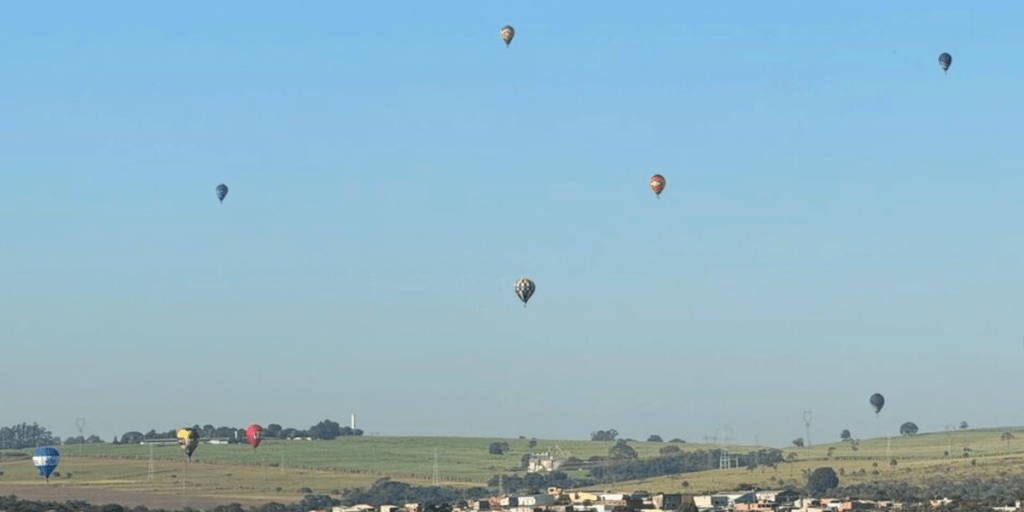
Balloons competing in the state championship of São Paulo. The event was held in São Carlos, SP, Brazil and this picture was taken on 144’2024 (2024-05-23).

That’s what I learned in school today!

Ref.:

1: EU translation requirements

2: XML

*: What did you learn in school today?

4: JSON

*: What did you learn in school today?

3: CCMS

4: JSON
*: What did you learn in school today?

121’2024 (2024-04-30) – Tuesday

Today, I learned about:

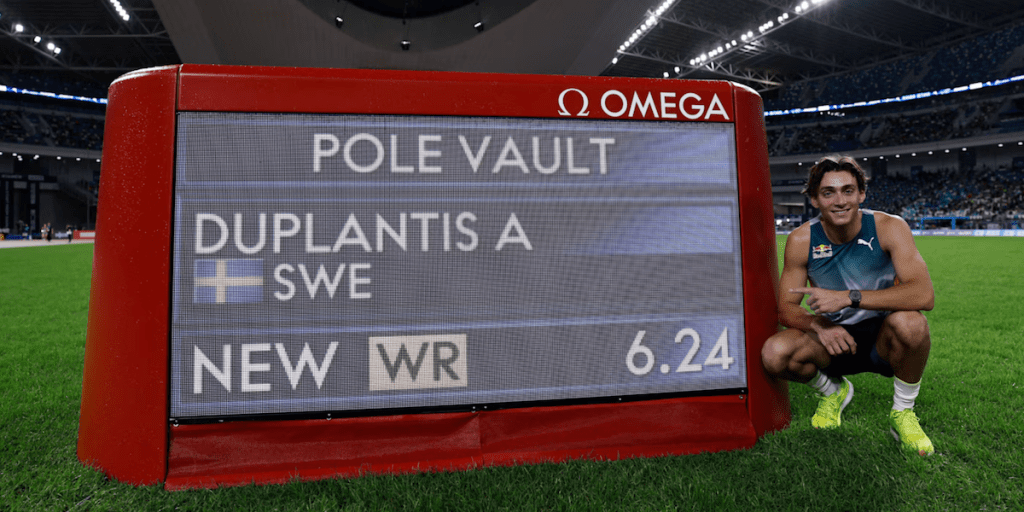
This month there will be interesting updates to earlier blog posts. In the previous post, 91’2024 (2024-03-31), I wrote about the fantastic pole vaulter, Armand Duplantis. In the first Diamond League competition for 2024, on 111’2024 (2024-04-20) in Xiamen, China, he continued his routine of raising the world record with yet another centimeter, to 6,24 m. The photo below shows that remarkable event. See the jump in reference #1 below.

One centimeter at the time! Mondo ajusted his own world record to 6,24 m during Diamond League in Xiamen, China on 111’2024 (2024-04-20).

And also in last month’s post, I wrote about how Lucas Braathen now will use his alpine skills to try and bring an Olympic medal also to Brazil. But he may have to fight for it with another skier who also is changing the country for which he competes. I am talking about Marcel Hirscher, who already had won various Olympic and World Championship medals for Austria before retiring in 2019. Now, he intends to return to challenge Lucas and others, but this time competing for the Netherlands. His mother is Dutch and now he also has acquired that citizenship. More about Marcel Hirscher can be found in reference #2 below.

Finally, in my posts about modularity, I only mentioned hardware and software items, but what about the necessary documentation, can it also be modular? Yes, it can, next month I will explain how!

That’s what I learned in school today!

Ref.:

1: Mondo and 6,24 m

2: Marcel Hirscher

*: What did you learn in school today?

356’2023 (2023-12-22) – Friday

Today, I learned about:

There are so many wonderful places in this world. Two weeks ago I had the pleasure of visiting one of them. It is called Inhotim, located in the municipality of Brumadinho, 60 km south of Belo Horizonte, capital of the state of Minas Gerais, Brazil. I took the following header photo there on 342’2023 (2023-12-08). In a future post, I will tell you more.

Photo of one of the beautiful scenic views in Inhotim, taken by me on 342’2023 (2023-12-08).

But for now, here comes an update to modularity, subject of my post last month, 334’2023 (2023-11-30):

In the reference about the Ericsson central office AXE is said “Modular design may appear self-evident. After all, wasn’t that the key to Scania’s success as a relatively small truck manufacturer?”

So, here comes more information about Scania’s approach. Scania is a Swedish company with headquarters in Södertälje, immediately south of Stockholm. The name Scania is latin for the Swedish southernmost province, Skåne. It was there in Malmö, Sweden’s third biggest city, that Scania was founded in 1900. Today it is part of the German Volkswagen group, but it is still considered an important Swedish company.

In 1980, Scania introduced its 2-series of heavy trucks. It is a very good example of how the various modules of chassis and engines can be combined to configure the needs of a customer. It was very succesful and paved its way for future generations. More about the 2-series can be found in reference #1 below.

But, as most of you probably know, there is also another major truck manufacturer in Sweden, Volvo. Of course, Volvo is also heavily invested in modularity. An example of this can be found in their EDC (Electronic Diesel Control). Reference #2 gives all the details.

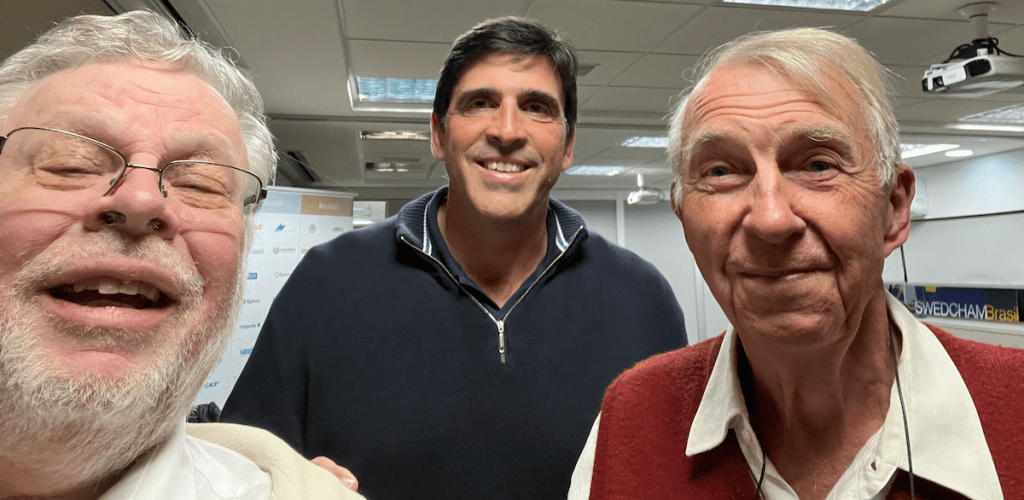
Finally, I would like to show you two different kinds of photos I took during the year 2023. The first one comes from a presentation at the Swedish-Brazilian Chamber of Commerce on 172’2023 (2023-06-21). I was very fortunate to integrate a group of athletes who together have won three olympic gold medals.

The golden trio, from right to left: Lars Björkström, olympic champion in yachting, tornado, in 1980; Giovane Gávio, twice olympic champion in men’s volleyball, in 1992 and 2004; and myself, no gold.

The second one was a photo that I had tried to take for a very long time, but the object always found a way to vanish before I could succeed. Then, finally, four days ago, I hit the jackpot. When a humming bird came to refresh itself with the sugary water I had waiting for him, then I was lucky enough to catch, not the humming bird, but more importantly, this fascinating picture of him. More about hummingbirds can be found in refrence #3 below.

This little bird is called beija-flor in Portuguese, a name that literally means flower kisser. It is always so fascinating to see it coming for a pit stop of sugary water on a sunny day, but it is so quick in its action that it is very difficult to catch it on film. Photo taken by me on 352’2023 (2023-12-18).

I wish all of my faithful readers and followers a MERRY CHRISTMAS and a HAPPY NEW YEAR!

That’s what I learned in school today!

Ref.:

1: Scania 2-series

2: Volvo EDC

3: Hummingbird

*: What did you learn in school today?

334’2023 (2023-11-30) – Thursday

Today, I learned about:

As I said one month ago, today I would like to discuss what modularity is and give some examples of where we can find it.

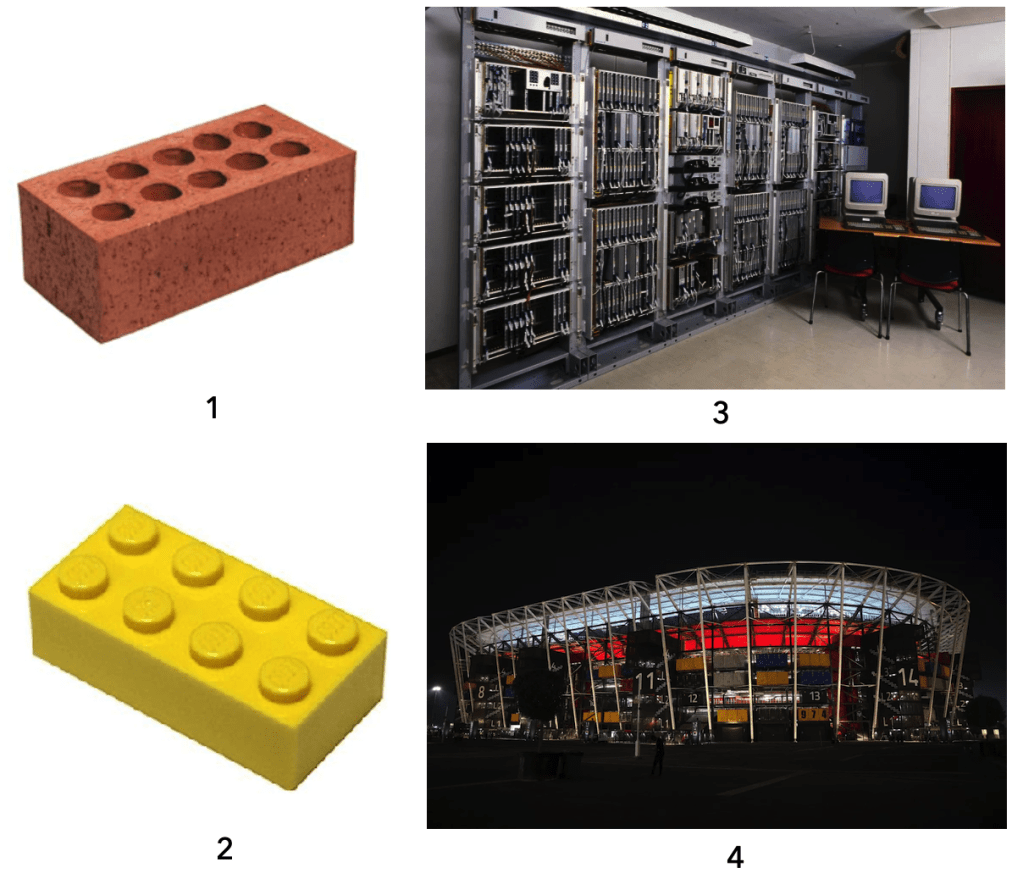
First, look at these four pictures:

The pictures illustrate: 1) A clay brick, 2) A Lego block, 3) The telephone switching equipment AXE (photo by Ericsson), and 4) The 974 stadium (photo by FIFA).

Which ones of the those four objects do you consider suitable to be called modules?

According to litterature references, modular thinking is a strategy of organizing complex products or processes in an efficient way. A modular system is composed of modules which are designed independently of each other, but that at the same time may work together as an integrated unit.

A product contains functional and physical elements. The physical elements are details, components or compositions which finally contribute to the function of the product. The physcial elements of a product are organized in various assembly blocks. If such a block is a collection of exchangeable components which execute similar functions, then the block is a called a module.

So, according to that reasoning, only 3) and 4) can be thought of as modular. Furthermore, the correct denomination for 1) and 2) is that they are components. I am sure that you all know what a brick and a Lego block are, so let us concentrate on examining 3) and 4) in bigger detail.

In 1979, I started my first job after having received my Masters degree in Electronics engineering from Chalmers. It was really interesting, a 1.5-year trainee course at the world-wide headquarters of the telecom company LM Ericsson in Stockholm, Sweden. Me and my three fellow colleagues visited many of Ericsson´s factories in Sweden and took many training courses in order to learn the theory behind the company’s products. It was then I first heard of modularity.

At that time, Ericsson was extremely busy changing the method of their central offices for telecommunications. Instead of the old electro-mechanical systems with a lot of valves and relays arranged in a big volume of hardware, the new systems based on the digital technology with computerized control were much smaller in size and were judged as more reliable than the old systems. The new system was called AXE and had been developed during the 1970’s at a development company called Ellemtel, joint owned by Ericsson and the Swedish Telecommunications administration, called Televerket.

When developing the AXE system, the engineers were using a novel approach, to organize both the hardware and software blocks of the final product according to the modular strategy. The result was astonishing, Ericsson grew from being one of the many telecom equipment producers in the world to lead the world market.

Then in 2022, when the FIFA World Cup was being played in Qatar, I was surprised by the way one of the stadiums was built. Yes, you guessed it right, using the modular thinking! The name of the stadium, 974, denotes the number of modules used to construct the stadium. According to a description by FIFA, Stadium 974 was constructed using standard certified shipping containers and modular steel elements, echoing the nearby port and the industrial history of the plot. Then, once the World Cup was over, the whole stadium was disassembled to be set up somewhere else for another game.

See also references 1,2, and 3 below about modularity.

In my blog post next month, I hope to able to show you some more examples of other objects that also are using the modular approach.

That’s what I learned in school today!

Ref.:

1: Min syn på modulariseringstänkande i PU-processen

2: AXE – a multi-dimensional system

3: Stadium 974

*: What did you learn in school today?

304’2023 (2023-10-31) – Tuesday

Today, I learned about:

Is there anyone today who does not know what modularity is? But how was it 50 years ago, did anyone talk about modularity then? If there were, they were very few.

Prepare yourselves, because starting next month I will give you examples of where the modularity exists today and how it slowly started to catch on everywhere.

That’s what I learned in school today!

Ref.:

*: What did you learn in school today?