270’2026 (2026-09-27) – Sunday

Today, I learned about:

You may remember that in 2025, I made a post about drones, 304’2026 (2025-10-31). Unfortunately, most of the news involving drones these days are about their use in military conflicts in Europe and Asia. But, of course, there are so many other ways we could really benefit from drones. Here comes an interesting application:

How can a person know what a certain forest contains with regards to the number of trees, their size and quality, etc.? Since the quantity of trees normally is huge, this is a major task! Let us call in a drone! And that is when the Swedish robotics and AI company Deep Forestry comes in. As you can see in reference #1 below, they use drones to facilitate the job.

You probably have heard about quantum computing, that does not use binary bits in their calculations, but quantum states, so-called qubits. More about what quantum computing is can be found in reference # 2 below. But so far, we have not seen much use of quantum computers, and one reason is that they are not very reliable yet. However, now a team of researchers at my alma mater, Chalmers University of Technology in Gothenburg, Sweden, have found a way of speeding up the calculations with a factor of 1.000 (one thousand) times. That way, we should be able to not only obtain faster results, but mainly also more reliable ones. If that sounds interesting to you, read all about it in references # 3 and 4, below.

Finally, this month we have been surprised by the discovery of a new species of cats. DNA analysis has confirmed that this species, with origin 1,4 million years ago, can be found in the jungles of Bolivia. But it is a shy animal, it only hunts during the night! Read all about in reference # 5 below. And here comes a photo of Leopardus tilcayo:
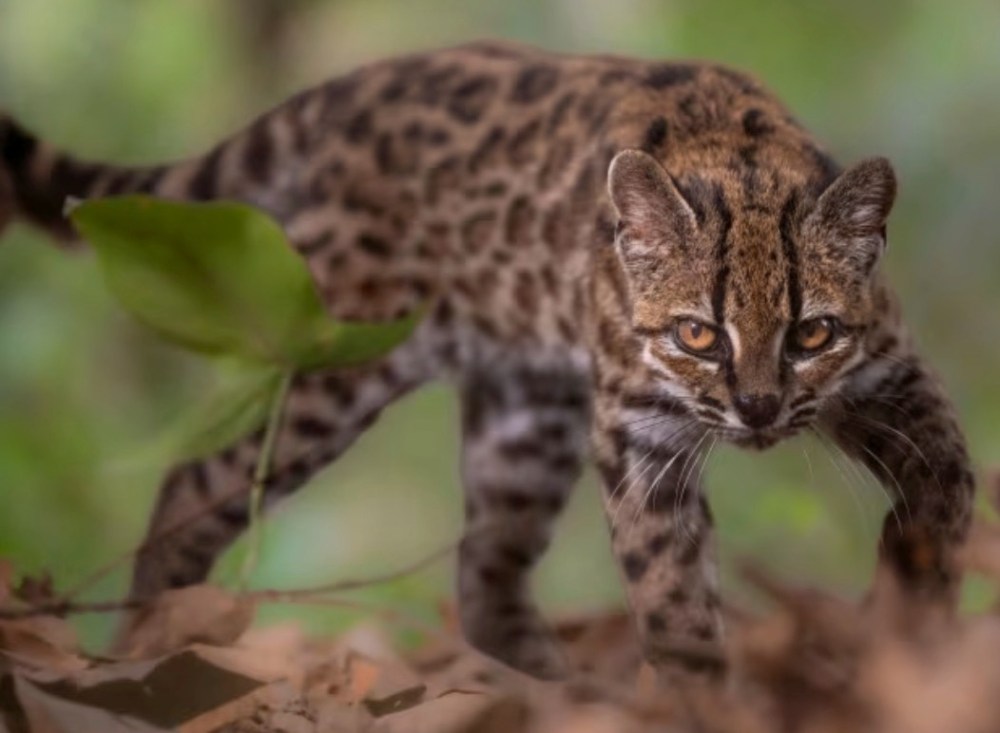
A Leopardu tilcayo cat, the first newly identified feline species in over 100 years, seen at the Senda Verde animal refuge in the Yungas region in Bolivia on 244’2026 (2026-09-01). Photo by Fernando Faciole/National Geographic/Reuters

And last, but not least, the header photo this month was taken by my daughter Karina on 259’2026 (2026-09-16), while visiting Penha in the Southern state of Santa Catarina. Complete peace and beauty!

That’s what I learned in school today! 

Ref.:

1: Deep Forestry & Ouster – Deep Learning for Forest Biodiversity

2: Quantum computing

3: 1,000 times faster operations bring reliable quantum computing a step closer

4: Single-Period Floquet Control of Bosonic Codes with Quantum Lattice Gates

5: Meet the tiny wild cat that’s new to science

*: What did you learn in school today?
304’2025 (2025-10-31) – Friday

Today, I learned about:

The month of October, 2025, was the month when I got to learn more about the UAV, unmanned aerial vehicle. What, you say, is that? It is the formal name for what colloquially is named a drone. Then most of you at least know what I am talking about.

I signed up for a course to learn more about drones in São Carlos, state of São Paulo, Brazil. São Carlos is a great university city, with two well known public universities, UFSCar (Federal University of São Carlos) and USP (State University of São Paulo), besides other private ones. It is said to be the city in Brazil that has the highest rate of academic doctors per capita. More about São Carlos can be found in reference #1 below.

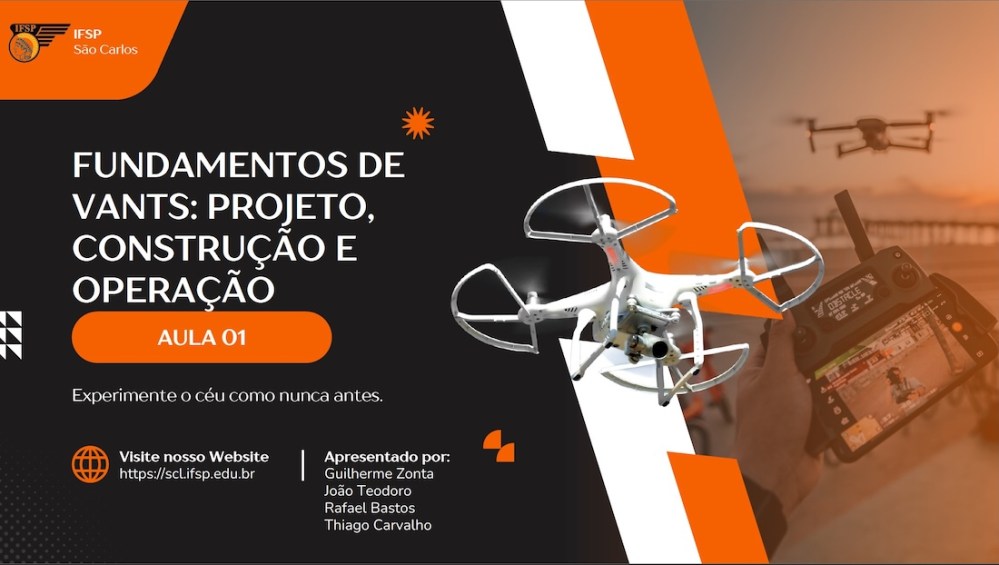
But of course there are also other schools beyond the universities. One of them is a federal technical school called IFSP São Carlos (Federal Institute in the state of São Paulo) and the city also has an educational foundation called FESC. IFSP and FESC have partnered up to offer a course named “Drones in action”, where 10 intensive classes of 2 to 3 hours each teach everything a layman needs to know about projecting, developing and deploying a drone, including not only technical details, but also legal regulations and security aspects. Right now, we are exactly in the middle of this course and I must say that it really has broadened my mind immensely. Here is an illustration from the course material:

This is the title page of the first class in the series about Drones in action: project, development and deployment. The course is presented by four enthusiastic persons (Guilherme Zonta, João Teodoro, Rafael Bastos, and Thiago Carvalho) from Instituto Federal de São Paulo in São Carlos, and is coordinated by Rogéria Kapp from Fundação Educacional São Carlos.

I got interested about finding out more on the subject and was lucky to retrieve an article from Nature in 2015, where the researches discuss how insects can fly and inspire developers of drones in their quest for light-weight, yet fast and powerful drones. I urge you to read the article which also gives very basic facts about why objects can fly. See reference #2 below.

Update 348’2025 (2025-12-14)

On 338’2025 (2025-12-04) was held the last class in the series Drones in action: project, development and deployment, with practical experience on how to navigate a drone. Today, I also obtained an e-book presenting a summary of the course, you can find it in reference #3, below.

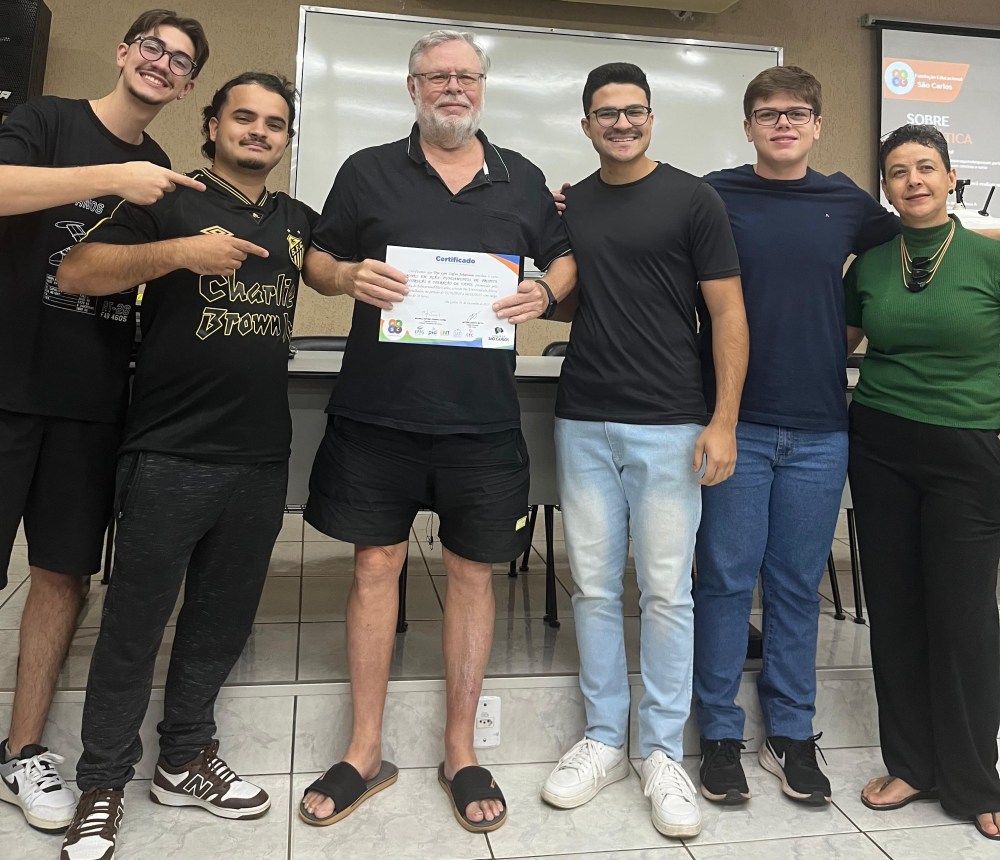
And since I had participated in all activitities from the start, I also obtained a certificate for that, see the following photo:

Here you can see a photo taken on 338’2025 (2025-12-04) of me (guess who?) in the center with the following persons, from left to right: Thiago Carvalho Nogueira, Rafael Bastos Arantes, João Pedro Teodoro Batista , Guilherme Leonel Zonta Avi, and Rogéria Kapp.

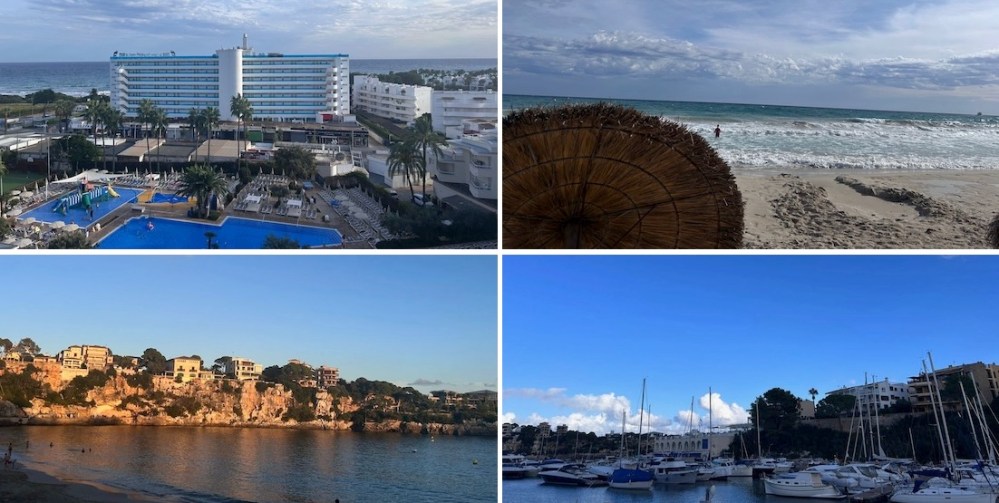
Today’s header photo and also the following ones were taken by my friend Juliane Vianna who recently had some marvellous days on the Spanish island of Mallorca. More about Mallorca can be found in reference # 4 below.

Pictures from Sa Coma and Porto Cristo on the Spanish island of Mallorca. Photos taken by Juliane Vianna on 303’2025 (2025-10-30).

That’s what I learned in school today!

Ref.:

1: São Carlos

2: Aerodynamics, vortices and robobees

3: Fundamentos de VANTs – Projeto, construção e operação

4: Mallorca

*: What did you learn in school today?