58’2025 (2025-02-27) – Tors dag
Today, I learned about:
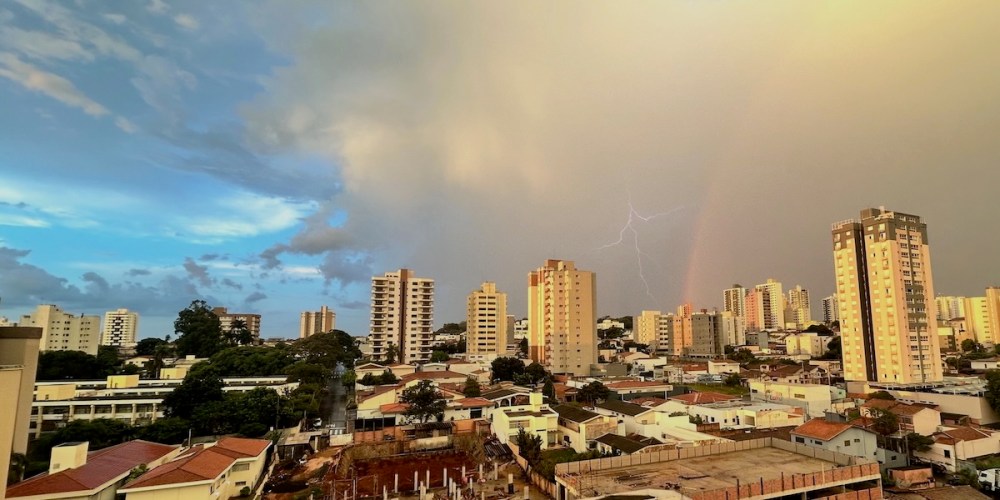
They are simply amazing, the things invented by Mother Nature. The following photo shows a view of the sky in São Carlos, SP, Brazil, taken exactly one week ago, in the late afternoon of 51’2025 (2025-02-20) by my daughter Karina. Such a view is something to be seen maybe only once in a lifetime! She was able to capture a bright sky, rainy sky, lightning (of course, being the day of the Nordic thunder god Thor), and rainbow, all-in-one!
But Mother Nature can also play tricks with us from time to time. One deficiency that is more common in men than women is color blindness, also known as color vision deficiency or daltonism. The last term is derived from the English chemist John Dalton, who during the 18th century made the first scientific observations about color blindness. See also reference #1 below.
Dalton suffered from red-green dichromacy. If there had been traffic lights when he lived, then he would have had difficulties in distinguishing the red “stop” signal from the green “go” signal. For that reason, often the green light has a bluish hue to reduce the risk of such a confusion. Furthermore, there is a suggestion to extend the normal three-stage traffic lights from the current red, yellow and green colors to also include a fourth one with white light. That would make it easier is for autonomous vehicles approaching a traffic signal. If it shines white, then it means the same as the green light, go ahead, otherwise don’t. See also reference #2 below.
But traffic lights are not only consisting of various colors, there are also different ways to arrange them, further to the traditional top-down placement of red-yellow-green, that make them more intuitive to understand. One such arrangement is being used in the start of a Formula 1 race:
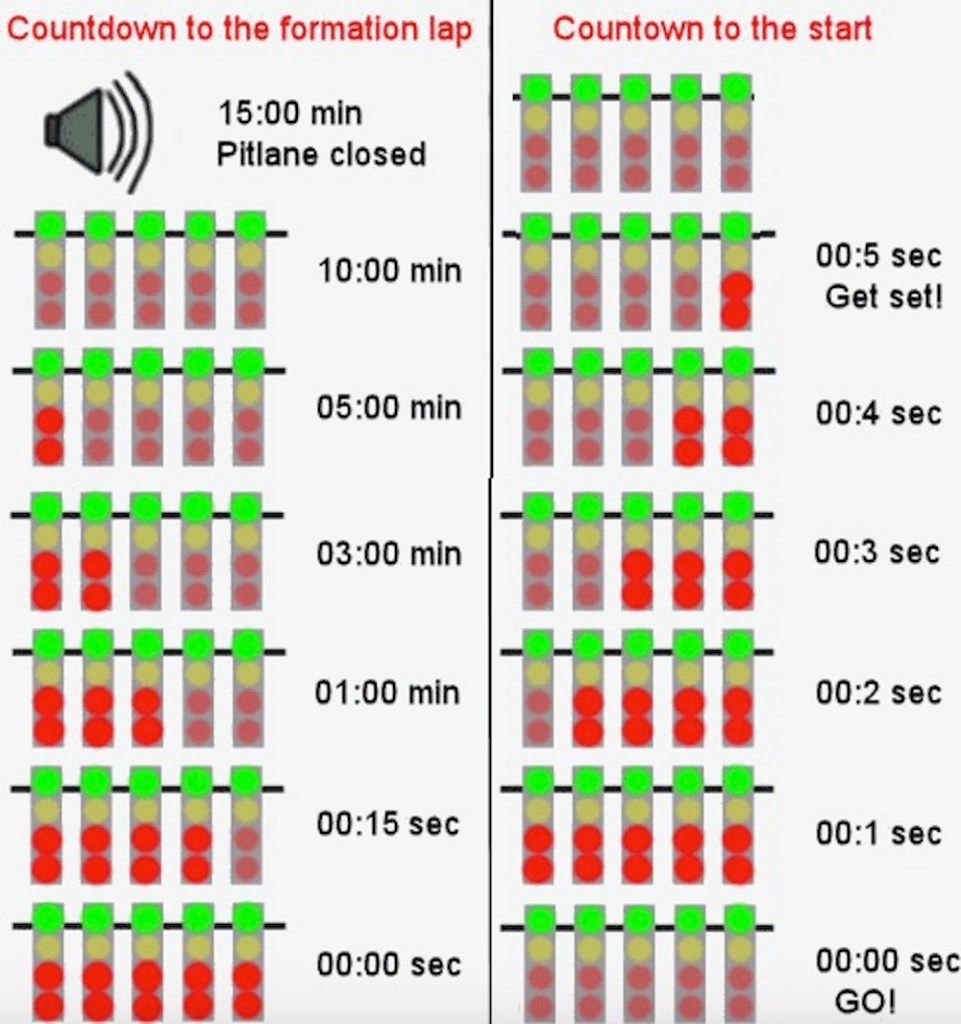
Reference: https://www.formula1-dictionary.net/start_sequence.html
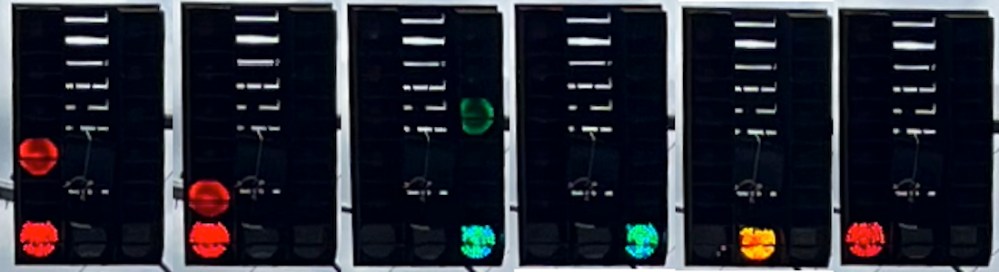
Maybe it was Formula 1 that inspired the inventor of this traffic light:
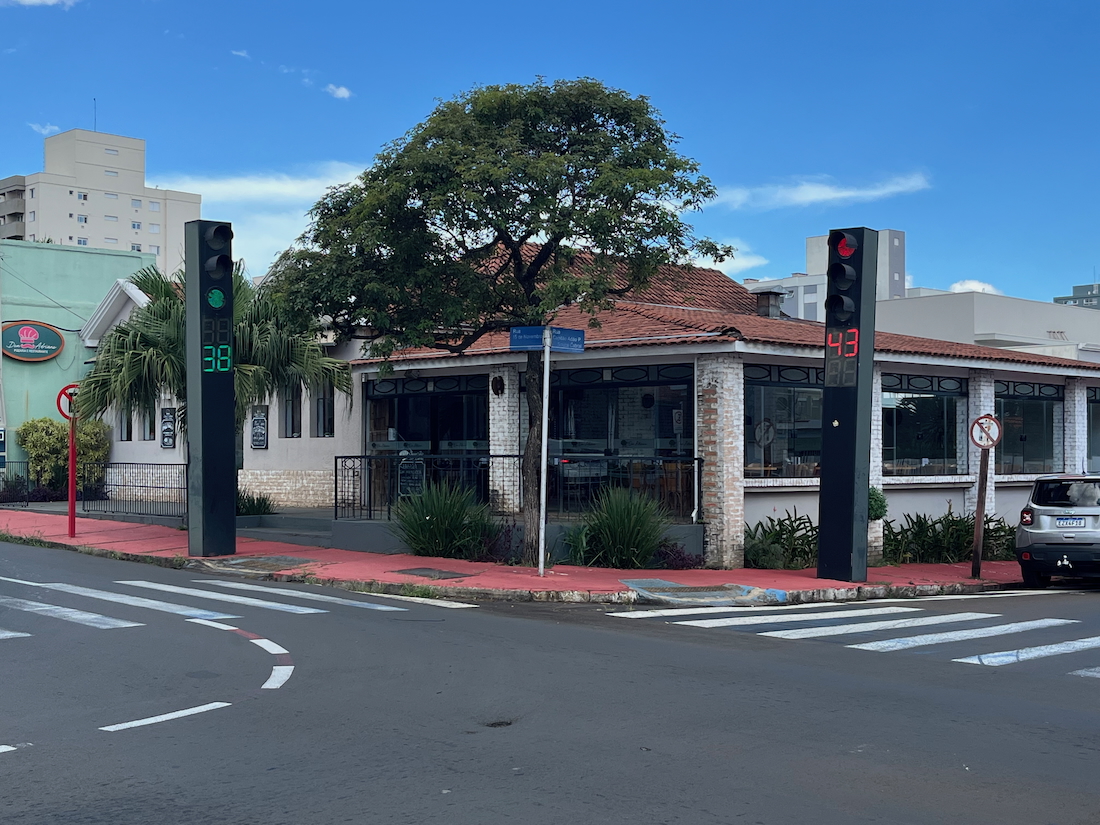
But the most intuitive traffic sign is no doubt this one, where both the driver having the liberty to proceed (another 38 seconds in this example) and the one waiting for their turn to go ahead (after 43 seconds in this example) have an exact idea of the respective available times:
That’s what I learned in school today!
Ref.:
2: A study proves stoplights need a fourth color: White
*: What did you learn in school today?
 What did you learn in School today?