151’2023 (2023-05-31) – Wednesday
Today, I learned about:
This post is a tribute to some of my Swedish language students and their families. What they all have in common is that during the month of May, 2023, normally the best of all seasons in Sweden, while being in Sweden, they also decided to explore its neighboring countries.
Adriana
Adriana lives in Brazil, but is enchanted by Sweden and its native language. The first time she went to Sweden with her family was 20 years ago and after that she went there on various occasions. It is a real pleasure giving lessons to Adriana, a very sympathetic person, who can make me laugh aloud with her stories, sometimes including black humour. Luckily, I am normally able to compete with her in that sense.
Paulo
Paulo moved to the region of Stockholm with his family 1,5 years ago and is getting well accustomed. In his company, he tries to speak as much Swedish as possible, although English is also commonly used as the corporate language. Our lessons are always fun, I try to include my knowledge about Sweden from the time I lived there, so that he can understand why certain things are the way they are. Paulo tells me good stories about his earlier life in Brazil and his business trips around the world.
Since Adriana and Paulo had both decided to bring their families to visit the Estonian capital Tallinn, I found it a good coincedence to join their narratives into one. Below are their family photos and some pictures taken during their respective visits to Tallinn. You can find facts about Tallinn in reference #1 below.
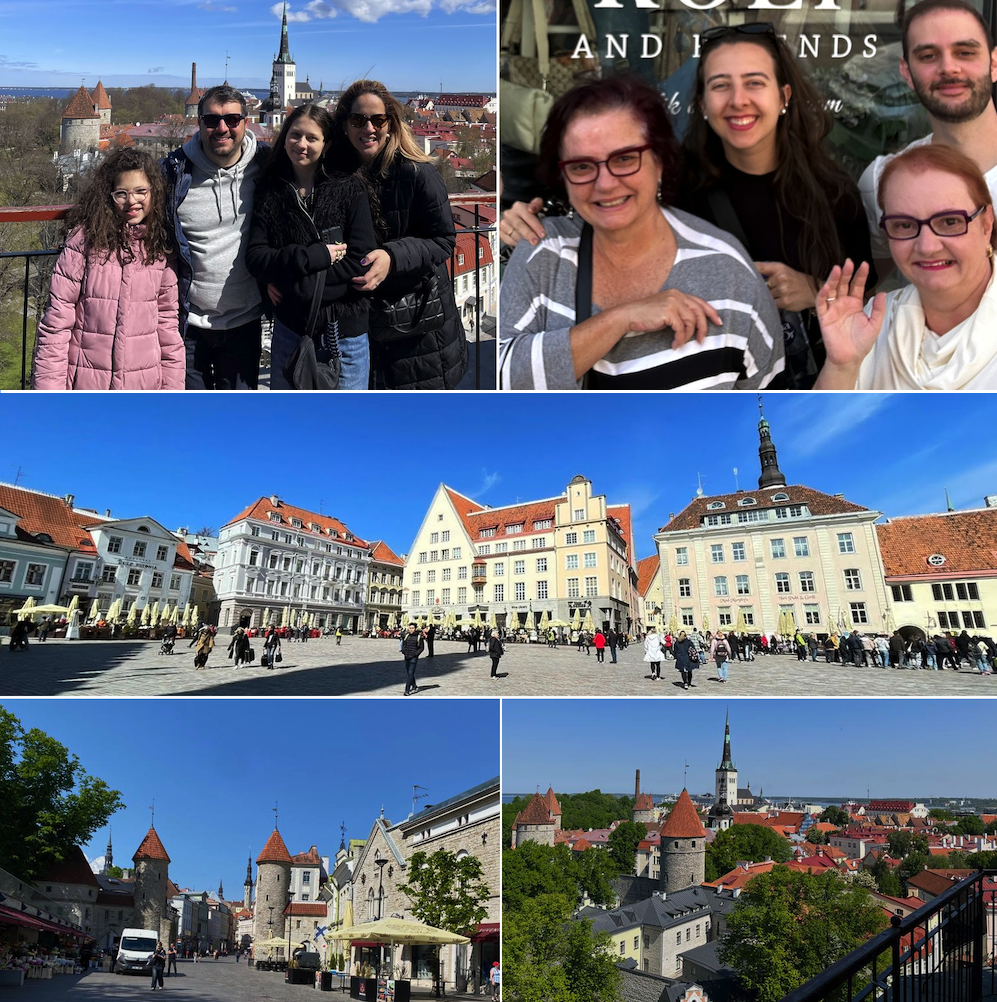
In the left, uppermost photo you can see Paulo and his wife Patricia, and from the left their two daughters, Sophie and Catherine. Paulo also took the big photo from Tallinn below.
Adriana, in the lower right corner of the righmost, upper photo, which was taken in Stockholm, was travelling to Denmark and Sweden with her family and decided that Estonia was worth a visit. Here you can see her sister Camila to the left and behind them are Adriana’s son Humberto, wit his fiancée Paula by his side. Adriana took the two lower photos from Tallinn.
Giovana and Rodrigo
The Brazilian couple Giovana and Rodrigo left the state of Paraná one year ago and moved to Göteborg (Gothenburg in English) to live and work. Before they moved, we had already had some months of initial training and due to changes in the Swedish immigration laws during the first half of 2022, their travel was delayed, which in a certain way was good, because they could concentrate on the Swedish lessons, using the same time zone as I. As you may know, currently there is a 5 hour time difference between Brazil and Sweden, so while our lessons for me occur in the early afternoon, for them it is much later in the evening. But they are hanging in, and their Swedish is getting ever better!
Giovana and Rodrigo like to travel very much, every once in a while they tell me that they will go to one of the European cities that can easily be reached by airplane from Göteborg. The destination this time was the Polish port Gdańsk, also known by its German name Danzig. If you are curious about Gdańsk, see also reference #2 below.

Joice and Elias
Another Brazilian couple, Joice and Elias, are newcomers in Sweden, also living in Göteborg. They are still in their first months living in Sweden, which means a lot of things to take care of. And it is not only living and working, they also have to see to that their sons are getting good schooling conditions. But from what I have heard, very soon the boys will help me in teaching Swedish to their parents.
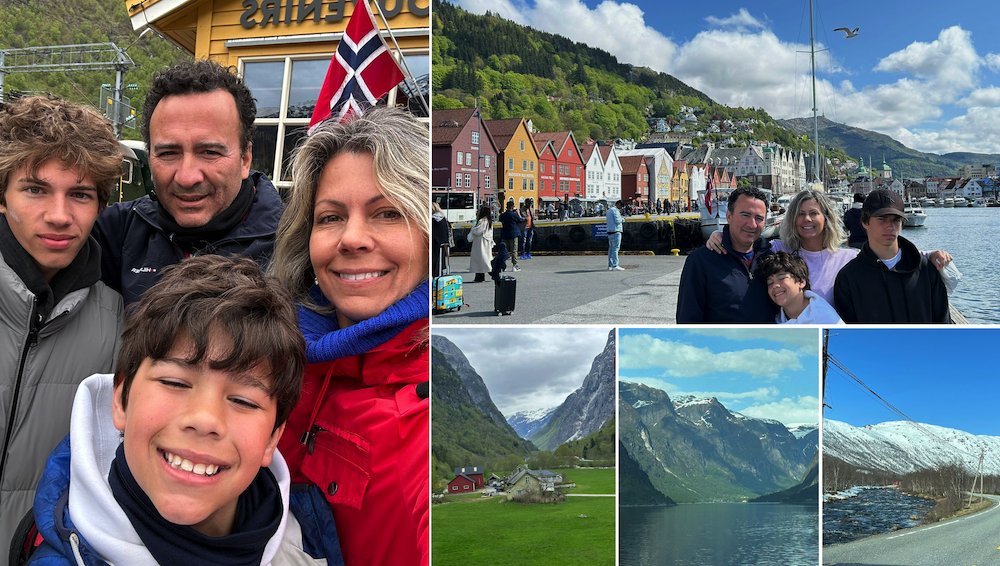
During the long weekend in the middle of May, when Thursday was a holiday to celebrate Ascension Day, they decided to go to Norway together with some friends. Below you can some marvellous pictures from their trip. If you want to know more about their destination, Hemsedal and Flå, see references # 3 and 4, below.
That’s what I learned in school today!
Ref.:
1: Tallinn
2: Gdańsk
3: Hemsedal
4: Flå
 What did you learn in School today?