It is so interesting when something that earlier was the privilege of a few countries is suddenly spread out also to those who you cannot think about in that context. One good example is the Swedish pole-vaulter Armand Duplantis, currently the world’s undisputed champion, who has raised the world record in 1 cm increments from 6,17 to 6,23 m, with more to come. He was born in the USA, but thanks to his Swedish mother, he also has a Swedish citizenship. More about him can be found here: 212’2022 (2022-07-29).
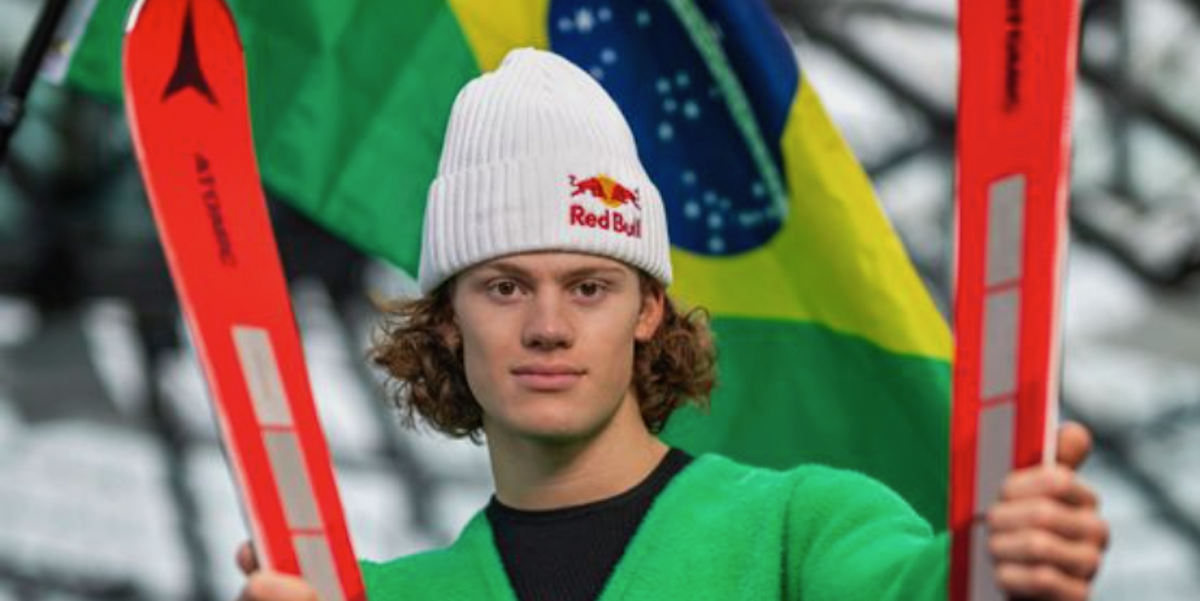
Earlier this month, CBDN (Brazilian Confederation of Snow Sport) had the pleasure of presenting to the world its newest affiliate, the Norwegian slalom skier Lucas Braathen, who also has a Brazilian mother and thus also a Brazilian citizenship. He spent much of his youth in Brazil, where he learned how to love sports and, among other things, support the São Paulo FC football team! He has already won both Olympic gold medals and the World Cup in alpine skiing, and now the Brazilians are hopeful that he will repeat it for his “new” country. More about Lucas can be found in the following photo and in reference #1 below.
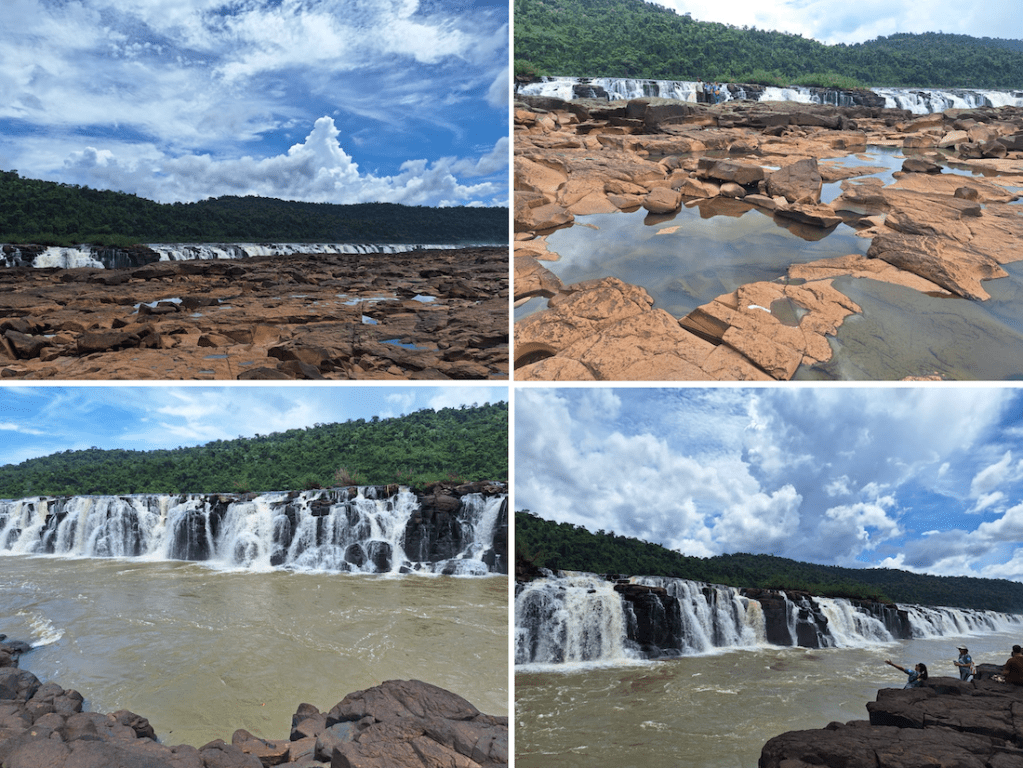
In last month’s post, I wrote about something that I would present now. My friend Neide visited recently the South West corner of Brazil, where there is an amazing water fall. Far from being so well known as the Iguaçu falls, but not very far away, there lies Salto do Yucumã (Yucumã falls), Derrubadas, state of Rio Grande do Sul, Brazil. In these water falls, water from one side of Rio Uruguay falls into the other side of the river. However, this can only be seen when the water level in the main river is low, if not it will be hidden under the surface. You have to be lucky to see the falls because the water level depends on what is liberated from the hydroelectric plant in Chapecó, state of Santa Catarina, Brazil, that is located upstream. These falls are considered to be the widest longitudional falls in the world, 1800 m wide. More about this can be found in reference #2 below.
Here are some nice pictures from Salto do Yucumã:
These photos were taken on 57’2024 (2024-02-26) at Salto do Yucumã (Yucumã falls), Derrubadas, state of Rio Grande do Sul, Brazil, by Neide Martins de Aguiar.
In my previous post, I talked about the small differences in sport between success and failure. Here are two more such events, both of them involving Swedish athletes:
Swimming men 400 m individual medley in Summer Olympic Games 1972
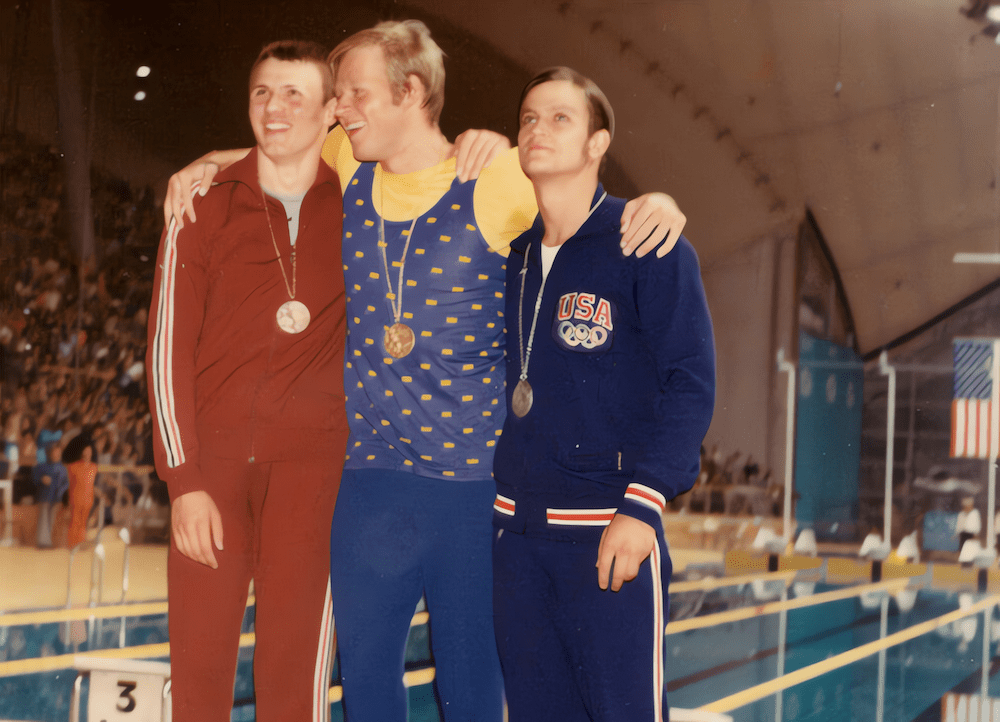
An earlier such fact happened in the Summer Olympics Games in Munich on August 30, 1972. In the final of the 400 m individual medley for men, the two first swimmers were registered for the same time, 4 min 31,98 s. So far using hundredths of a second had been sufficient to decide a winner, but in this case the organizers had to go further down, to the thousandths of a second, and then it was discovered that the Swede Gunnar Larsson had the time of 4 min 31,981 s, while his major opponent, the American swimmer Tim McKee was recorded for 4 min 31,983 s, 2 thousandths of a second slower, or converted into distance 3 mm. Of course there were many people who wanted the goal medal to be shared between the two swimmers, but the decision was to keep them apart. I remember very well this event, I was at home watching the event live on TV and how everyone was apprehensive about the outcome.
Thousandth second timing was also used at the 1973 World Championships, but this would not be allowed again, as it was shown that this was less than the thickness of one coat of paint on the wall, and minute differences in the lanes could affect this result. All future international swimming races after 1973 would be decided only to the 1/100th of a second, and if swimmers were tied at that margin, they were declared tied. However, that decision did not have any retroactive result, so Gunnar Larsson continued as a sole winner in 1972. But Tim McKee could at least console himself that both he and Gunnar were registered as having broken the old olympic record.
Since then, there have been three different olympic events where the two first swimmers have shared the gold medal, all in freestyle swimming, in 1984, 2000, and 2016. Will there be anext one in 2032?
See also reference #1 below.
The winners podium after the 400 m individual medley, the winner Gunnar Larsson accompanied by the silver medalist Tim McKee (to the right) and bronze medalist Andras Hargitay, Hungary (to the left).
Triathlon women individual event in Summer Olympic Games 2012
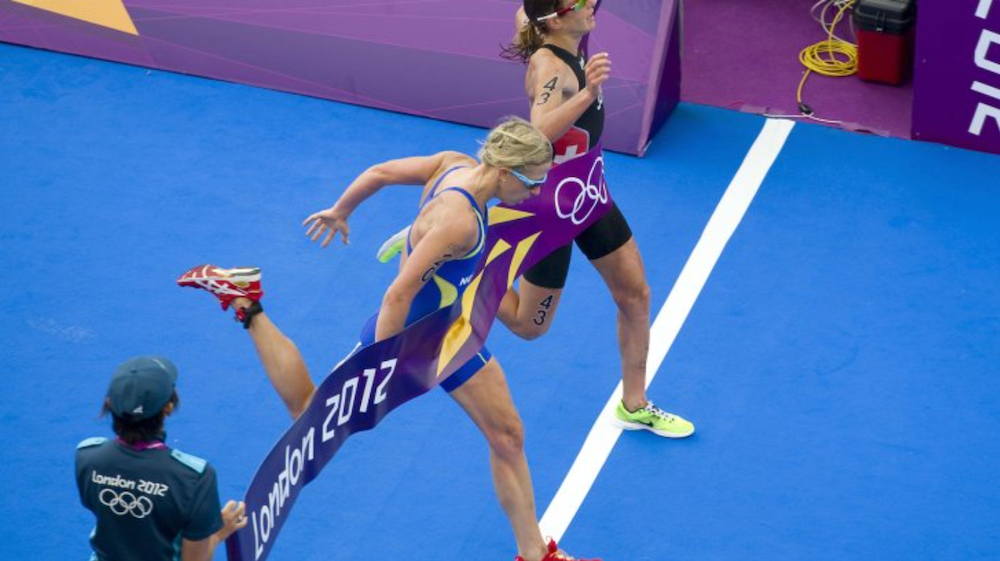
Another similar event happened in the Summer Olympics Games in London on August 4, 2012. It was hosted in Hyde Park, and the first three athletes were all within 2 seconds at the finish line. Of those, the two first competitors ended up with the same time, 1 h 59 min 48 s. But the Swiss athlete Nicola Spirig was judged as being the winner in a photo finish, with the same time as the Swede Lisa Nordén. The Swedish Olympic Committee appealed against the result in the Court of Arbitration for Sport (CAS), but it turned down the appeal.
See also reference #2 below.
The thrilling photo finish with Lisa Nordén (foremost) and Nicola Spirig side by side. Photo by Imago.
Winter sports in Brazil
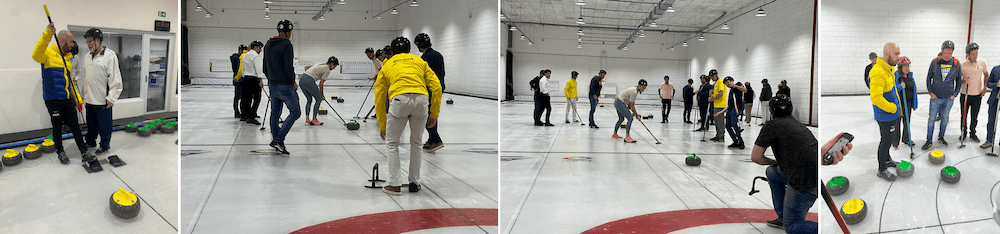
You may remember that a little over a year ago, in my post 240’2022 (2022-08-28) , I wrote about the two Brazilian winter sports organizations, CBDG (ice) and CBDN (snow), and presented the Arena Ice. Last week, I had the opportunity to visit the Arena Ice again, this time together with my fellow associates of Swedcham, the Swedish-Brazilian Chamber of Commerce in São Paulo, and practice some curling under the supervision of one of the curling instructors at CBDG, Fabrício Dias Paes. We all had very much fun in trying to master the 20 kg heavy curling stone and guide it to its goal. Here you can see some photos taken by Anders Pettersson and myself:
Curling practice in Arena Ice on 264’2023 (2023-09-21)
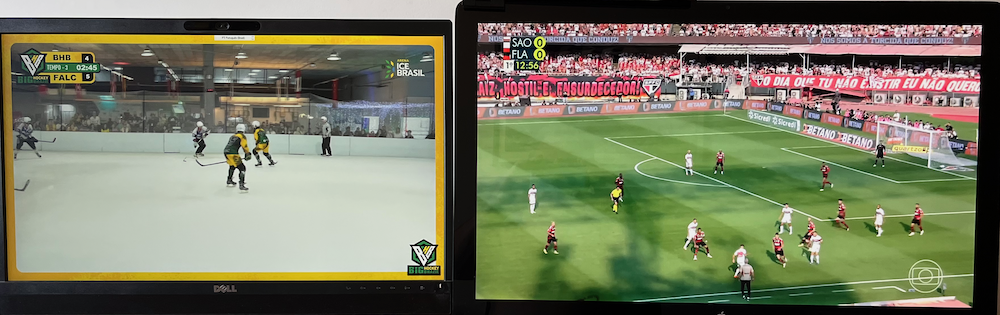
Then on the following weekend, from my home in São Carlos, I could watch two very different sports events happening at the same time in the region of Morumbi in São Paulo, to the left the final in the Brazilian Championship in Icehockey 3×3, held at the rink in Arena Ice, and to the right the final in the Brazilian Football Cup, occurring only 4 kilometers from Arena Ice. Unfortunately, the home team Big Hockey Brazil lost the final 3-4 to the Falcons from Bragança Paulista, but São Paulo FC compensated that by securing the Brazilian Football Cup with a draw 1-1 against the Rio team Flamengo, after having won the first game in Rio de Janeiro one week before.
Two totally different sports happening at the same time only 4 km apart on 267’2023 (2023-09-24).
By the way, during this weekend, there is also a Brazilian Championship in Curling for Mixed couples being played in Arena Ice. If you want to accompany it live, you can do so on this link: https://youtube.com/live/laEfuz7FYMU
Finally, today’s header photo was taken in the Argentine capital Buenos Aires by my daughter Karina on 250’2023 (2023-09-07). This metallic rose opens its petals during the day and is called Floralis Genérica. See also reference # 3 below.
 What did you learn in School today?