2016-01-21 (Thursday)

Today, I learned once more that:

Tennis is probably the most exciting of all individual sports with a ball. Further to requiring that the players are well conditioned to withstand a match that can go on during various hours, they must still remember well the basic techniques and also keep their heads very cool.

When I grew up, my father was secretary of the local tennis club, Herrljunga TK, in a small town with 4.000 inhabitants. Thanks to talented players and dedicated leaders, it even arrived at the top position in Swedish team tennis, beating SALK from Stockholm in the final. And its star player, Jonte Sjögren, later advanced to higher levels, both as a player and leader, being the captain of the Swedish team that won the Davis Cup on various occasions, as well as coaching one of the best tennis players of all times, Björn Borg.
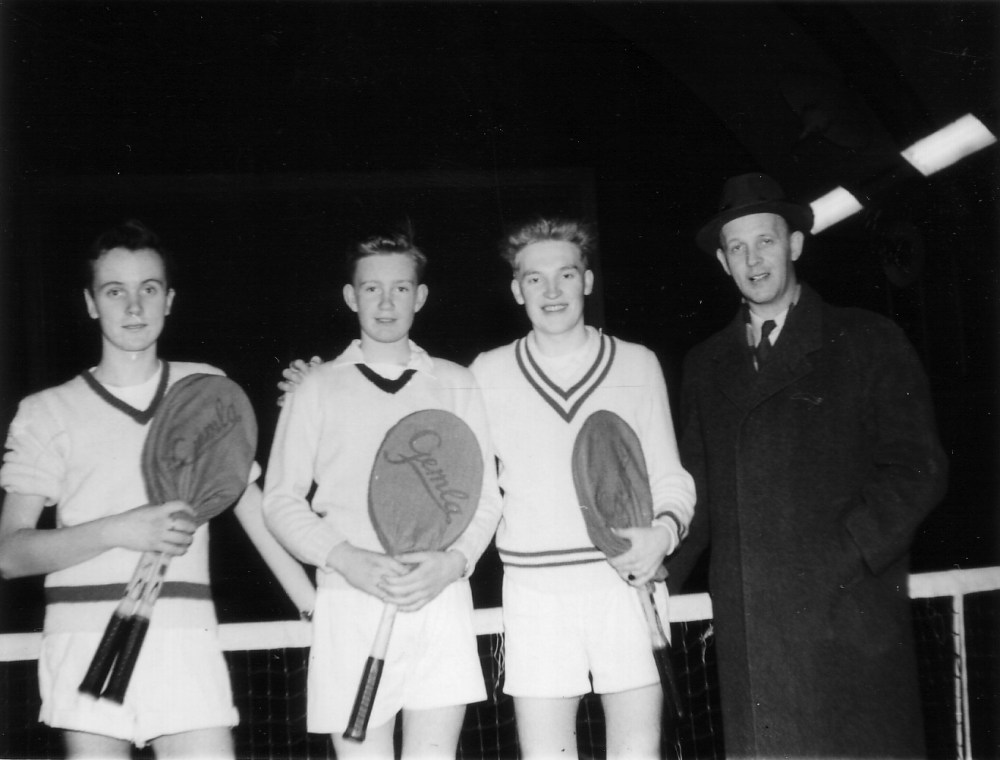
HTK 1957-58

Herrljunga Tennisklubb’s musketeers in Sporthallen, 1957-58. From left to right: Rolf Andersson, John-Anders Sjögren, Sixten Borgvall, and Bengt Lundell.

At that time, there were few types of materials used in the tennis courts. The standard material for outdoor courts was a sort of clay, called ‘en-tous-cas’. And of course there were grass courts, such as Wimbledon. To play on one type of court or another meant to dominate different styles of tennis. On clay courts, the ball bounces slower than on grass, so there is more time to get to the ball and plan on how and where to hit it. Of the four Grand Slam tournaments today, the French Open is still clay and Wimbledon, of course, continues with its famous grass lawns. The US Open tournament uses a hard court material, called Deco Turf, and the Australian Open is using another hard court material, Plexicushion, based on an acrylic compound, just like it US colleague. These hard court materials result in even higher ball speeds than the grass courts.

Of course, there are regulations about these materials, and speedwise they are classified into 5 different categories, where category 1, slow speed, includes clay courts. Wimbledon’s grass courts are in category 3, medium speed, whereas USA and Australia are both in category 4, medium-fast speed.

As a consequence of these speeds, a player that knows how to serve well can draw big benefits from the faster court materials, scoring many points on his/her serve and thus leading to shorter times to define the points. I think that this is a pity, because the real beauty of tennis are the long rallies when both players have to vary their shots to defeat the opponent. And now it almost happened again, yesterday!

During the ongoing Australian Open tournament, in the second round, the Czech player Kristyna Pliskova hit 31 aces, i.e. a serve so hard and/or well placed that the opponent cannot even touch the ball. This is a new record for a women’s tennis match at elite level. But even so, Pliskova lost the match to Mónica Puig from Puerto Rico, in spite of the 31 aces and 5 match balls in her favour. Luckily for tennis, Pliskova did not advance to the next round!

… That’s what I learned in school!

Refs.:

1: https://en.wikipedia.org/wiki/Tennis

2: https://www.perfect-tennis.com/tennis-court-surfaces-and-court-speeds/

3: http://www.itftennis.com/technical/courts/court-testing/overview.aspx

4: http://www.rippa.com/category/tennis/kristyna-pliskova-sets-new-aces-record-20160120-0006/
+: https://www.youtube.com/watch?v=VucczIg98Gw

2016-01-20 (Wednesday)

20000503c

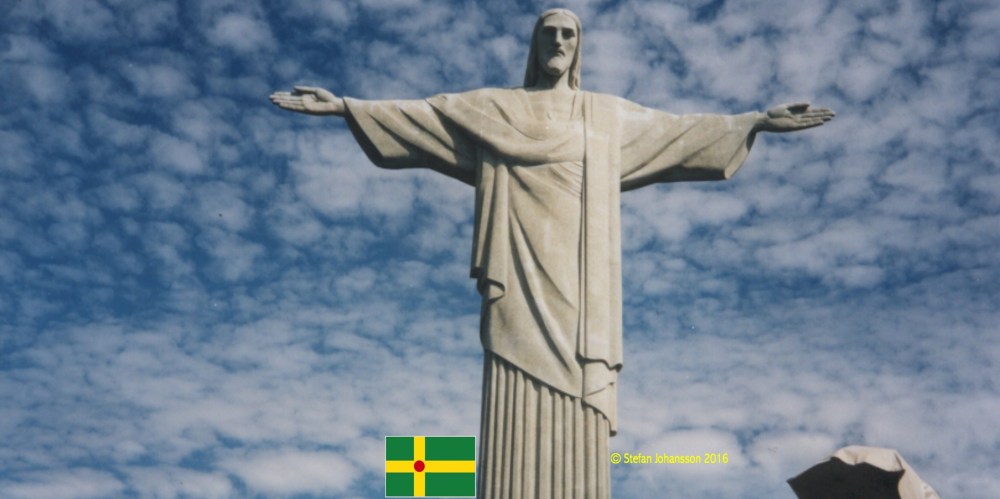
Christ Statue, Corcovado, Rio de Janeiro

Today, I learned again, that:

Rio de Janeiro is scheduled to host the 31st Summer Olympic Games later this year. But how was it that the city got its name and what does it mean?

Rio de Janeiro literally means the January River. The reason is that when the Portuguese explorer Gaspar de Lemos discovered the Bay of Guanabara on January 1, 1502, the Portuguese word for both river and bay was ‘rio’, and hence the origin of the name. When the city was founded by Estácio de Sá on March 1, 1565, its name was designated as São Sebastião do Rio de Janeiro, as a tribute also to the ruling Portuguese king, D. Sebastião.

Every city in Brazil has a day once a year when they pay a tribute to their patron saint, and when there is a local holiday. In the case of Rio de Janeiro, in consequence with what was said above, it is Saint Sebastian, and since his day is January 20, today is a local holiday in Rio de Janeiro, as well as in many other Brazilian cities, that also venerate Saint Sebastian, e.g. São Sebastião (state of São Paulo), Paranavaí (state of Paraná), Paraisópolis (state of Minas Gerais), as well as some other 250 cities all over Brazil.

… That’s what I learned in school!

Refs.:

1: https://en.wikipedia.org/wiki/Rio_de_Janeiro

2: https://en.wikipedia.org/wiki/Saint_Sebastian

3: https://pt.wikipedia.org/wiki/São_Sebastião#Brasil

+: https://www.youtube.com/watch?v=VucczIg98Gw

2016-01-19 (Tuesday)

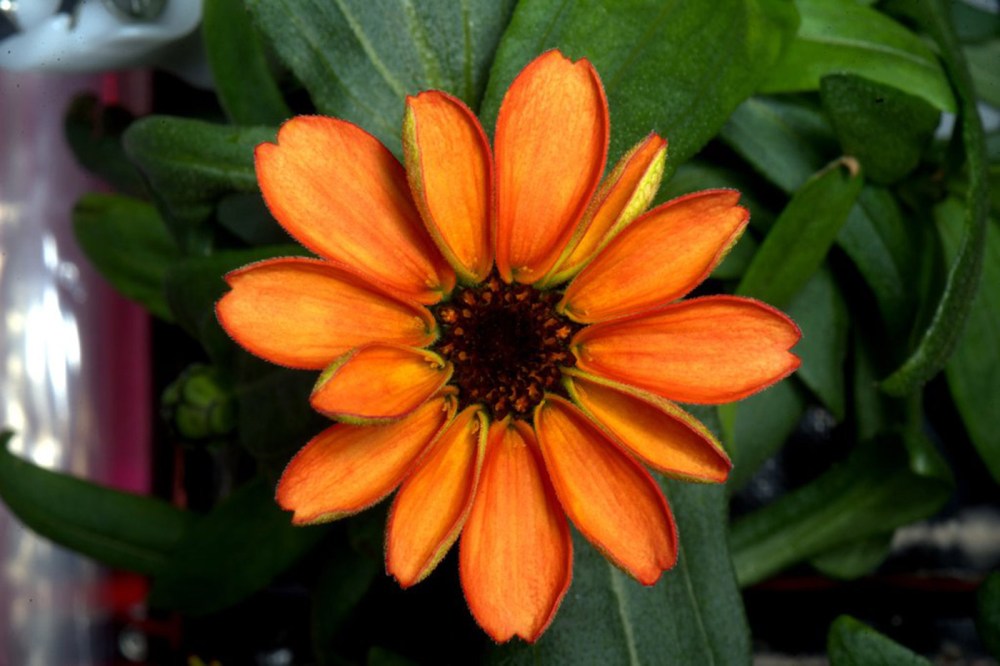
zinnias-success

First flower grown in space. Photo taken by NASA astronaut Scott Kelly

Today, I learned that:

B-R-E-A-K-I-N-G N-E-W-S

According to fresh information from NASA, the astronauts on the International Space Station have successfully grown a flower, zinnia, in zero gravity. This is an amazing feat, makes me think about the movie ‘The Martian’ where Matt Damon managed to grow potatoes on Mars.

… That’s what I learned in school!

Refs.:

1: Astronauts grow their first flower in space

2: How Mold on Space Station Flowers is Helping Us to Get to Mars

+: What did you learn in school today ?

2016-01-18 (Segunda-feira)

Hoje eu aprendi, que:

Mesmo conseguindo se safar nas florestas da Islândia, estando nas rodovias brasileiras também é possível se perder.

E o que você faz se de repentente o celular e GPS não funcionam, não há mapa no carro, etc.? Aí, pode ser útil saber um pouco sobre a nomenclatura das rodovias, o seja, o que significam os códigos? Suscintamente é o seguinte:

As rodovias brasileiras federais são de cinco tipos diferentes, radiais, longitudinais, transversais, diagonais e de ligação, todas com a numeração do tipo BR-ABC.

O dígito A=0 é empregado para 8 rodovias radiais, que partem da capital federal, Brasilia-DF, para os extremos do país, sendo o mais comprido destas BR-020, que vai até Fortaleza, numa extensão de 2.038 km.

O dígito A=1 significa as 14 rodovias longitudinais, que vão do norte ao sul do país. Os dígitos BC são de 01 a 49, quando a rodovia fica no lado leste de Brasília, começando no extremo leste na direção a Brasília. No lado oeste de Brasília, a sequência começa em 51 até chegar em 99 no extremo oeste do país. Exemplos disso são BR-101 que vai de Touros (RN) a Rio Grande (RS), numa distância de 4.551 km, BR-116 de Fortaleza (CE) a Porto Alegre (RS), 4.566 km, BR-153 de Marabá (PA) a Aceguá (RS), medindo 3.566 km e BR-174 de Cáceres (MT) até a fronteira com Venezuela, totalizando 2.798 km.

O dígito A=2 compreende as 20 rodovias transversais, que atravessam o país do leste ao oeste. Para a númeração secundaria, os dígitos BC de 01 a 49 vão do extremo norte até a altura de Brasília, e de 51 a 99 para as rodovias que ficam cada vez mais para o sul, a partir de Brasília. Exemplos deste tipo de rodovias são BR-210 de Macapá (AP) até a fronteira com Colômbia, 2.454 km, BR-230 de Cabedelo (PB) a Benjamin Constant (AM), 4.965 km, BR-251 de Ilhéus (BA) a Cuiabá (MT), 2.418 km, e BR-272 de São Paulo (SP) a Guaíra (PR), extensão 904 km.

O dígito A=3 é utilizado para 30 rodovias diagonais, sendo 14 na direção geral do noroeste ao sudeste com o dígito C par, p.ex. BR-316 de Belém (PA) a Maceió (AL), 2.062 km, e BR-364 de Limeira (SP) até a fronteira com Peru, 4.141 km. As outras 16 rodovias diagonais, na direção geral do nordeste ao sudoeste possuem o dígito C impar, p.ex. BR-349 de Aracajú (SE) a Posse (BA), 1.242 km, e BR-369 de Oliveira (MG) a Cascavel (PR), numa distância de 1.232 km. O dígito B varia de 0 a 4 se a direção geral da rodovia estiver ao norte de um outro diagonal paralelo que atravessa Brasília e de 5 a 9 se estiver ao sul deste diagonal de referência de Brasília.

Finalmente, o dígito A=4 é utilizado para o restante das rodovias federais, chamadas rodovias de ligação. Atualmente, há 77 rodovias deste tipo, que possuem um papel de apoio aos outros tipos de rodovias federais, descritos acima. Exemplos destas rodovias são BR-401 de Boa Vista (RR) até a fronteira com a Guiana, 199 km, BR-407 de Piripri (PI) a Anagé (BA), 1.470 km, e BR-488 da Basílica de Aparecida (SP) à rodovia BR-116, 3 km.

Mais detalhes constam na referência abaixo.

Num outro post futuro vou descrever a nomenclatura das rodovias estaduais no Brasil.

… Por hoje é so!

(This post in Brazilian Portuguese deals with the system for numbering of the Brazilian federal highways.)

Ref.:

1: Nomenclatura das rodovias federais

+: What did you learn in school today ?

2016-01-17 ( Sunnudagur)

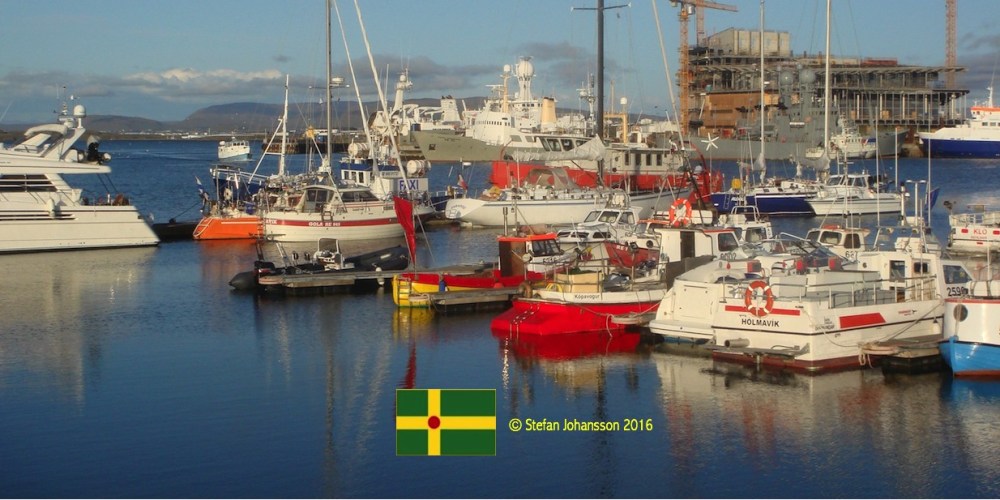
cropped-20090802o.jpg

Reykjavik Harbour, Iceland

Today, I learned that:

It is important to know where you are, so that you can get out if you get lost. For instance, if you would get lost in the forests of Iceland, how would you call for help????

The answer is: Stand up, so that others may see you! There are no forests in Iceland, but there are so many other interesting things that a person may want to see. This barren landscape is full of amazing objects. In another post, I will talk more about the subterranean activities that make Iceland such a different country to visit. (To be entirely correct, there are some forests in Iceland. UN data from 2010 indicate that 0,3 % of the total area of Iceland is covered by forests!)

Did you know that the inhabitants in Reykjavik, the capital where more than 40 % of all Icelanders live, do not have to worry about water supply? The big city water tower, that other cities use to distribute drinking water, instead takes care of supplying hot water to its citizens, and also lodges an exhibition of the early history of Iceland. Some years ago, a team of researchers from USA investigated the purity of the Icelandic water and were puzzled when their precise equipment showed no sign of any contamination, whatsoever. They recalibrated the instruments, but the results were still the same! The Icelandic water is 100 % pure, so using it when brewing beer is of course a breeze. One of the best beers is fittingly called Viking!

20090803o

Maria José enjoys a Viking or two !

The Vikings also brought their Scandinavian language with them when they invaded Iceland in the 9th century AD, and it has changed very little since then. Even the fact that recently there was an American military base on Iceland did not permit the Icelandic language to get heavily contaminated with foreign words. When there is a need for a new word due to some new invention, the Icelanders create new domestic words based upon their language traditions. Examples are sími (telephone), sjonvarp (television), tölva (computer), skriftstofa (office), skyr (yoghurt), etc.

Thanks to Barbara and Camilla for helping me in my research.

… That’s what I learned in school!

Ref.:

+: What did you learn in school today ?

2016-01-16 (Lördag)

Idag har jag åter lärt mig, att:

Ishockey är naturligtvis en mycket populär sport i Sverige och intresset för världens bästa hockeyliga, National Hockey League (NHL) i Nordamerika, ökar ständigt. Nu rapporteras det att det aldrig har varit så många svenskar i NHL.

I årets säsong finns 80 svenska spelare registerade, av totalt 872, alltså drygt 9 % av alla spelare. Störst är hemmanationerna Kanada, 49 %, och USA, 24 %. Sverige har alltså en tredjedel av alla spelare som inte är nordamerikaner. De fjärde och femte största nationerna, Ryssland och Finland, har 4 % var.

Mer information finns i referens 1 nedan.

… Slut för idag, tack för idag!

(This post in Swedish deals with the high percentage of Swedish players in National Hockey League.)

Ref.:

1: Nytt rekord för NHL-svenskar

+: What did you learn in school today ?

2016-01-15 (Fredag)

Idag fick jag mig en påminnelse om:

Att bada i 4-gradigt vatten, i en vak som tillfälligt hålls isfri på en i övrigt istäckt sjö kan av många tyckas vara en aktivitet som de aldrig i livet skulle tänka sig att utföra. Men det är något som vinterbadarna njuter av varje dag under den kallaste årstiden. Jag hörde detta reportage av Niclas Odengård på SR Sjuhärad, som också har hjälpt mig att hitta en del av referenserna längre ned:

http://sverigesradio.se/sida/artikel.aspx?programid=95&artikel=6343269

Kanske något att tänka på istället för att kura ihop sig inomhus? Själv minns jag när vi hade kalas i Chalmers studentkårs sportstuga i Härskogen, den 14 februari 1979, för ett gäng fransoser som liksom vi, utbytesstudenter från CTH på Université de Technologie de Compiègne, var i Göteborg på sportlovet. Efter mat, dryck och bastubad var det dags att visa våra gäster hur man svalkar sig i Sverige på vintern. Medan min franske kompis var nere i vattnet stod jag på bryggan i adamsdräkt, 22 minusgrader och snålblåst och längtade (!) att få avlösa honom i vaken. Och det är faktiskt något som jag minns än idag, när jag skriver detta i 30 plusgrader på andra sidan jordklotet.

… Tack för idag, slut för idag!

(This post in Swedish talks about the health benefits of winter swimming.)

Refs.:

1: http://sverigesradio.se/sida/artikel.aspx?programid=95&artikel=6343269

2: http://fof.se/tidning/2012/10/artikel/kylan-stressar-kroppen-och-det-ar-bra

3: http://www.vardagsfilosoferna.se/2015/03/23/hälsosamma-vinterbad-är-vanebildande-26169633

4: http://www.sciencedirect.com/science/article/pii/S0031938404002616

5: http://www.sciencedirect.com/science/article/pii/S0306987703002706

+: https://www.youtube.com/watch?v=VucczIg98Gw

2016-01-14 (Thursday)

Today, I learned that:

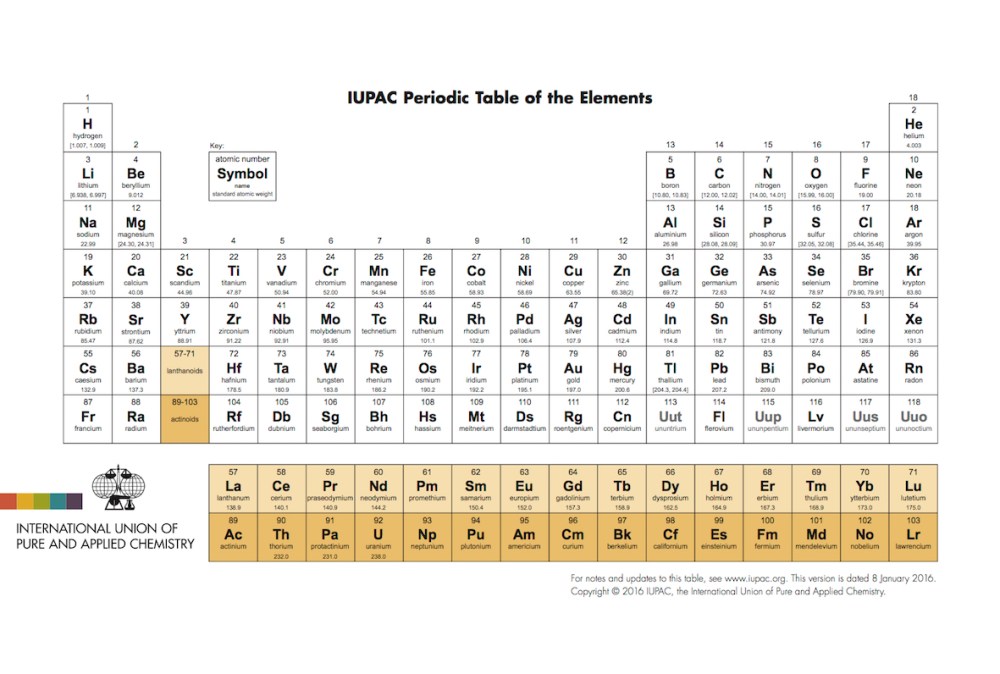
There is something new in the world of chemistry, and although I am not very fond of chemistry, this is really thrilling. IUPAC (The International Union of Pure and Applied Chemistry), announced that four new elements of the periodic table (elements 113, 115, 117, and 118) have been discovered and approved. These elements complete the 7th row of the periodic table of the elements, and the discoverers from Japan, Russia, and the USA will now be invited to suggest permanent names and symbols.

IUPAC_Periodic_Table-8Jan16

The current Periodic Table of the Elements, Copyright © 2016 IUPAC, the International Union of Pure and Applied Chemistry

Also, in the same podcast, The Naked Scientists, where these new elements were discussed, they talked about how the physicists Max von Laue and James Franck, who had won the Nobel Prize in 1914 and 1925, respectively, were able to save their golden medals from falling into Nazi hands during World War II. Their colleague George de Hevesy hid their medals in a bottle in a lab at the Niels Bohr Institute and dissolved them in aqua regia, a concentrated nitrogen hydrochloric acid (‘kungsvatten’ in Swedish). After the war, the gold solution was still there, and then it was transformed back into solid gold and recast to medals by the Nobel authorities in Stockholm. Finally, the scientists received their Nobel medals back.

… That’s what I learned in school!

Refs.:

1: 04:33 – Four new elements discovered

2: Discovery and Assignment of Elements with Atomic Numbers 113, 115, 117 and 118

3: Aqua regia

+: What did you learn in school today ?

2016-01-13 (Onsdag)

Idag har jag åter lärt mig, att:

Vad vi har det bra, om man jämför med alla skitjobb som det finns runt om i världen! Men frågan är om det finns något mycket värre än vad Sveriges Radio berättade om igår i Studio Ett.

Det handlar om arbetare som rensar kloakerna i den indiska staden Ahmedabad. Utan skyddsutrustning dyker de ned i förorenat vatten, fyllt av skräp, avföring, etc.

Lyssna och förundras över arbetsvillkoren:

http://sverigesradio.se/sida/artikel.aspx?programid=1637&artikel=6321283

… Slut för idag, tack för idag!

(This post is entirely in Swedish, with a link to a program by Radio Sweden, in Swedish, which deals with the horrendous job conditions for the workers who clean the sewage pipes in the Indian city of Ahmedabad.)

Ref.:

+: https://www.youtube.com/watch?v=VucczIg98Gw

2016-01-12 (Tuesday)

Today, I learned that:

The common expression “gigabyte” so often used today when talking about a quantity of data is not always a gigabyte, here is the story:

Some time ago, I discovered that there was a new type of USB flash drive (‘pen drive’) in the market, the handy little memory device that lets one move chunks of data from one computer to another. This particular device would be specially suited for transferring data from desktop/laptop computer to a smartphone, and vice-versa. The reason for this is that the drive has two different ports, one with a regular USB-A male connector and the other with a micro-USB AB receptacle. I decided to buy the smallest one, specified at 16 Gbytes of memory.

When it arrived, before even saving any file onto the drive, I investigated if it really could hold 16 Gbytes as specified. Well, it could not! My Mac computer showed that the maximum capacity when using a file format called Extended File Allocation Table (exFAT), which would permit compatibility between OS X, Windows and Android, was 15 549 300 736 bytes, also informed as 15,55 GB by the Mac. In Windows, it was even less, 14,4 GB. So how come this difference, more than 1 GB?

The reason is that Apple uses the decimal definition of gigabyte, where 1 gigabyte (GB) = 1000 x 1000 x 1000 bytes = 1 000 000 000 bytes, and Microsoft uses the binary definition, that states that 1 gigabyte (or more correctly 1 gibibyte – GiB) = 1024 x 1024 x 1024 = 1 073 741 824 bytes.

The recommended international standard, in unison with the International System of Units (SI), is to use only the prefixes kilo, mega, giga, etc. as multiples of 1000, and kibi, mebi, gibi, etc. as multiples of 1024.

The word gibi is also used in Brazil to denote a comics magazine, in Swedish called ‘serietidning’.

… That’s what I learned in school!

Refs.:

1: USB flash drive

2: USB

3: ExFAT

4: Gigabyte

5: Gibi

+: What did you learn in school today ?