2016-05-22 (Sunday)

Today, I learned that:

The Brazilian-Swedish seminar I attended earlier this week, see my post of 2016-05-18 , was in fact the fifth of the same type that SACF (Swedish Academic Collaboration Forum) arranged. Earlier, it had been hosted in Korea, Singapore, China, and Indonesia, all with the aim to promote the exchange of ideas and opinions in academic matters and scientific research. In February, 2017, there is planned another event, where the participating countries of these five seminars will gather in Stockholm, Sweden, for a follow-up.

Today, I will concentrate on the seminar in Brazil and hope to be able to comment on the earlier four on a later occasion. The two days in Brasília were packed with interesting presentations and networking opportunities. And the earlier weeks of commotion in the federal capital could not be seen here, on the contrary. There were many positive and inspiring comments on what happens when Brazilians and Swedes join forces in advancing the frontiers of science.

Basically, there were four kinds of seminars in one:

  • Top level management sessions, where the most prominent representatives from the Brazilian and Swedish universities discussed “Internationalisation and Collaboration in Higher Education”, “Funding for promoting world class research collaboration”, and “Brazil-Sweden: Importance of University & Industry collaboration”.
  • 5 different series of academic sessions, namely “Imaging and Visualization in Life Science”, “Novel Functional Materials and Nanotechnology” (2 parallel sessions due to the number of topics presented),”Inclusive Education: Gender & Ethnicity”, “Sustainable Development: Energy, Environment and Biodiversity”, and “Machine Intelligence and Autonomy” (also 2 parallel sessions due to the number of topics presented).
  • A funding seminar, where funding agencies and universities interchanged ideas and suggestions about various aspects of funding of scientific research.
  • An innovation seminar, where the Swedish innovation agency Vinnova presented programs for funding and gave various examples of successful Swedish-Brazilian projects.

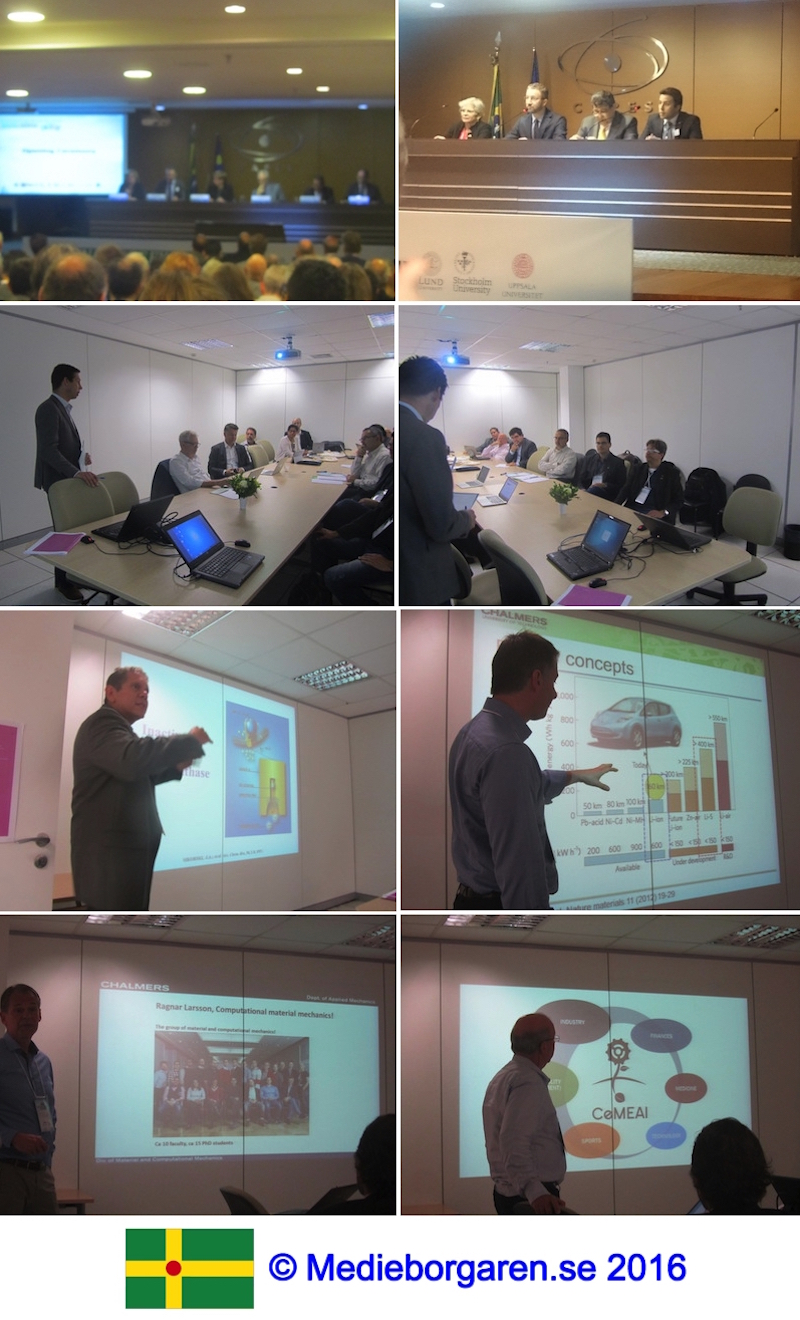
I decided to dedicate my time of the academic sessions to learn more about new materials and nanotechnology, to follow up the knowledge I had acquired through the MOOC about graphene in 2015, see also my post of 2016-02-01. Below are some pictures I took of the event.

I wish to extend my sincere gratitude for inviting me, to the organizers of this extra ordinary seminar with so many brilliant minds gathered in one place, Gustaf Cars (Uppsala University), Helena Balogh (Linköping University), and Åsa Valadi (Chalmers University of Technology)!
CAPES

Update 2016-05-29:

On the web site of CAPES, there is further information, with photos, of the two days of seminar. Please consult references #2 and 3 below.

Finally, I just learned that the mysterious first chord of the Beatles song from 1964,”A hard day’s night”, in fact are three different chords, played by George Harrison, John Lennon and Paul McCartney, joined into one. That is what I call a perfect cooperation project! Reference #1 below, in Portuguese, presents all the facts behind this Magical Mystery Chord, with images and video clips.

… That’s what I learned in school !

Refs.:

1: Um acorde mágico dos Beatles revelado depois de 52 anos de mistério

2: Capes recebe Seminário de Excelência Brasil-Suécia

3: Brasil e Suécia pretendem intensificar cooperação científica entre os dois países

+: What did you learn in school today ?
2016-05-18 (Wednesday)

Today, I learned that:

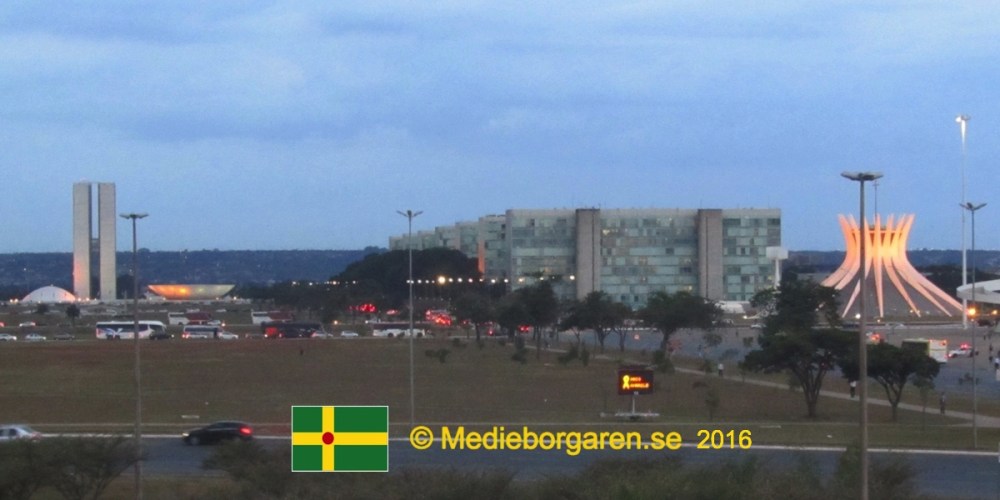
Although two countries are very distant from each other, they can still learn a lot from each other if they cooperate. That is definitely the case of Sweden and Brazil. I was invited by SACF (The Swedish Academic Collaboration Forum) to participate in a scientific seminar of excellence in Brasília, the federal capital of Brazil. It started yesterday with six different topics, held concurrently, and will continue today. I am participating in topic #2, which deals with ´Novel Functional Materials and Nanotechnology´ and will return later this week with a resume of it. See also reference #1 below. The following photo shows some of the famous buildings of Brasília, taken at sundown yesterday.

Planalto2016

Today is the day when we congratulate persons named Erik, since May 18 is his day. I am proud to have a father (in memoriam), a son, and a nephew who all are named Erik, as well as a Norwegian friend called Eirik, the Norwegian variant of the same old Nordic name, as you can see in reference #2 below. And I also would like to include my daughter Karina in the celebration, because she just received a MENÇÃO HONROSA (“HONORARY MENTION”) from her school, Instituto Federal do Paraná. Congratulations to you all!

… That’s what I learned in school !

Refs.:

1: Top Brazilian and Swedish universities join together for the fifth SACF Excellence Seminar

2: Behind the name Erik

2016-05-08 (Sunday)

Today, I learned that:

Exactly 71 years ago, the World War II ended in Europe. And on the 25-year celebrations on 1970-05-08, I was in Berlin for the first time, together with colleagues and teachers in the final month of elementary school.

It was a fascinating journey, with ferry from Trelleborg to Sassnitz, and from there train through East Germany to West Berlin. One day, we took the S-Bahn into East Berlin and transposed the Berlin Wall. Once there, a colleague and I interviewed people on the streets about life in the East! And on the very day of the war end anniversary, there were of course heavy demonstrations about the current state of division of the German peoples. The following day, we also visited the Olympiastadion, where the West German football squad played against Ireland, resulting in a 2-1 win. Although the German team, coached by Helmut Schön, had top players such as Berti Vogts, Jürgen Grabowski, Wolfgang Overath, Gerd Müller, Franz Beckenbauer and Uwe Seeler, the game was a tough fight. Full details can be found in reference # 1 below.

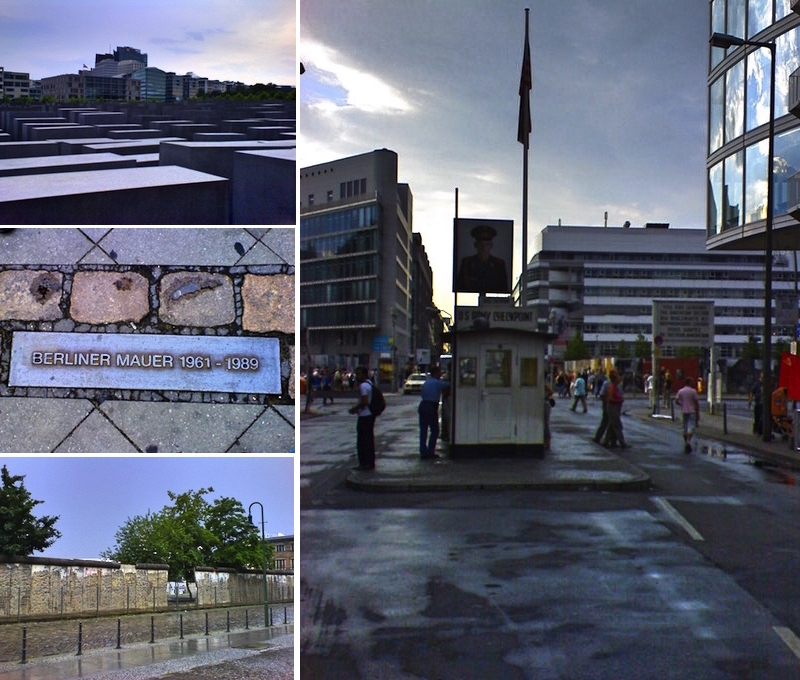
Then it would take 37 years until I returned to Berlin. The Wall was gone, although quite some things reminded me of what had been. I went on a very interesting sightseeing tour, with guide on foot. The whole event was scheduled to take 4 hours, but we had so many interesting questions that it was prolonged for 2 more hours! Today’s header image shows Berlin’s #1 symbol, Brandenburger Tor, and below are some other photos I took that day. The memorial of the holocaust is located close to there, and just beside the place where Hitler had his ultimate bunker. Seeing those stones, to signify all the people exterminated in the concentration camps, made a deep and very distressing impression on me. See also the other references below for more details about the most interesting city, and I dare to say, Europe´s de facto capital, Berlin.

Berlin25

4 photos I took on 2007-06-09. In the left column, from top to bottom: – The holocaust memorial; – A plate showing where the Berlin Wall used to divide the West and the East during more than 28 years; – Part of the original Berlin Wall. In the right column: Checkpoint Charlie, the famous crossing between West and East Berlin.

Finally, although I am not very fond of the American way of life, I must admit there are many interesting, creative people there. The web site CreativeLive is paying a tribute to some of them, through a series of video interviews, during the month of May, called 30 days of Genius. See reference # 6 below with a link to a subscription to the series, free of charge.

… That’s what I learned in school !

Refs.:

1: West German football team defeated Republic of Ireland 2:1, 9 May 1970

2: Brandenburger Tor

3: Holocaust memorial

4: Berlin Wall

5: Checkpoint Charlie

6: 30 days of Genius

+: What did you learn in school today ?

2016-05-07 (Lördag)

Idag lärde jag mig, att:

I tisdags, 2016-05-03, fyllde Wikipedias svenska webbplats 15 år, STORT GRATTIS! Utav alla språkversioner av Wikipedia är faktiskt den svenska den näst största med över tre miljoner artiklar. Men det är inte bara jag som använder Wikipedia för att leta efter bakgrundsmaterial till mina blogginlägg, utan den tjänar också som en viktig webbplats för dem som vill hålla sig uppdaterade över aktuell forskning. Referenserna nummer 1 och 2 nedan kan ge mer intressanta uppgifter om det.

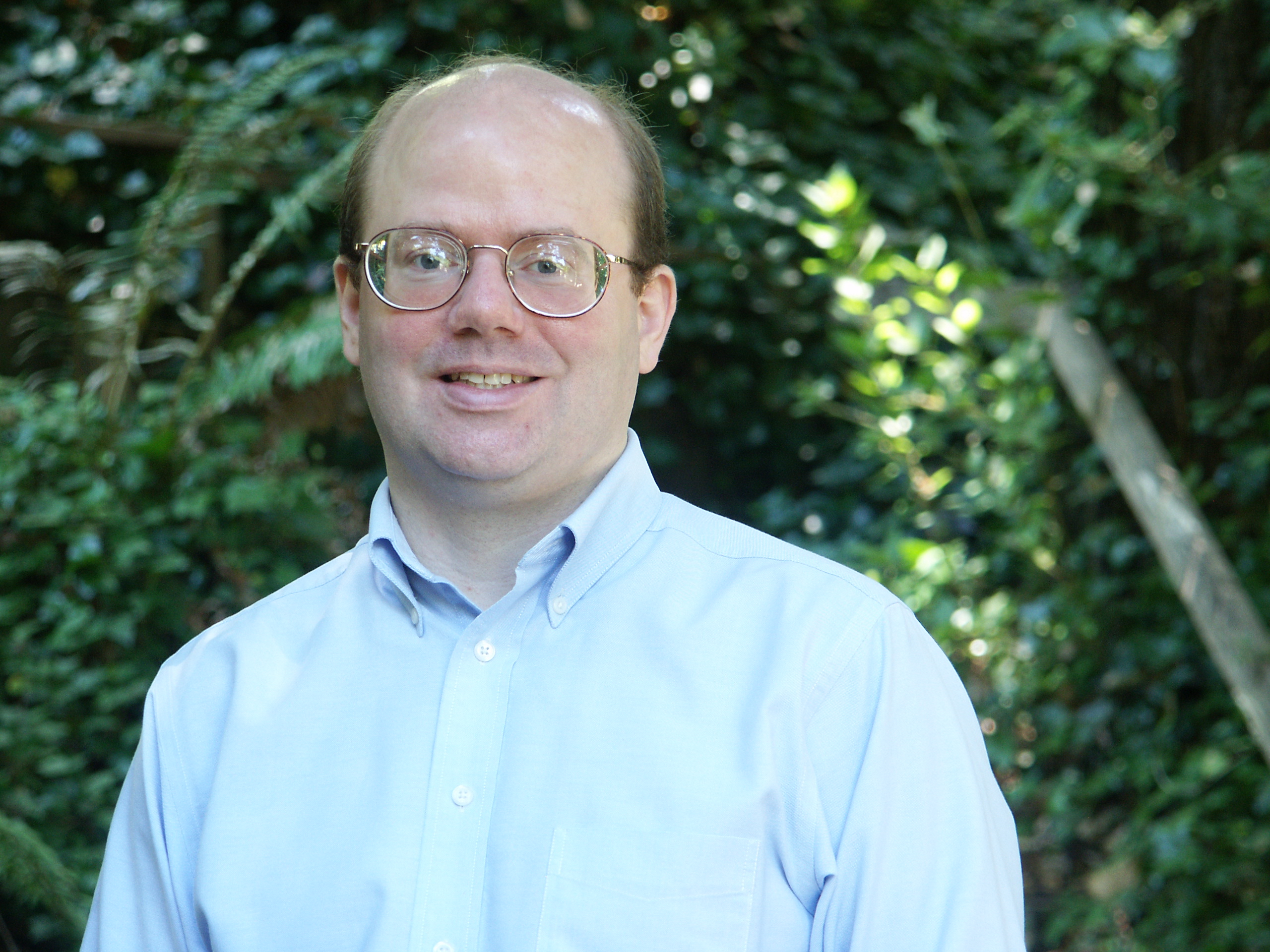
Jimmy Wales & Larry Sanger

Wikipedia grundare, Jimmy Wales (till vänster, foto Lane Hartwell, http://www.fetching.net), och Larry Sanger (till höger, foto http://www.larrysanger.org/lsanger02.jpg)

Till sist skulle jag vilja ge några goda (?) råd till Mona Sahlin och Jan Björklund:

Mona, du har valt fel land att verka i som politiker. Se på Brasilien, här kan underhusets talman bli ertappad med miljoner på schweiziska banker och ändå bara bli avstängd på beslut av Högsta Domstolen. Ingen risk att någon skulle höja ett ögonbryn för några Toblerone på ett statligt kreditkort eller en felaktig inkomstuppgift i ett certifikat!

Jan, varför inte föreslå en mobilregel i svenska skolor lik den brasilianska? Om någon elev ertappas med att använda sin nalle under en lektion, så blir den omhändertagen och endast återlämnad efter det att föräldrarna ger sitt medgivande. Ett fint tillfälle att låta en trilskande son/dotter bli ångerfull för t.ex. en vecka!

… Slut för idag, tack för idag!

Refs.:

1: Wikipedia – svenska forskares förlängda arm

2: Wikipedia på svenska

+: What did you learn in school today ?

2016-04-26 (Tuesday)

Today, I learned that:

Amidst all depressing news about threats of terrorist attacks, the 30-year anniversary of the Chernobyl nuclear accident and its consequences, at least one ray of sunshine found its way to me today.

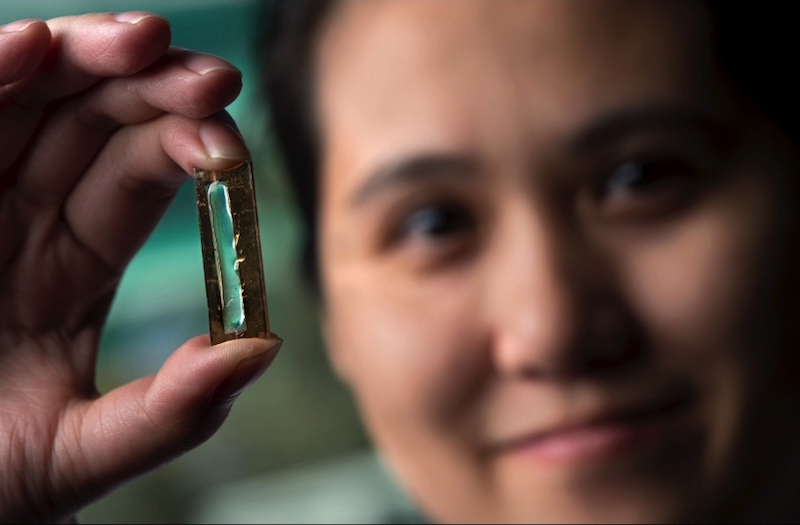
I just learned that researchers at the University of California in Irvine have developed a new kind of battery. In comparison with the ruling lithium ion batteries, which use a liquid electrolyte, the new battery is composed of various strands of nano wires in a gel electrolyte. Preliminary results have shown that it may be possible to recharge this new battery hundreds of thousands of cycles with no or just a small degree of degrading in its charging capacity, as opposed to the lithium ion batteries which normally lose much of their powers already after some thousand cycles. However, there is no word yet of when we might eventually see these nano wire batteries as commercial products.

nanowires

Is this the battery of the future? The researcher Mya Le Thai at the University of California in Irvine (UCI) shows us the promising object we all might crave for in a not too distant future. Photo by Steve Zylius, also from UCI.

References #1 and 2 below are brief articles about the new type of battery, and reference #3 is the scientific paper which was recently published.

But until we see those new batteries in production, we have to make use of what we have to the best of our knowledge. And then it can be good to verify what Android Authority wrote in their article about 6 common battery myths, reference #4 below. Read it and take lessons from it!

… That’s what I learned in school !

Refs.:

1: New Nanowire Batteries Can Be Charged More Than 100,000 Times

2: Accidental discovery could help batteries last years longer

3: 100k Cycles and Beyond: Extraordinary Cycle Stability for MnO2 Nanowires Imparted by a Gel Electrolyte

4: 6 common battery myths you probably believe

+: What did you learn in school today ?
2016-04-23 (Saturday)

Today, I learned that:

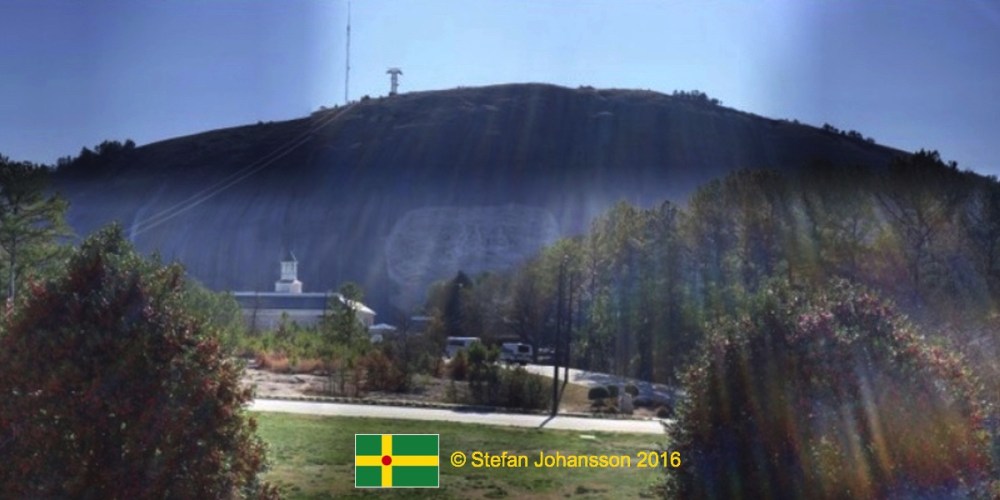
The photo below is one I took on 2009-01-16 of the Stone Mountain, in the Metropolitan area of Atlanta, Georgia, USA. The original photo, a huge gigapan photo with a file size of 110 MB, can be found in reference #1 below. The built-in photo browser will permit that you zoom in on interesting parts of the photo, e.g. the carvings in the stone in the center of this photo. Reference #2 below contains interesting information about Stone Mountain.

SM+

Photo I took on 2009-01-16 of the Stone Mountain, in the Metropolitan area of Atlanta, Georgia, USA. The original photo, a gigapan photo of 110 MB, can be found on http://www.gigapan.com/gigapans/15165 . The built-in photo browser will permit that you zoom in on interesting parts of the photo, e.g. the carvings in the stone in the center of this photo.

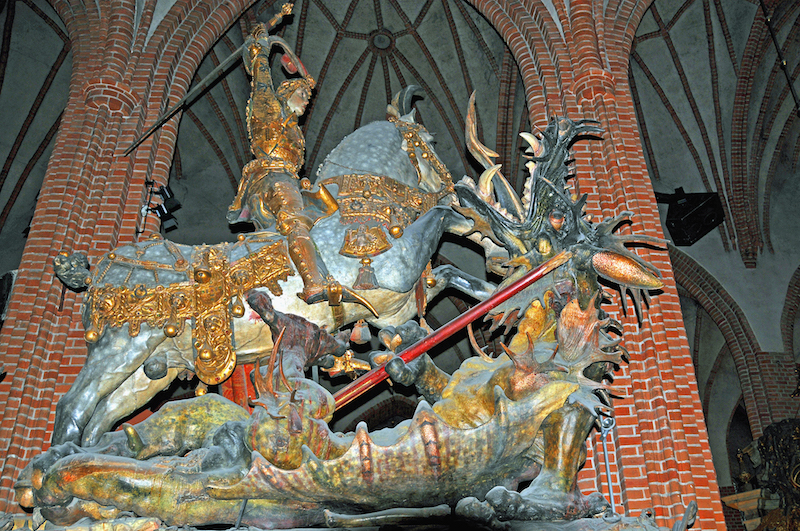
This is my way of paying a tribute to the saint which is celebrated today and whose name I am also proud of bearing. I am of course talking about Saint George. According to the legend, he was a Roman soldier who died on 304-04-23. His big contribution to history was as a martyr who battled successfully with a dragon. References #3 and 4 below give more information.

SGod

The famous sculpture of Saint George battling with the dragon, from Storkyrkan in Stockholm, Sweden

That Saint George is still remembered today, can be seen in the many countries, states, cities, etc. that incorporate his name, such as the republic of Georgia, ex-USSR; the US state of Georgia, etc. The red cross in the English and British flags is called Saint George’s cross. Furthermore, it is still a popular name which many parents give to their new-born baby boy, as can be seen below:

English: George; Deutsch: Georg, Jürgen; Français: Georges; Italiano: Giorgio, Español / Português: Jorge; Svenska: Georg, Göran, Jörgen; Suomalainen: Yrjö; Pусский (Russian): Юрий (Yuri); Polski: Jerzy; etc., and of course their female correspondences.

… That’s what I learned in school !

Refs.:

1: View from Stone Mountain Inn

2: Stone Mountain

3: Saint George’s Day

4: Saint George

+: What did you learn in school today ?
2016-04-21 (Thursday)

Today, I learned that:

What do you if you live far from the city, it is in the middle of the night, the only jar of baby food fell to the floor and got crushed, the only grocery store is of course closed, but your baby is still crying because s/he is hungry?

The Icelander Robert Ilijason, who lives in a village called Viken, in the county of Skåne in the South of Sweden, met with exactly that situation. His solution was to set up a new type of convenience store, a totally unmanned store, open 24/7. The registered customers download an app to their smartphone, which gives them access to entering the store anytime. They pick up a product,  use their phone to scan its label and register the purchase. Once a month, they receive an invoice to pay. And the store owner cannot complain, so far nothing has disappeared from his shelves uncounted. Video monitoring guarantees that fact.

The store has created a lot of interest from all over the world, quite understandably so. Reference #1 below, in Swedish, from Radio Sweden, interviews the owner and gives more details. An article in English can also be found in reference #2 below.

autostore

Robert Ilijason in his unmanned convenience store. Photo by Linnea Edin/Sveriges Radio

Finally, my around-the-globe-trip is close to coming to an end. After the 37-hour day before, it was good to lay over in Montreal. And even though the weather was rainy, I did not mind, because as you know, Montreal has a famous huge underground city with shops and food places. Nearby is also the McCord museum, which showed handicraft and traditional Canadian interests. See also references # 3 and 4, as well as the photos, below.

20AD

Photos I took in Montreal on 2005-04-20. In the upper row are external and internal views of the underground city, and in the lower row are shown two favorite Canadian pastimes, ice hockey and hunting, from the McCord museum.

… That’s what I learned in school !

Refs.:

1: Sveriges första obemannade matbutik

2: Sweden opens unmanned 24-hour convenience store

3: Underground City, Montreal

4: McCord Museum

+: What did you learn in school today ?

2016-04-18 (Monday)

Today, I learned that:

A few days ago, I heard an interesting story from the SR local radio station in Borås, named SR Sjuhärad. SP (The Swedish Technical Research Institute) in Borås, together with the University of Göteborg (Gothenburg) has developed a new type of paint, to be used in the hull of boats and maintain them clean from the plants that tend to propagate there. If the boat owner can keep the hull clean from Balanidae, then s/he can reduce friction during travel and save up to 20 % of fuel.

The traditional paint used today to keep those plants away contains copper, which contaminates the water. The revolutionary paint does not contain copper, but instead a chemical compound named Abamectin and is produced by bacteriae. The difference between the old and the new paint is that the latter one permits the plants to attach themselves to the hull and once there they are poisoned by the paint, die and eventually fall off the hull.

The new paint should be available commercially by a German company within three years. See references #1, 2 and 3 below for further details.

One week ago I talked about the technology podcast This Week in Tech, which then discussed a US draft for law that demanded that producers of any equipment or software containing encryption technology should also provide non-encrypted access, if any authority so requested. Yesterday’s program have further information in this polemical subject. And also, this program celebrates 11 years of regular, weekly podcasts by Leo Laporte and his team. Congratulations to all of you!

And speaking of 11 years ago, on 2005-04-18 I had a pleasant field day with my sister-in-law Sônia to the region around Japan’s sacred Mount Fuji, which we ended with a purchasing spree in the electronic district Akihabara downtown Tokyo. Below are some photos I took that day.

18AD

Out and about in the Tokyo vicinity, photos taken on 2005-04-18

… That’s what I learned in school !

Refs.:

1: SP i Borås bakom framtidens båtfärg

2: Havstulpaner

3: Balanidae

4: This Week in Tech 558 Rattlesnake in a Piñata

+: What did you learn in school today ?
2016-04-17 (Sunday)

Today, I learned that:

In the Guizhou province in the Southwest of China, an impressive construction is underway. It is the Five hundred meter Aperture Spherical Telescope (FAST). This exact location was chosen because it is very well shielded from magnetic disruptions, the ground is both stable enough to hold the structure and porous enough to drain away water and protect the telescope.

When concluded later on in 2016, FAST will be the largest single-aperture radio telescope in the world, with a 500 meter diameter, 60 % larger than the current largest one, the Arecibo Observatory in Puerto Rico. It will be comprised of 4,500 triangular panels, which when combined with an active adjustable reflector, will enable scientists to observe a larger area of space in greater fidelity than any telescope before it. See also reference #1 below.

ST

The Five hundred meter Aperture Spherical Telescope, currently under construction in Guizhou province, China. Photo credit: ChinaFotoPress / Getty Images

And today I also learned that within the next few months, Sweden will exhibit a topological map with a resolution 25 times greater than the current one. The older aerial photos will give way to a modern method where an airplane flying on an altitude of 2 km beams a laser over a 1,5 km wide area, thus permitting a ground resolution of 2 m! Not bad, considering that Sweden has a total area of 450 000 km2. The new map has already revealed surprising archeological facts about the Swedish landscape that were unknown before. Reference #2 (in Swedish) gives more details.

And finally, why is everybody talking about “April in Paris”? I say “April in Tokyo”, with cherry trees in blossom like the one in the header photo. I had left Beijing a couple of hours earlier, but before that I had one of the biggest surprises ever in my life. While waiting for my flight to be called out, I visited the VIP lounge at the Beijing airport to check e-mails, and there I met a good old friend from the same small village where we both were born. He had been in China together with his wife to inaugurate a new production plant. Now I perfectly understand the meaning of the expression “It is a small world we live in!”

17AD

Arriving in Tokyo on Sunday afternoon 2005-04-17, my sister-in-law and her family brought me to see some interesting sights and take these photos. The ones in the top row are from the lush gardens of Edo Castle, and the ones in the lower row are also from downtown Tokyo, giving both a birds-eye view of the center and a street view of the Kabuki-za in the Ginza district. For more information, see references #3, 4 and 5 below.

… That’s what I learned in school !

Refs.:

1: An otherworldly visitor nests in rural China

2: Ny höjdmodell över Sverige

3: Edo Castle

4: Ginza

5: Kabuki-za

+: What did you learn in school today ?