2016-04-10 (Sunday)

Today, I learned that:

Every Sunday morning, Radio Sweden’s domestic channel P1 transmits a 2-hour news program named “Godmorgon, världen!”, which means ‘Good morning, world!’. It is supposed to be a radio alternative to the Sunday newspaper, and as such discusses hot issues from the preceding week, mixed with satire and chronicles. The big political discussion was an analysis which impact the Panama papers may have on the world in the short term. But what I remember most from today’s program was a chronicle by the Swedish journalist and author Göran Rosenberg, who declared his worries about what is happening to the majestic ash tree, formal name fraxinus excelsior, that he sees is slowly being deprived of its beauty, due to plagues.

Here is a translation into English of an excerpt from the chronicle: “The ash tree is not only a big tree in the cultural landscape, it is also a big tree in the cultural history. Yggdrasil, the world tree, which according to Nordic mythology carried the cosmos in its branches and from which Oden [the main god] created the first human being, was an ash tree. Only that fact alone tells us how long the ash tree has been together with us.”

The complete text, in Swedish, can be found in reference #1 below. The Wikipedia article in reference #2 below give more facts about fraxinus excelsior.

AskarVinter

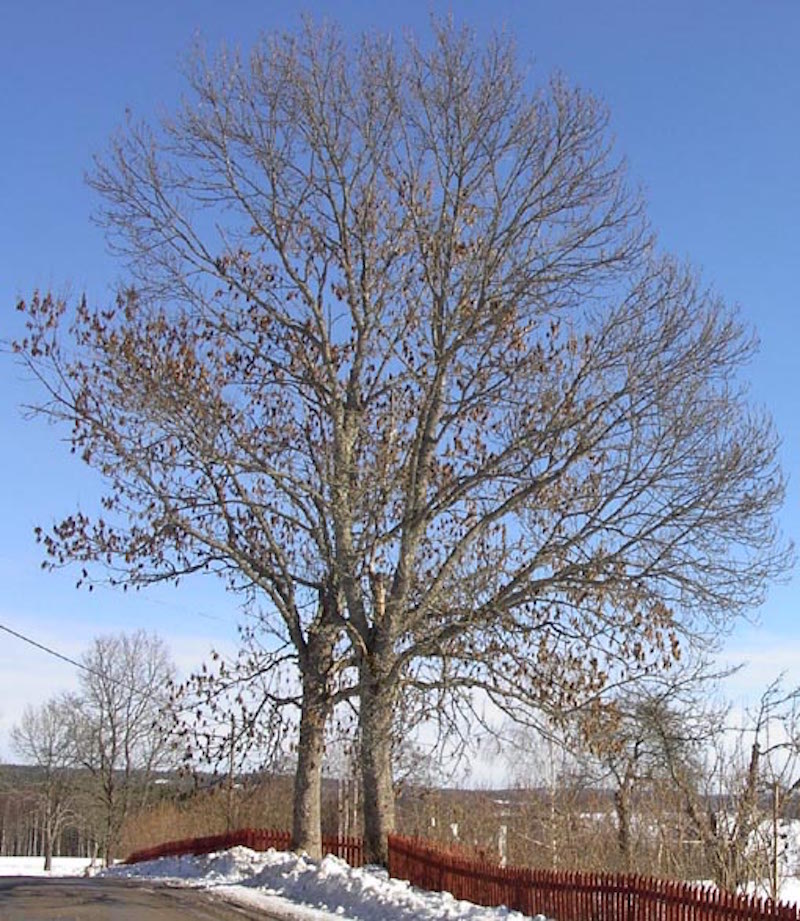
Fraxinus excelsior in winter in the Swedish village Gammelbo. Male in front, female behind. Please observe that the female tree is smaller than its male companion, in spite of having been planted at the same time.

Exactly 11 years ago, I had the pleasure of circling the globe. My company, which previously had dealt with electronic production machines from the Western hemisphere, had decided to find new partners in Asia. So, therefore, I left São Paulo for a quick visit to my father in Sweden, before I boarded the SAS Airbus 343 in Copenhagen on 2005-04-08. The trip from Copenhagen to Pudong airport in Shanghai, China took some 10 hours, the business class cabin was wide and comfortable. In the chair to the the right was a German man, who was going for business in the chemical industry in Shanghai. But what I remember most from this leg was the in-flight WiFi provided aboard. 1,5 months before, I had joined Skype, and now I could call friends and family while looking down on the Siberian tundra, an interesting sensation.

When we arrived at immigration, for which I had a obtained a fresh visa in my passport and received a shot against yellow fever, they did not even look at those documents. No guide of mine was to be found, so the German man’s business contact dropped me off at my hotel hotel downtown Shanghai. After a relaxing nap, I went out in the afternoon and walked around the streets to feel the city. Since Saturday night was approaching, the streets got filled with people enjoying their weekend. See below some photos I took on Saturday, tomorrow I will show some more from the following day.

09AD

Out and about in Shanghai, photos taken on 2005-04-09.

… That’s what I learned in school !

Refs.:

1: Det döende askträdet – ett järtecken i tiden

2: Fraxinus excelsior

+: What did you learn in school today ?

2016-04-09 (Saturday)

Today, I learned that:

Today marks exactly three months since I wrote my first blog post. It has been a very interesting period, I have tried to vary the subjects and also the languages used. And I must sincerely thank all my faithful readers for comments and suggestions.

Although my interests lie mainly in technology, I have found that the subject that attracts everyone is food. So today, I will give you two new pieces of information relative to food, which I believe that most people did not know.

It all started yesterday night, when I received the latest edition of the podcast KCRW Good food from Los Angeles, always so fascinating with the always so enthusiastic Evan Kleiman. One of the topics in this program was about childrens’ food habits. “The Flavor Window” is the period between four and sevens month of ages, when human beings are more receptive to new flavors than they will ever be, so if there is something in particular you believe your child should learn to like, that is the time! (In a similar way, if you want a person to learn a foreign language and pronounce it well, it must start before the child is in the five to six-year age, because until then the vocal chords are still flexible enough to learn how to pronounce almost any sound.) “Good food” can be heard through the link in reference #1 below.

A popular sauce in adults food is the Italian pesto sauce. Today’s edition of From our own correspondents, BBC’s traditional program with chronics from abroad, among our things, talks about how to make an original pesto sauce, and who knows, maybe participate in the World Championships in pesto sauce making, held right now in Genova. More details in reference #2 below.

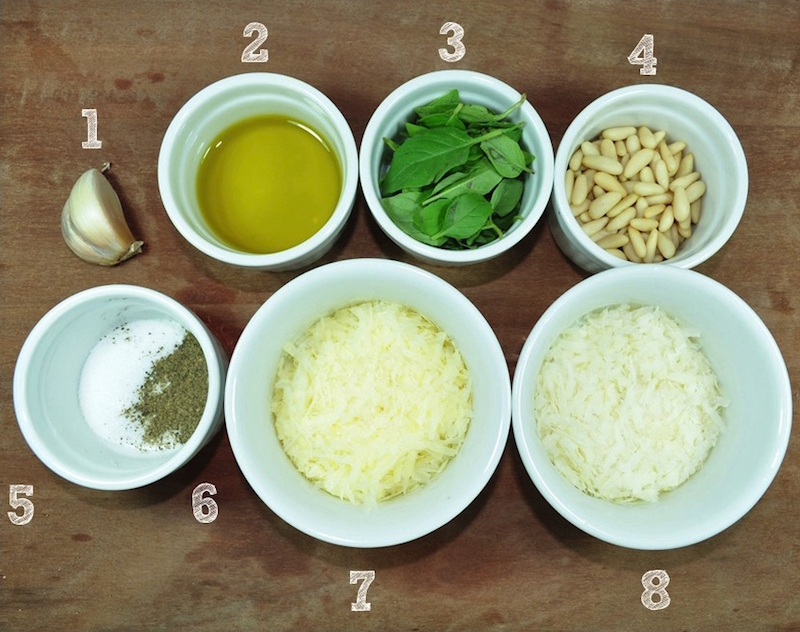
pesto

One suggestion about ingredients to make a pesto genovese sauce. Which are the ingredients? Look in http://2nuts4spices.com/receita-de-pesto-genovese/

… That’s what I learned in school !

Refs.:

1: Food & Family

2: The Babylon Brigade

+: What did you learn in school today ?

2016-04-08 (Friday)

Today, I learned that:

Music has fascinated people in all times. I remember that when I was in elementary school, we practiced to sing the traditional songs for the major holidays as a choir. And although I have never had any good voice to sing, I thought that the experience of singing in a choir was quite thrilling.

Yesterday, I heard yet another podcast from Scientific American, which informed that a cancer center in the U.K. found that patients had significantly lower levels of the stress hormone cortisol after harmonizing for an hour. For more information, consult reference #1 below.

And then I also remembered news about how people singing in a choir entered into a state of synchronization even of their heartbeats. See more about that study from 2013 in references #2 and 3 below.

From there to the fantastic Swedish film “Så som i himmelen”, in English ‘As it is in heaven’, which competed for an Oscar in 2004, the connection was obvious. If you have seen it, you do not know what you are missing! See also reference #4 below.

And yet another film on the same theme is from 2012, ‘Song for Marion’, in which a cranky old man finally joins his dying wife in the joys of singing (reference #5 below).

körsång

Posters from today’s featured films about the excitement of choir singing

… That’s what I learned in school !

Refs.:
1: Choir Practice Could Lower Stress in Cancer Patients

2: Choir singers ‘synchronise their heartbeats’

3: Music structure determines heart rate variability of singers

4: As it is in heaven

5: Song for Marion

+: What did you learn in school today ?

2016-04-07 (Thursday)

Today, I learned that:

The news we received earlier this week that the digital communications application WhatsApp has finally received end-to-end encryption of all messages sent is definitely a welcomed one. That way, one can start to use it also in areas where we would not dare using it before. But do not think that now you can relax your own security measures. Reference #1 gives a good explanation about the whole situation now.

WAduo

The co-founders of WhatsApp, Brian Acton and Jan Koum, in the company HQ in Mountain View, CA, USA, in May 2013, the year before they were bought by Facebook for US$ 19 billion. Photo by Peter da Silva / The New York Times

But did you ever wonder how a company can produce an application used by one billion users and suffer from low indices of downtime? Which is the underlying structure, e.g. which programming language was used to permit the creation of a such a largely scalable system and permit it to be used in real time? The answer is that the creators of WhatsApp got inspired by Erlang, a programming language originally created in the 1990’s by the Ericsson engineer Joe Armstrong to be used as a base for the data switching version of their flagship central office AXE system, named AXD 301. In 1998, Erlang was released as an Open Project. Reference #2 below can fill in all the blanks in that story.

… That’s what I learned in school !

Refs.:

1: WhatsApp Encryption A Good Start, But Far From a Security Cure-all

2: Inside Erlang, The Rare Programming Language Behind WhatsApp’s Success

+: What did you learn in school today ?

2016-04-06 (Onsdag)

Idag lärde jag mig, att:

Har man tillräckligt med pengar så gör man vad man vill. Det har blivit uppenbart när Panamadokumenten nu avslöjas. I morse redogjorde SRs utrikeskorrespondent Staffan Sonning för hur det fungerar att trolla bort skatt på de surt förvärvade pengarna, lyssna på krönikan i referens nummer 1 nedan.

Men allt är inte bara elände i världen. Häromdagen fick jag ännu ett nummer av Chalmers magasin i min brevlåda. Förutom de som alltid interessanta artiklarna om vad forskarna har kommit på nu, så var det två notiser på sidorna 4 och 5 som drog till sig mitt intresse:

För fjärde året i rad toppar Chalmers TNS Sifos anseendemätning över svenska universitet, med betyget 89 på den 100-gradiga skalan, vilket uttyds som “utomordentligt anseende”.

Ansökningar från internationella studenter att börja höstterminen 2016 på Chalmers är rekordstort, 10 822 ansökningar, en ökning med 63 % i förhållande till fjolåret. Det totala antalet ansökningar från utlandet till alla högre utbildningar i Sverige ökade samtidigt med 46 %, så även här stärker Chalmers sin position i Sverige.

Läs hela utgåvan i referens nummer 2 nedan.

… Tack för idag, slut för idag!

(This post in Swedish deals with how easy it is to vanish with your money, and also about how my alma mater, Chalmers, is strengthening its position, both in Sweden and abroad.)

Refs.:

1: Staffan Sonning: Om Panamadokumenten

2: Chalmers magasin nr. 1 2016

+: What did you learn in school today ?

2016-04-05 (Tuesday)

Today, I learned that:

In a world with so much violence, crimes and frauds, one could expect that at least sport competitions would give us some time to recover our senses and enjoy them.

But unfortunately, there is so much mischief going on also in sports, that it further adds on to all the other stress items we have to endure.

This morning, I read in Folha de S. Paulo, see reference #1 below, that the government of the State of São Paulo, for safety reasons, will not permit that the supporters of the away team in the matches among the teams from the capital, the so-called “classical matches”, be present in the stadium. The drop that made the bottle flow over was the violence last Sunday, in connection with the match between Palmeiras and Corinthians. A person waiting for his bus home at a bus stop was shot and died. He had nothing to do with the fighting supporters, just happened to be “at the wrong place at the wrong time”.

In Sweden, the premium football league, named “Allsvenskan” started the 2016 season last Sunday. The public attendence was good, even higher than the icehockey games of Swedish Hockey League, but there is one thing that I find most distressing in relation to the so-called “supporters” who find more pleasure in lighting artifical fires, “Bengal fires” on the grandstands, instead of concentrating themselves on the game. How about arranging separate competitions between Bengal supporters instead, who can create the finest, multi-coloured, smoky fires, so that real football fans can watch their game without the incendiary disturbance? If you are literate in Swedish, listen also to the interview in reference # 2, where the police give their negative opinion about this practice.

bengal

Supporters from IFK Göteborg “enjoying” their Bengal fires, in an earlier game against IF Elfsborg. Photo by Björn Larsson Rosvall / TT

… That’s what I learned in school !

Refs.:
1: Governo impõe torcida única para clássicos em São Paulo

2: Polisen ser ingen lösning på bengalerna

+: What did you learn in school today ?

2016-04-04 (Monday)

Today, I learned that:

If you like salt in your food but know that you have to take very much care in order to not overdose the salt contents, since too much sodium will raise your blood pressure, could there be a different way of feeling the same food sensation without putting your life in danger?

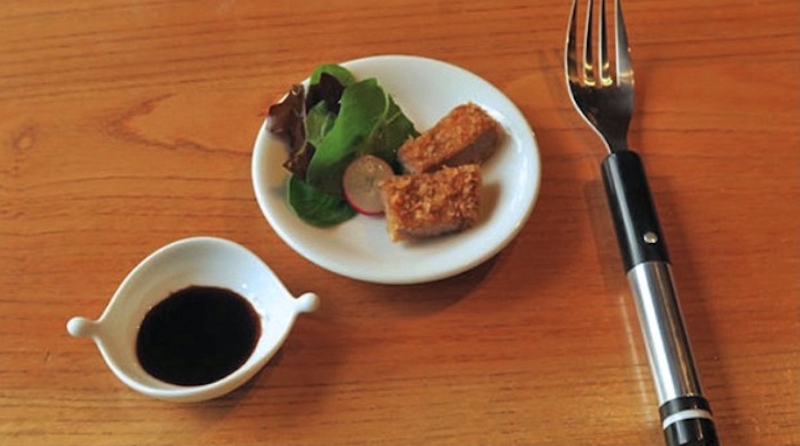
Researchers at the University of Tokyo’s Rekimoto Lab have come up with an interesting alternative, sort of best of both worlds. They have built a prototype of an electric fork, which uses electrical stimulation to simulate the taste of salty or sour ingredients.

The battery-powered fork features a conductive handle that completes a circuit when the tines make contact with a diner’s tongue, electrically stimulating their taste buds. It has has adjustable levels of stimulation, to adapt to individual tastes. However, before thinking about making it available to the public, they have to overcome a problem, because if pushed too far, the fork can produce an unpleasant metallic taste in the mouth.

E-Fork

Bon (and healthy) appétit !

… That’s what I learned in school !

Refs.:

1: This Electric Fork Simulates a Salty Flavour By Shocking Your Tongue

+: What did you learn in school today ?

2016-04-03 (Söndag)

Idag lärde jag mig, att:

Vår värld är verkligen varierad, även om det finns likheter mellan Norr och Syd. Till exempel är det som så att fler och fler politiker av olika färg och nationaliteter börjar ertappas med att först ta vara på sig själva och skicka “sina” pengar till något skatteparadis.

Så har det varit länge i Brasilien, även om det som nu håller på att avslöjas överstiger allt som vi har hört talas om tidigare. I dagens God morgon världen i SR P1 rapporterade SRs korrespondent i Latinamerika, Lotten Collin, om en brasiliansk satirsajt som verkligen har lyckats fånga situationen på ett kusligt sätt. Lyssna på reportaget i referens nummer 1 nedan.

Och i samma program fanns det också ett intressant inslag om hur man använder hundar i Kambodja för att tillaga deliciösa maträtter. Reporter där var Alex Kronholm. Hör inslaget i referens nummer 2 nedan.

BVI

(Skatte)Paradiset Brittiska Jungfruöarna. Foto AP

Så slutligen i Ekot kvart i sex fanns det också ett inslag från Island, där man har upptäckt att statsministerns fru föredrar att placera pengar på Brittiska Jungfruöarna. Reporter ännu en gång, den välbereste Alex Kronholm! Hör inslaget i referens nummer 3 nedan.

… Tack för idag, slut för idag!

(Today’s post deals with three different reports from around the world, all in Swedish, namely from Brazil, Cambodia and Iceland.)

Refs.:

1: Politisk satir i krisens Brasilien

2: Stulna hundar på matbordet i Kambodja

3: Islands regering skakas av en skatteskandal

+: What did you learn in school today ?

2016-04-02 (Saturday)

Today, I learned that:

Last night, I took my son and his girl friend to an outdoor consert with Skank, one of Brazil’s leading rock band for a couple of decades, which you can see in full action in the photo below. The surprising venue was Arena Brasil, located in the outskirts of Paraná’s leading textile city, Cianorte. The evening was warm and pleasant. Skank presented a mixed program spanning from some of their all-time hits until the most recent tunes. The public interacted well with the band and sang together the lyrics of the well-known songs. And the whole arena exploded when Skank once again paid a tribute to the Brazilian pastime, football. Listen to “É Uma Partida De Futebol” (It is a Football game) in reference #1 below.

Skank

Show by Skank in Cianorte, PR, Brazil on 2016-04-01

Yesterday’s event came as a relaxing break from the distressing reality of the Brazilian everyday life. However, the rotten economy, the political scandals, the official corruption, etc., are still here. Radio Sweden’s Saturday program about Economics discussed all this in a way accessible to all its listeners. Listen to the program in reference #2 below (unfortunately only in Swedish) and stay on top of the current situation here.

… That’s what I learned in school !

Refs.:

1: É Uma Partida De Futebol

2: Brasiliens ekonomiska kris

+: What did you learn in school today ?

2016-04-01 (Fredag)

Idag lärde jag mig, att:

Det är bäst att vara förvarnad för en lavin av aprilskämt, för det verkar som om kvantiteten ökar för varje år som går. Exempel på dagens skämt kan du se i referens nummer 1 nedan.

Men kvantitet är nödvändigtvis inte kvalitet, kanske det var bättre förr? Sveriges Radio sände igår ett minnesprogram om se- och hörvärda aprilskämt från anno dazumal. Naturligtvis satt TV-programmet från 1962, när Kjell Stensson fick hela svenska folket att beklä sina svartvita TV-mottagare med nylonstrumpor i hopp om att få se lite färg, i högsätet, men något som gladde mig särskilt mycket var när min hemort Herrljunga år 2014 bestämt sig för att bli helt emanciperat och byta namn till Henljunga. Missa inte programmet i referens nummer 2 nedan.

1962&2014

Aprilskämt från 1962 och 2014

Men varifrån kommer då aprilskämtet? Herman Lindqvist kunde berätta om det i ett frågeprogram för knappt två år sedan, se referens nummer 3 nedan.

… Slut för idag, tack för idag!

(The text above in Swedish is all about April Fool’s Day, in the past and the present.)

Refs.:

1: 2016 års bästa aprilskämt

2: Aprilskämt vi kanske glömt

3: Bästa minnet 2014-05-10

+: What did you learn in school today ?