304’2025 (2025-10-31) – Friday

Today, I learned about:

The month of October, 2025, was the month when I got to learn more about the UAV, unmanned aerial vehicle. What, you say, is that? It is the formal name for what colloquially is named a drone. Then most of you at least know what I am talking about.

I signed up for a course to learn more about drones in São Carlos, state of São Paulo, Brazil. São Carlos is a great university city, with two well known public universities, UFSCar (Federal University of São Carlos) and USP (State University of São Paulo), besides other private ones. It is said to be the city in Brazil that has the highest rate of academic doctors per capita. More about São Carlos can be found in reference #1 below.

But of course there are also other schools beyond the universities. One of them is a federal technical school called IFSP São Carlos (Federal Institute in the state of São Paulo) and the city also has an educational foundation called FESC. IFSP and FESC have partnered up to offer a course named “Drones in action”, where 10 intensive classes of 2 to 3 hours each teach everything a layman needs to know about projecting, developing and deploying a drone, including not only technical details, but also legal regulations and security aspects. Right now, we are exactly in the middle of this course and I must say that it really has broadened my mind immensely. Here is an illustration from the course material:
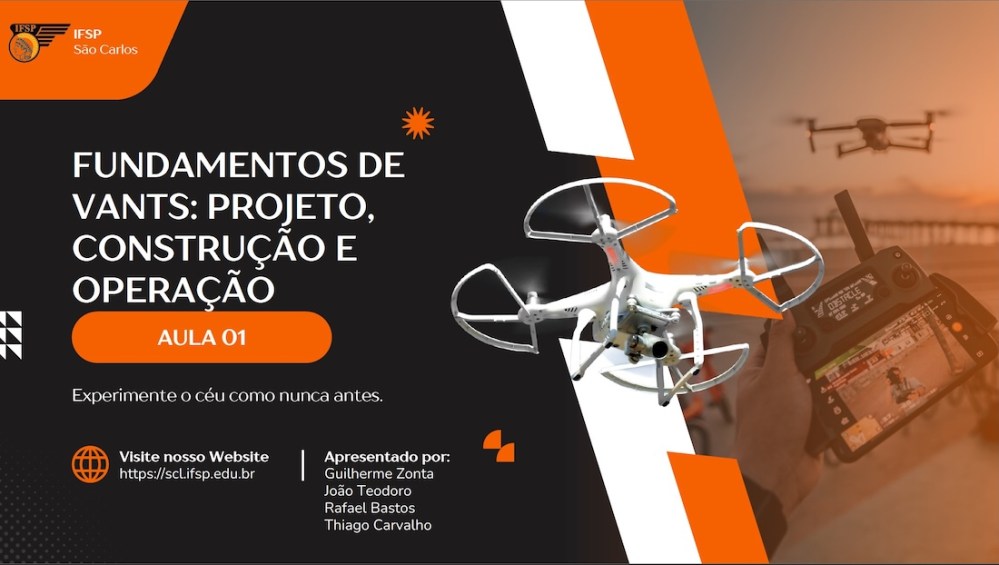
This is the title page of the first class in the series about Drones in action: project, development and deployment. The course is presented by four enthusiastic persons (Guilherme Zonta, João Teodoro, Rafael Bastos, and Thiago Carvalho) from Instituto Federal de São Paulo in São Carlos, and is coordinated by Rogéria Kapp from Fundação Educacional São Carlos.

I got interested about finding out more on the subject and was lucky to retrieve an article from Nature in 2015, where the researches discuss how insects can fly and inspire developers of drones in their quest for light-weight, yet fast and powerful drones. I urge you to read the article which also gives very basic facts about why objects can fly. See reference #2 below.

Update 348’2025 (2025-12-14)

On 338’2025 (2025-12-04) was held the last class in the series Drones in action: project, development and deployment, with practical experience on how to navigate a drone. Today, I also obtained an e-book presenting a summary of the course, you can find it in reference #3, below.

And since I had participated in all activitities from the start, I also obtained a certificate for that, see the following photo:
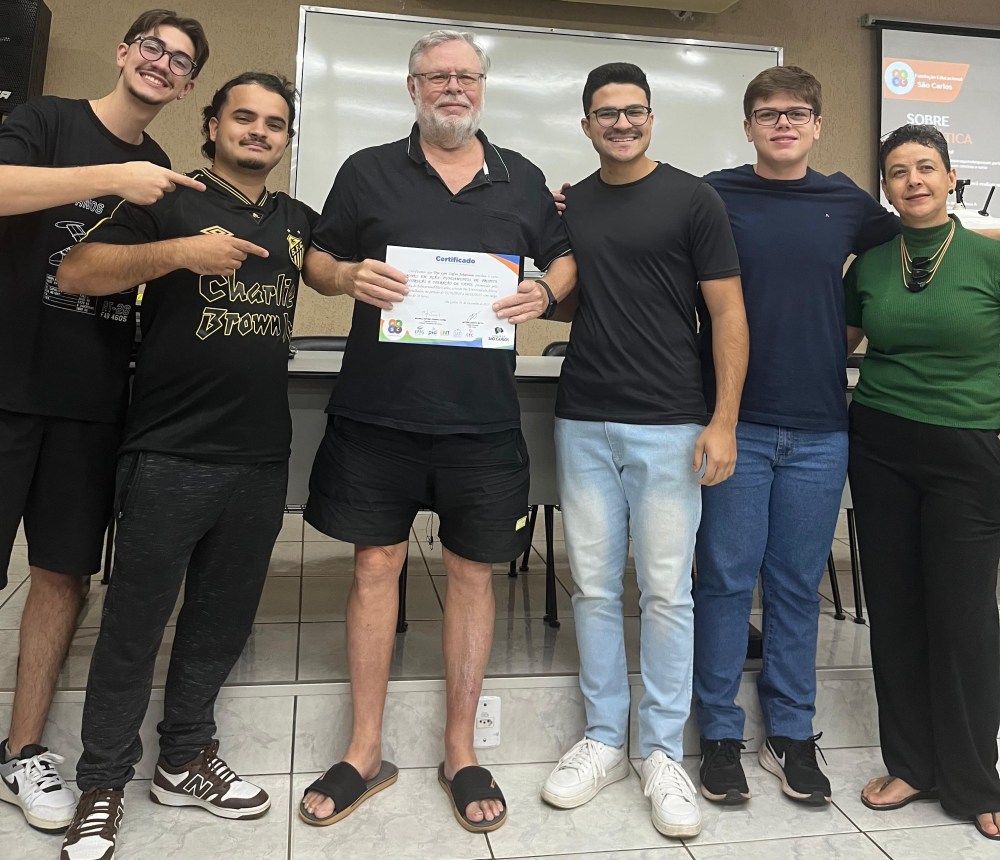
Here you can see a photo taken on 338’2025 (2025-12-04) of me (guess who?) in the center with the following persons, from left to right: Thiago Carvalho Nogueira, Rafael Bastos Arantes, João Pedro Teodoro Batista , Guilherme Leonel Zonta Avi, and Rogéria Kapp.

Today’s header photo and also the following ones were taken by my friend Juliane Vianna who recently had some marvellous days on the Spanish island of Mallorca. More about Mallorca can be found in reference # 4 below.
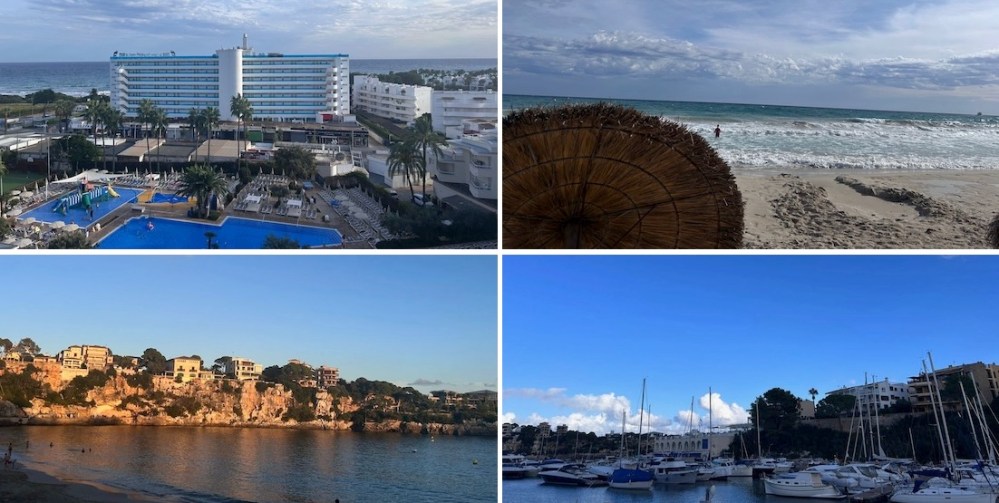
Pictures from Sa Coma and Porto Cristo on the Spanish island of Mallorca. Photos taken by Juliane Vianna on 303’2025 (2025-10-30).

That’s what I learned in school today!

Ref.:

1: São Carlos

2: Aerodynamics, vortices and robobees

3: Fundamentos de VANTs – Projeto, construção e operação

4: Mallorca
*: What did you learn in school today?

243’2025 (2025-08-31) – Sunday

Today, I learned about:

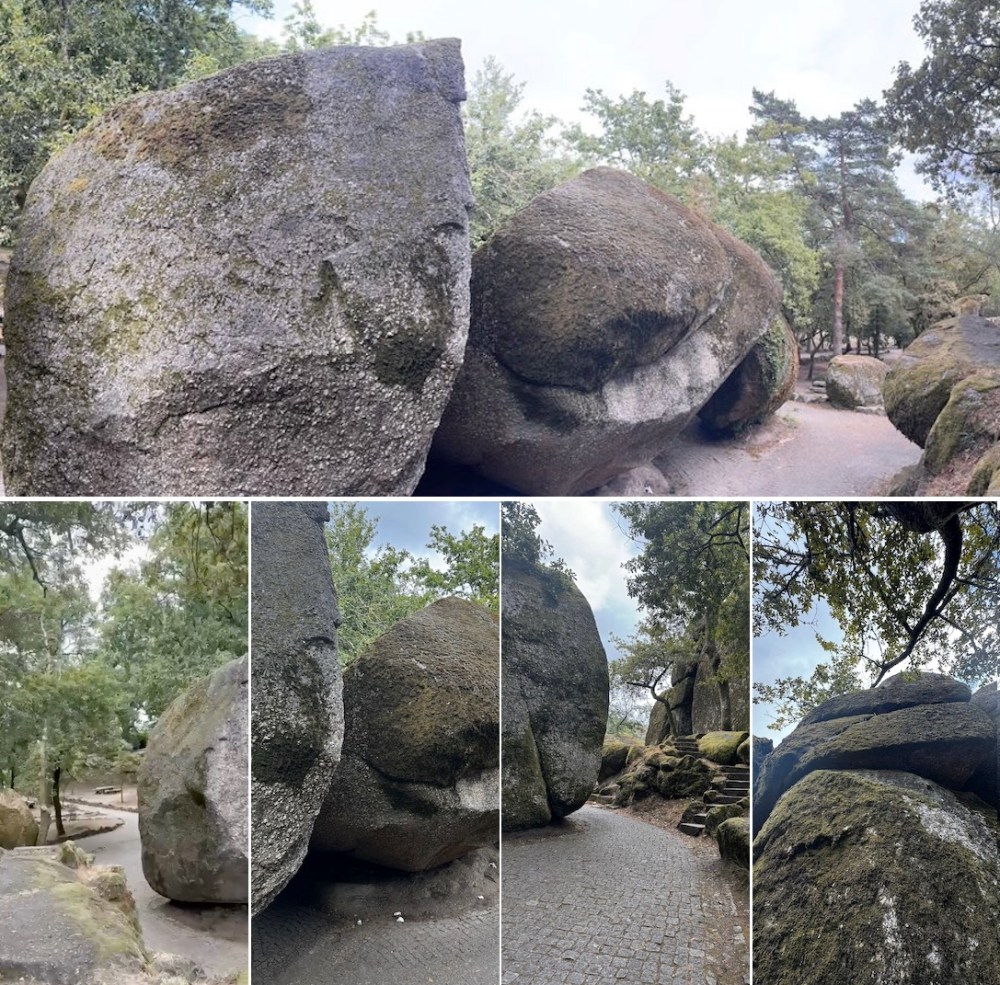
Following my story from last month’s blog, here is yet another interesting place on this earth. This time we have moved eastwords into the Old World, specifically the birthplace of Portugal, named Guimarães. It is located in a mountainous region in the North, not very far from the cities of Braga and Porto. Reference #1 tells you more about Guimarães and its region.

The following photos were taken by my friend Dina Giltinan, who varies living with her family in Guimarães and Limerick, Republic of Ireland. Thank you Dina for yet another contribution!

Earlier publications originated by Dina are 2016-02-24 , 2016-03-17 , 2016-08-28 , 120’2022-04-30, and 11’2024-01-11.

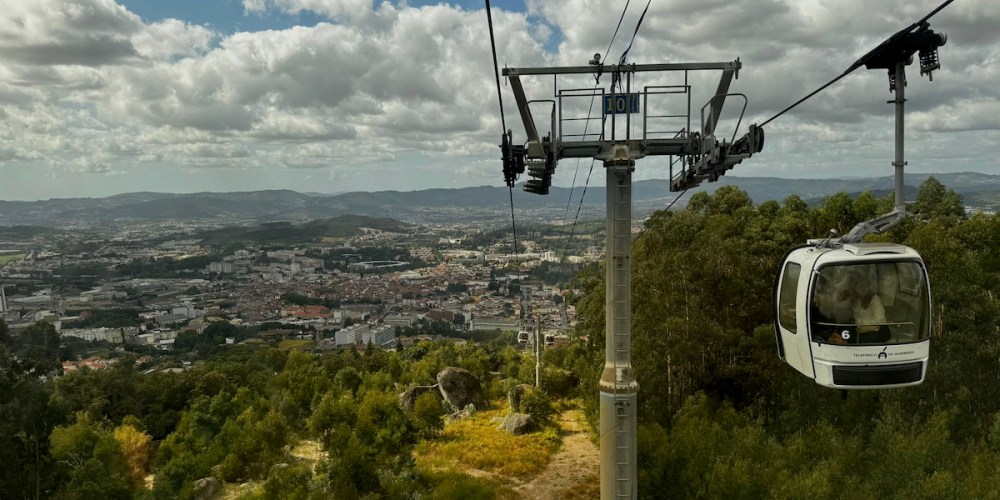
Cable car in the região of Guimarães, North of Portugal, going from the city up into the mountians. Photo taken by Dina Giltinan in August, 2025.

Forest with granite rocks in the region of Guimarães, North of Portugal. Photos taken by Dina Giltinan in August, 2025.

That’s what I learned in school today!

Ref.:

1: Guimarães

*: What did you learn in school today?

151’2025 (2025-05-31) – Saturday

Today, I learned about:

My ongoing relation with CBDN, the Brazilian Confederation for Snowsports, has added another, impressive chapter. Earlier posts about CBDN can be found on 240’2022 (2022-08-28), 304’2022 (2022-10-31) , 334’2022 (2022-11-30) , 31’2023 (2023-01-31) , 272’2023 (2023-09-29), and 91’2024 (2024-03-31) .

On 146’2025 (2025-05-26), I was invited to a ceremony to mark the conclusion of the 2024/25 winter sport season. It was held in São Paulo at MIS, the museum for image and sound. The whole event was very well organized, with both an initial cocktail with delicious salty and sweet snacks and a bigger buffet during the half-time break.

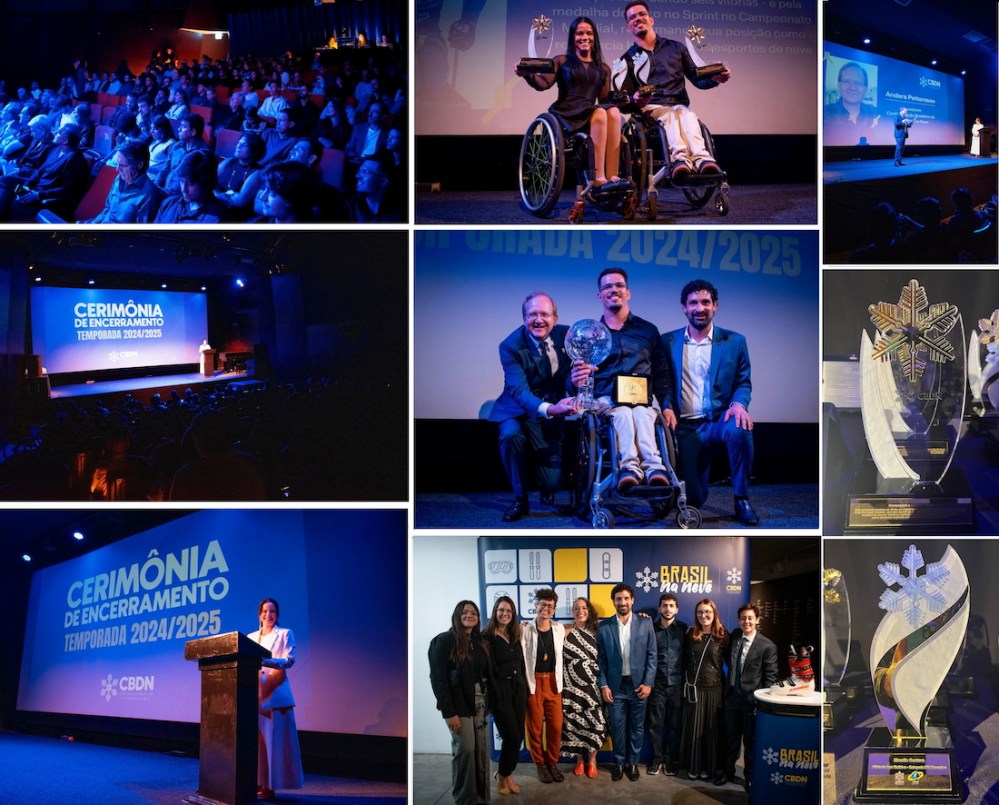
It was really interesting to see the enthuiasm of so many talented athletes, both those with normal body conditions and those who participate in the para athletic disciplines. And the ceremony, which meant to reward the best of those, was also very well planned and executed, with a ceremony master, Beth Romero, who is a well-known sports journalist. A video from the ceremony can be found in reference #1 below, and here are also some photos:

As you can see from the photo in the upper left corner, the auditorium was packed with expectation from the athletes, their families, friends and supporters. The bottom photo in the left column shows the ceremony master, Beth Romero.
The three photos in the middle column show, from top to bottom: – Two of the most rewarded athletes, Aline Rocha and Cristian Ribera, both world champions in para ski cross country; – Cristian Ribera, showing the Crystal Globe as World Cup champion, rewarded as Athlete of the Season, flanked by CBDN President Anders Pettersson and COO Gustavo Haidar; – Some of the CBDN staff present during the ceremony, from left to right: Laura Dias, Luisa Crisol, Luíza Calaça, Thatiana Freire, Gustavo Haidar, Matheus Sales, Laura Costa, and Rafaella Malafaia.
In the rightmost column, from top to bottom: – CBDN President Anders Pettersson welcoming the audience to the cremony; – The trophy awarded to the Athletes of the Year in their respective disciplines; – The trophy awarded to the Athletes considered Revelations or Highlights during the Year.

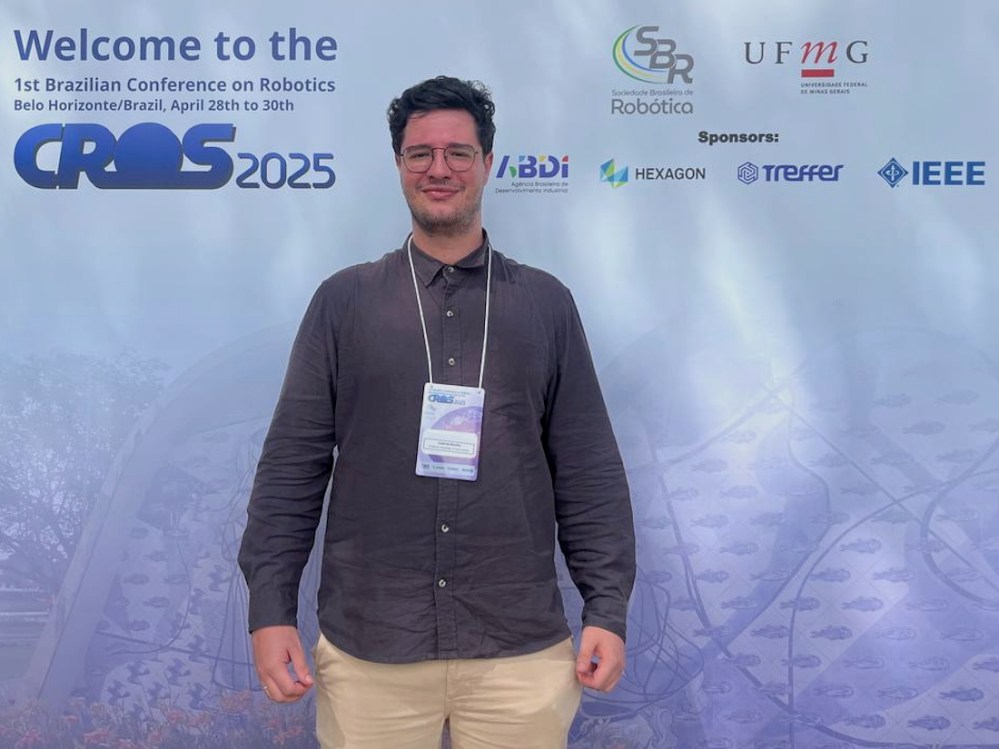
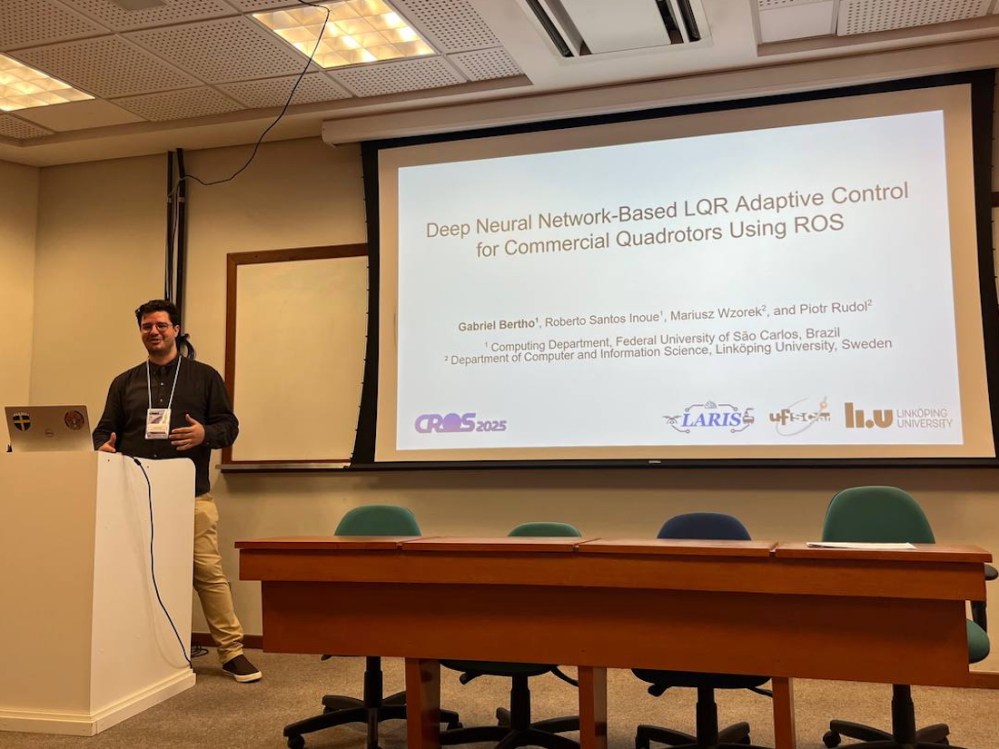
Another highlight this month is related to my student of the Swedish language, Gabriel Bertho. I teach him Swedish so he can communicate well with his fellow colleagues at Linköping University of Technology. Gabriel, who is a technology student at UFSCar, the Federal University of São Carlos,  spent four months in Sweden in 2024 on a robotics project. The result of that project was presented by him at the 1st Brazilian Conference on Robotics in Belo Horizonte, MG, Brazil during the last three days of April, 2025. Here are two pictures of Gabriel and his presentation at the conference:

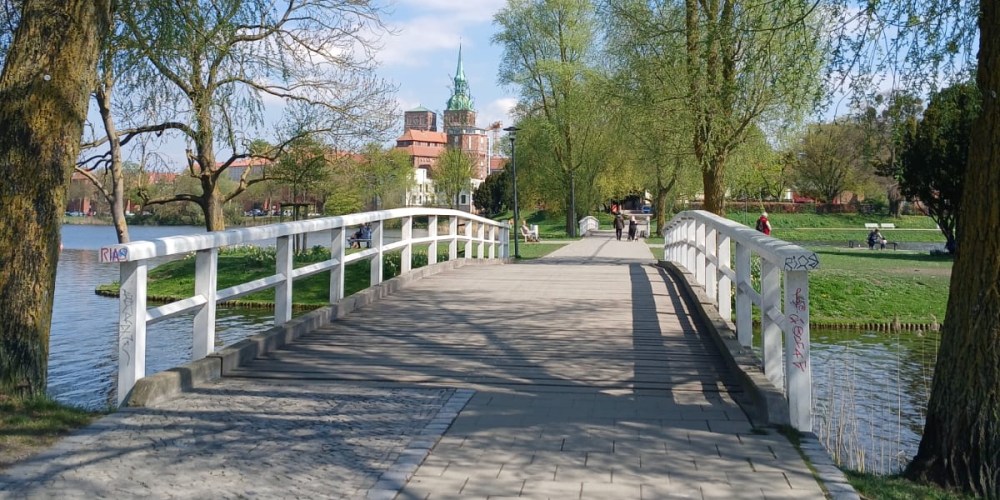
Finally, this month’s header photo was taken by another of my Swedish language students, Laura Ponce, who currently lives in Greifswald, Germany, where she took this springlike photo on 121’2025 (2025-05-01).

A beautiful spring photo taken on 121’2025 (2025-05-01) in Greifswald, Germany by Laura Ponce.

Thank you, Laura! More about Greifswald can be found in reference #2 below.

That’s what I learned in school today! 

Ref.:

1: Cerimônia de encerramento da temporada 2024/2025

2: Greifswald

*: What did you learn in school today?

90’2025 (2025-03-31) – End of Q1

Today, I learned about:

There are so many interesting places around the world and of course it is impossible to travel to all of them. Instead, how good it is to know that we have friends who can supply us with the information and photos we lack.

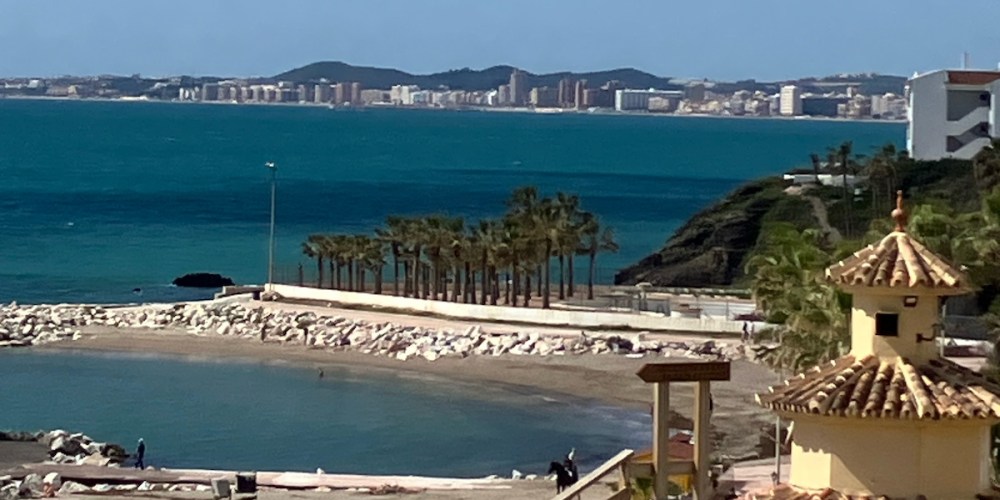
This photo today was taken by my friend Barbara a couple of weeks ago. She was on vacation in Málaga, Costa del Sol in the South of Spain, by the tempting Mediterranean sea. Thank you, Barbara, for sharing this view with us.

A beautiful view of the beach in Malaga, Costa del Sol in the South of Spain. Picture taken by Barbara Sigurdsson in March, 2025.

Málaga is a city which a rich history, founded 770 BC. More information can be found in reference #1 below.

That’s what I learned in school today! 

Ref.:

1: Málaga

*: What did you learn in school today?

361’2022 (2022-12-27) – Tuesday

Today, I learned about:

Finally, here are some photos from the city of Ouro Preto in the Brazilian state of Minas Gerais. It is a city that was founded in 1711 and during the 18th century, from the mountains around it, were extracted more than 800 tons of gold. That number only contains what was sent to Portugal, not considering what stayed in Brazil. In reference #1 below is link to an article about Ouro Preto that is well worth reading. And furthermore, if you have the chance, visit Ouro Preto, you will never forget it!

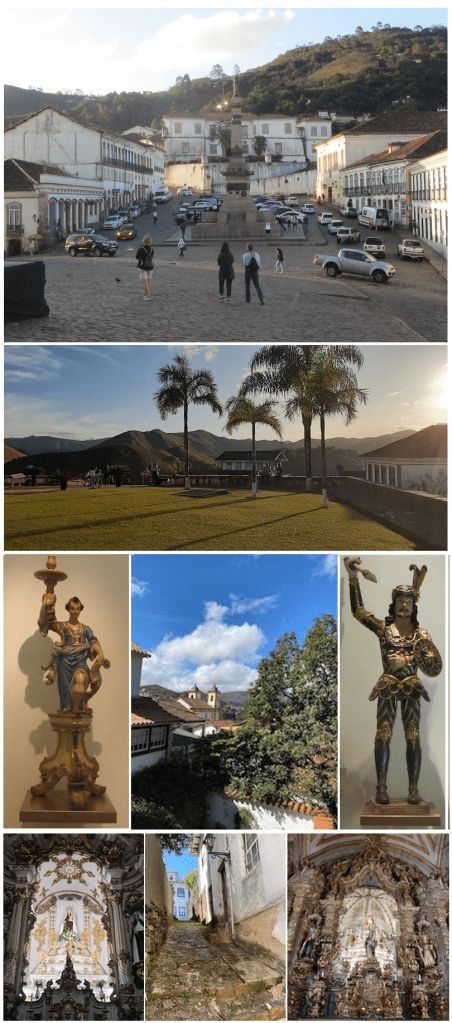
Here are some photos that I and my friends Adriana and Graziela took in Ouro Preto during the last week of May, 2022:

In the uppermost picture is shown the main square in Ouro Preto, named Praça Tiradentes, as seen from the fantastic Museu da Infocidência. The following picture was taken outside of the church of Nossa Senhora do Carmo (Our Lady of Mount Carmel) with a breathtaking view of the surroundings of Ouro Preto. In the smaller pictures below are two examples of the exquisite statuettes carved by the Brazilian artist Aleijadinho, who managed to do so in spite of his illness in the extremities of his body. Those two and many more are on display in the Museu da Infocidência. The two pictures from inside two of the many churches in Ouro Preto, where one can find inumerous objects made of pure gold, are from Nossa Senhora do Carmo (Our Lady of Mount Carmel) and Nossa Senhora do Pilar (Our Lady of Pilar). All pictures were taken during the last week of May, 2022.

I wish all of my faithful readers a pleasant end of 2022 and an even better start of 2023!

That’s what I learned in school today!

Ref.:

1: Outro Preto

*: What did you learn in school today ?

Tuesday (2017-02-28)

Today, I learned that:

The Nordic people are said to be cold and not very sociable. But that saying is now definitely DEAD ! The reason can be seen in The Guardian. Last week, it presented a survey made in 39 different cities of the world about the social behaviour and attitudes of its residents. And the winner was GÖTEBORG, aka Gothenburg. (And Stockholm ended up in the second place.) Read the whole story in reference #1 below. As a tribute, the following photo was taken at the Gothenburg marina of Långedrag on 2008-07-17.

Ldrag

Photo taken at Långedrag, Göteborg on 2008-07-17

Of course I feel very proud that the city where I got my academic degree was chosen, and I agree that those years I spent there had quite a lot of positive events and people. The locals in Göteborg are considered as funny people, always ready to tell a joke or two. On the day that the survey was presented, the Canadian general governor, David Johnston, visited Göteborg, which generated the following joke:

HOW MANY PEOPLE FROM GÖTEBORG LIVE IN CANADA ???

You can see the answer, in “göteborgska” at the end of this page.

… That’s what I learned in school !

byran
Do you need to TRANSLATE DOCUMENTS between ENGLISH, BRAZILIAN PORTUGUESE, and the SCANDINAVIAN (SWEDISH / DANISH / NORWEGIAN) languages? Contact “Byrån / The Taskforce” here !!!

Refs.:
1: Party central: Gothenburg voted world’s most sociable city

*: What did you learn in school today ?

ANSWER TO THE JOKE: ÅTTA VA!

2017-01-14 (Saturday)

Today, I learned that:

One year passes so fast, and the older one gets, the faster it seems! Someone said that our perception of time is inversely proportional to our physical age, e.g. one month for an 8-year old child seems to last as long as half a year for a person of 48 years. And one year ago, on 2016-01-08, I met with my old friend Tereza, lawyer and university professor, undoubtedly the leading Brazilian expert on the rights of certain minority populations, see reference # 1 below. She suggested to me to start a blog and thus disseminate my knowledge and ideas. I told her that I had no experience in blogs!

But then, during the following night, I had the most vivid dream, when what I believed to be a song by Tom Lehrer played over and over again in my head, ‘What did you in learn school today?’. I took it as a premunition for something special, and once awake I searched for the song on the internet. It proved to have been written by Tom Paxton, and I found the fabulous version interpreted by Pete Seeger, the main reference * below.

My very first, extremely timid post, was about the first podcast I had listened to in the morning of 2016-01-09, from the Science Show by Radio National in Australia, about potatoes and incas. Thank you, Tereza, for your excellent suggestion!

And now to the very best moment of all: Thank you, everyone, who have supported me during this very interesting year. Please bare with me and I will continue to produce also in 2017, when time so permits. And a special thank to all my friends who have sent me such marvellous pictures from their travels and allowed me to publish them.

Here is a partial list of posts with descriptions and photos of cities, as well as other posts with substantial contributions from my friends, from all around the world:

Today is no exception, as you can see further down in this post.

Today’s hint is once more from the Science Show. In 2016 was celebrated the 150th anniversary of the birth of HG Wells, who most of you know as the author of The Time Machine. But he was so much more, a very prolific author of a multitude of books, articles, etc., mostly science fiction, often with sinister forecasts. Did you know that he coined the term ‘atomic bomb’ and at an early stage warned about the disasterous effects the uncontrolled release of atomic energy could have on human kind. He lived to see the bombs which were thrown over Japan in 1945, and when he died in 1946, he had already written his epitaph. What did he write? Find out by listening to the podcast in reference # 2 below. Reference # 3 also contains plenty of information about him.

huvudbild

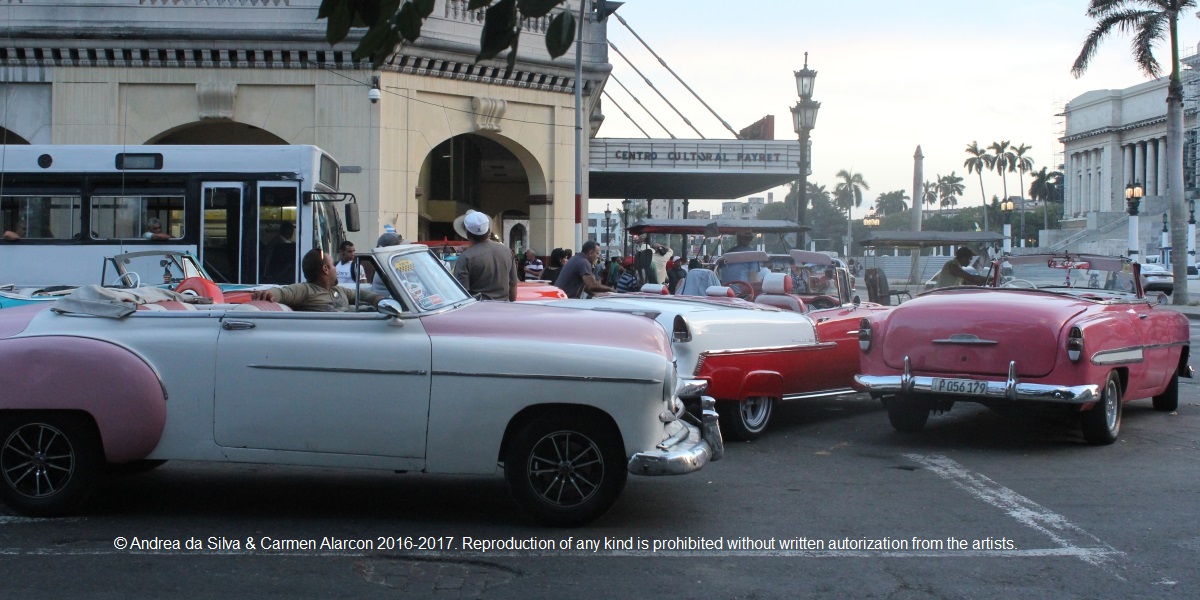
Photo taken downtown Havanna on 2016-12-06.

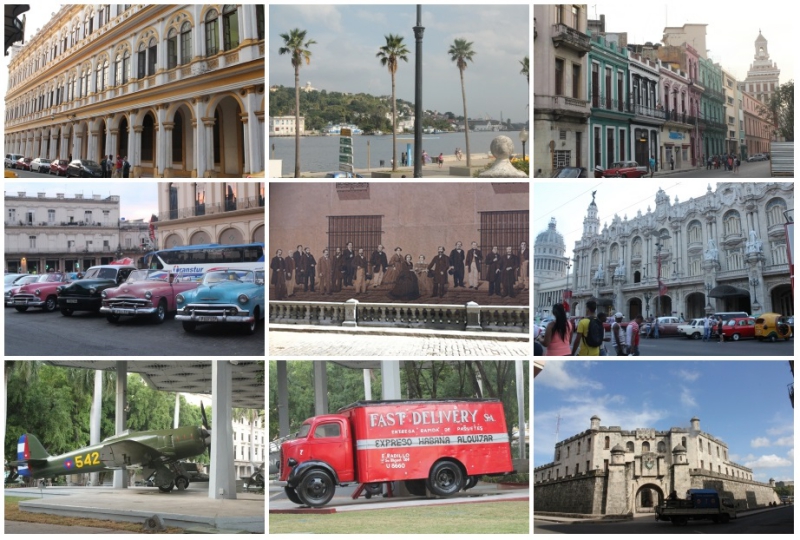
My guests of honor today are my friends Andrea and Carmen, both native from South America, but living in Sweden nowadays. One month ago, they went to visit a friend of theirs in Havana, the capital city of Cuba, and among other things took some amazing photos. One of those is today’s header photo. It was taken downtown old Havana in Parque Central, and it shows a typical scene from current traffic in Cuba, dominated by American cars from the 1950’s. Below are some more photos from their trip:

kuba-kollage

Photos taken in Havana, Cuba, in December/2016, by Andrea da Silva and Carmen Alarcon. The top row shows typical photos from the streets, including Hotel Sevilla, on the left. In the middle row, we can see American cars from the 1950’s, the middle photo is part of an impressive mural in Calle Mercaderes depicting 67 notable persons in Cuban arts and history, and the rightmost photo also shows the Capitol and El Gran Teatro de La Habana (aka Garcia Lorca). The left and center photos in the bottom row were taken in the Museo de la Revolution, housed in a former presidential palace, and the rightmost photo is of the police headquarters in Havana.

If you want to know more about Havana, one good start is reference # 4 below.

… That’s what I learned in school !

byran
Do you need to TRANSLATE DOCUMENTS between ENGLISH, BRAZILIAN PORTUGUESE, and the SCANDINAVIAN (SWEDISH / DANISH / NORWEGIAN) languages? Contact “Byrån / The Taskforce” here !!!

Refs.:
1: Advogada Especialista em Mudança de Nome e Sexo e Alteração de Nome em geral.

2: HG Wells: author who imaged a future based on scientific achievement

3: HG Wells

4: Havana

*: What did you learn in school today ?

2016-10-02 (Sunday)

Today, I learned that:

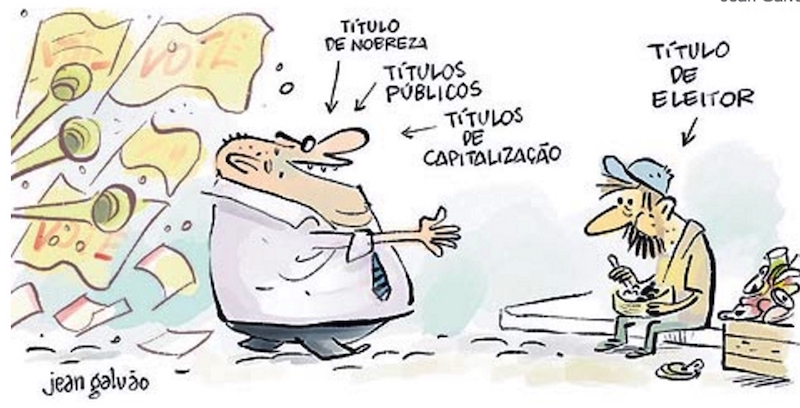
Once more, it is municipal election day in the pseudo democracy called Brazil. I say so, because voting is not only a right for Brazilian citizens, but also a duty! The result is obvious beforehand: A conservation of the ruling class, which has the financial means to control the situation. Everyone declared capable, aged from 18 to 70 years, must vote. Although there are some other democracies in the world where it is also mandatory to vote, what comes to my mind right now is Belgium, a country that stayed without a government during almost three years after a general election. My conviction is that elections should be open to everyone who is qualified to vote, but nobody should be obligated to do so! But since it is the proper politicians who must decide on such a measure which would go against their interests, unfortunately I do not see such a change coming ever.

titulos

Two opposite sides of the Brazilian society: To the left, the well-off citizen with all his titles and investment bonds, and to the right, the poor person, whose only right (and obligation!) is the document which identifies him as an elector. Drawn by Jean Galvão and published in Folha de S. Paulo today.

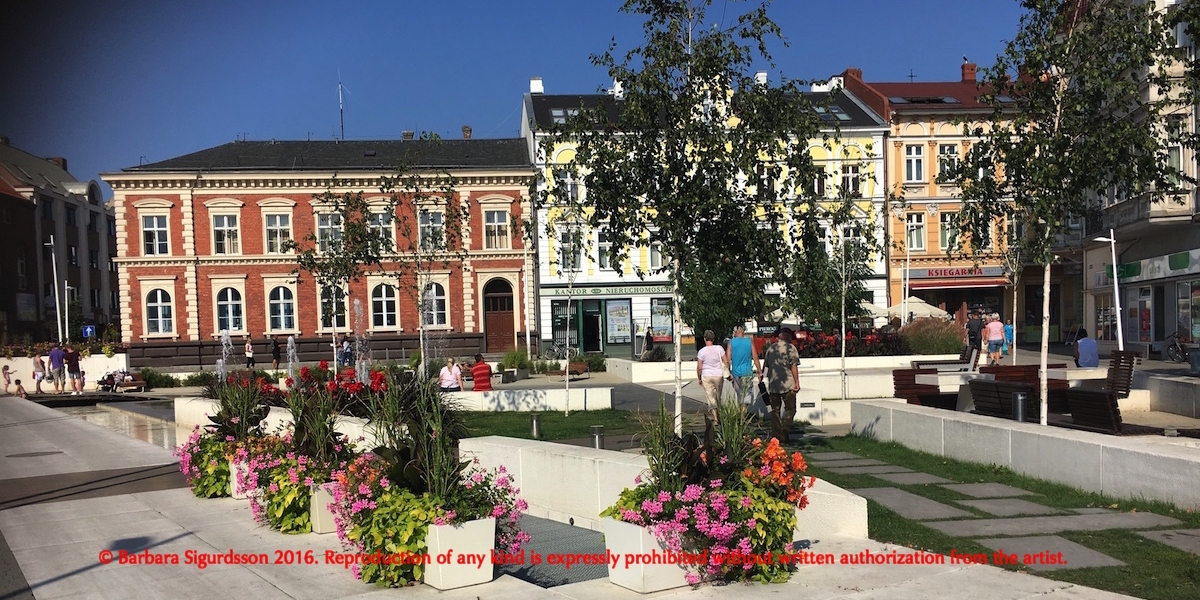
I feel very honored to have so many friends spread out all over the world, and when they travel they often send me pictures to show their destinations, and today is not at all different. My friend Barbara, who has lived in Sweden for decades, went back home to her native city, Świnoujście in Poland, last month for an important family celebration. And here you can see some of the pictures she sent me. Dzięki, Barbara!

Below are some more pictures from this sea-side city in the extreme north-west corner of Poland, bordering Germany and with a daily ferry to Ystad in Sweden. See also reference # 1 below.

swinoujscie

swinoujcie2

Six photos from Świnoujście, all taken by Barbara Sigurdsson in September, 2016. The main photo shows the post office to the left, and the two photos in landscape mode of the next front row show scenes from the seaside promenade. The leftmost one pictures the German town Ahlbeck in the distance and the second one is a typical one from this neighborhood. In the second row, to the left, is a former Soviet military base that now has been transformed into a civic center, including sports arena, theater, tax authority and a music school. The next photo shows typical residental buildings today, in bright contrast to the rightmost photo of a skyscraper built during the communist regime.

Last Friday, 2016-09-30, was International Translation Day. When I was a teenager, I did not know which career I would follow, since I liked both technology and languages. My uncle, who had a high position in Ericsson, advised me to study technology and include as many languages as possible in my curriculum. Of course, I followed his advice, and today I am proud to say that I am very fond of making translations, in particular those involving technology, in the language pairs Swedish <-> English, Swedish <-> Portuguese, and English < – > Portuguese. If you need to have any document translated in those languages, or including Danish and Norwegian, contact me or my fellow translators of the Taskforce, see link in reference # 2 below, and click on the appropriate flag in the upper right corner.

Finally, if you live close to an airport and are disturbed by the noise of aircraft while arriving at the airport, here comes good news for you. A study performed at KTH in Stockholm, confirmed at Heathrow airport, shows that if the landing aircraft forms an angle of 3,5 degrees to the ground instead of the current 3 degrees, then the generated noise can be reduced by 2 decibel, which is quite a lot! See references #3 and 4 below.

… That’s what I learned in school !

Refs.:

1: Świnoujście

2: Do you need to TRANSLATE DOCUMENTS between ENGLISH, PORTUGUESE and the SCANDINAVIAN (SWEDISH, DANISH, NORWEGIAN) languages? Contact “Byrån / The Taskforce” through this link !!!

3: Brantare landning minskar bullret

4: Slutrapport Förstudie Brantare

+: What did you learn in school today ?

2016-09-29 (Thursday)

Today, I learned that:

The internet of today is very different from what it was 40 years ago. And at that time it did not even have that name, it was ARPANET. I found a literature review which I made for a university course called Computer Networks in October, 1976. The whole document, including all articles, is a heavy book, but I do not want to scare you so in reference # 1 below you can find a resume in 14 pages. However, in order for you to get complete satisfaction from the contents, you have to learn Swedish. But there are quite some figures and graphs as well, and you know what they say, a picture is worth more than a thousand words! I already commented about the creation of e-mail on 2016-03-07, when its inventor, Ray Tomlinson, died.

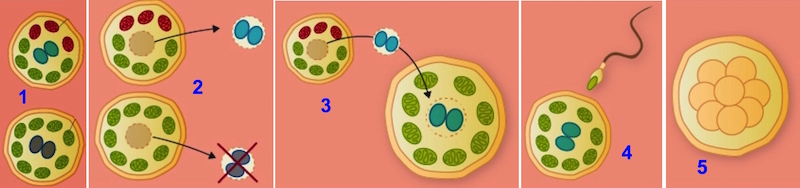
And another fantastic feat was reported 2 days ago. Due to a genetic flaw, a woman could not be sure to give birth to a sound baby, so a new technique was employed to let another woman with normal genes participate in the process, thus generating the first human being with three biological parents. See more in the figure below, and complete coverage in English and Portuguese in references #2 and 3 below.

3p1-5

The five phases in the process for a child to have three biological parents. 1: A non-fertilized egg with abnormal mitochondria (colored red) from the patient and another one with normal mitochondria (colored green) from the donor are selected. 2: Both cores (colored blue) are removed and only the core of the patient is maintained, the core of the donor is discarded. 3: This core is then inserted into the egg without core of the donor, with contains normal mitochondria. 4: The reconstituted egg is fertilized with the sperm of the patient’s male partner. 5: The fertilized embryo, with normal mitochondria and maternal and paternal genomes can now be transferred into the uterus of the patient. Images and text provided by Folha de S. Paulo, see also reference # 3 below.

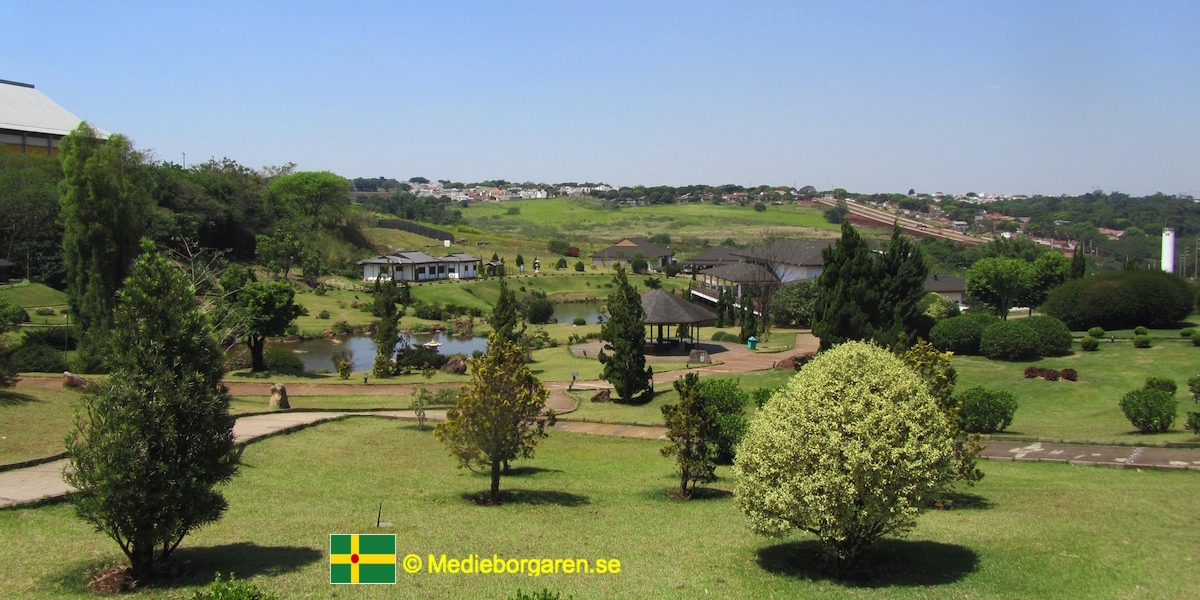
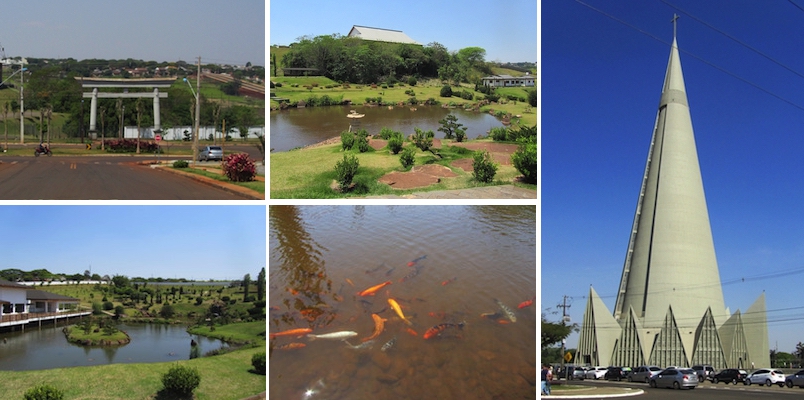
Earlier today, I took the day off from my daily chores and invited my wife to celebrate my birthday in the neighboring city, Maringá. First we visited Parque do Japão, a marvelous creation close to the Maringá airport, and which was inaugurated on 2014-05-12. Maybe you already knew that over 1 million Japanese descendants live in Brazil? The state of São Paulo is most popular among them, but Paraná, the state immediately south of São Paulo, is also very popular. And Maringá is definitely such a place.

Below you can see some images from the park and also Maringás landmark, the Cathedral, the tallest church in South America. More information can be seen in references # 4 and 5 below.

maringa0

Parque do Japão in Maringá, Paraná, Brazil. Photo taken on 2016-09-29

maringa

Photos from the city of Maringá, state of Paraná, Brazil. The four photos in landscape mode show different aspects of the “Park of Japan”. The cathedral to the right is considered as Maringá’s landmark. All photos were taken by me on 2016-09-29.

Finally, tomorrow, September 30 is the International Translation Day, yet another subject that is very dear to me. See my next post on Sunday, 2016-10-02, for more about that fascinating topic.

… That’s what I learned in school !

Refs.:

1: ARPANET

2: World’s first baby born with new “3 parent” technique

3: Primeiro bebê com DNA de três progenitores nasceu no México

4: Maringá

5: Parque do Japão

+: What did you learn in school today ?

2016-05-08 (Sunday)

Today, I learned that:

Exactly 71 years ago, the World War II ended in Europe. And on the 25-year celebrations on 1970-05-08, I was in Berlin for the first time, together with colleagues and teachers in the final month of elementary school.

It was a fascinating journey, with ferry from Trelleborg to Sassnitz, and from there train through East Germany to West Berlin. One day, we took the S-Bahn into East Berlin and transposed the Berlin Wall. Once there, a colleague and I interviewed people on the streets about life in the East! And on the very day of the war end anniversary, there were of course heavy demonstrations about the current state of division of the German peoples. The following day, we also visited the Olympiastadion, where the West German football squad played against Ireland, resulting in a 2-1 win. Although the German team, coached by Helmut Schön, had top players such as Berti Vogts, Jürgen Grabowski, Wolfgang Overath, Gerd Müller, Franz Beckenbauer and Uwe Seeler, the game was a tough fight. Full details can be found in reference # 1 below.

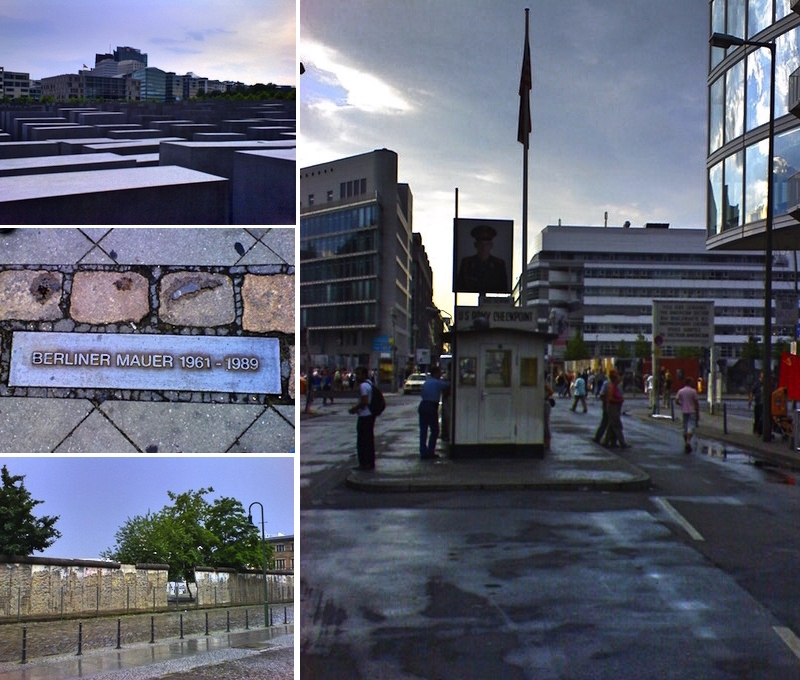
Then it would take 37 years until I returned to Berlin. The Wall was gone, although quite some things reminded me of what had been. I went on a very interesting sightseeing tour, with guide on foot. The whole event was scheduled to take 4 hours, but we had so many interesting questions that it was prolonged for 2 more hours! Today’s header image shows Berlin’s #1 symbol, Brandenburger Tor, and below are some other photos I took that day. The memorial of the holocaust is located close to there, and just beside the place where Hitler had his ultimate bunker. Seeing those stones, to signify all the people exterminated in the concentration camps, made a deep and very distressing impression on me. See also the other references below for more details about the most interesting city, and I dare to say, Europe´s de facto capital, Berlin.

Berlin25

4 photos I took on 2007-06-09. In the left column, from top to bottom: – The holocaust memorial; – A plate showing where the Berlin Wall used to divide the West and the East during more than 28 years; – Part of the original Berlin Wall. In the right column: Checkpoint Charlie, the famous crossing between West and East Berlin.

Finally, although I am not very fond of the American way of life, I must admit there are many interesting, creative people there. The web site CreativeLive is paying a tribute to some of them, through a series of video interviews, during the month of May, called 30 days of Genius. See reference # 6 below with a link to a subscription to the series, free of charge.

… That’s what I learned in school !

Refs.:

1: West German football team defeated Republic of Ireland 2:1, 9 May 1970

2: Brandenburger Tor

3: Holocaust memorial

4: Berlin Wall

5: Checkpoint Charlie

6: 30 days of Genius

+: What did you learn in school today ?