2016-02-06 (Saturday)

Today I learned once more, that:

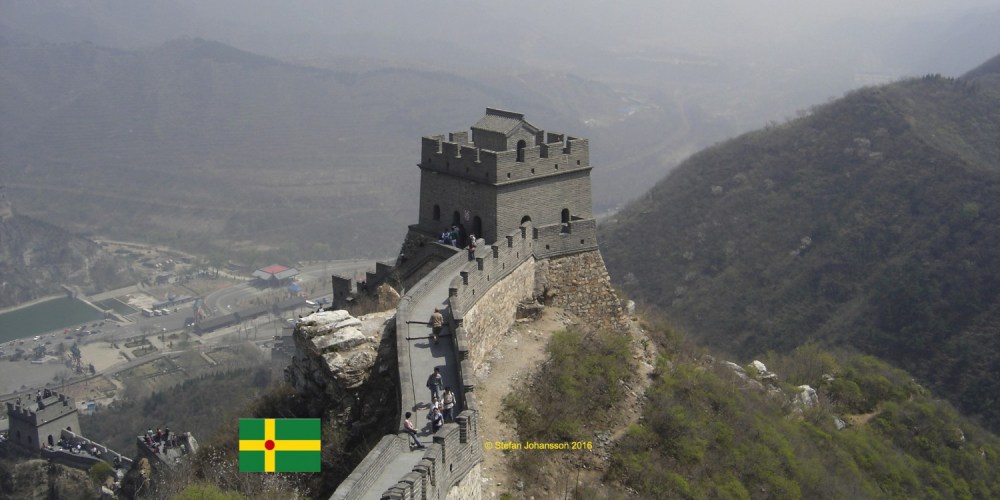
It is much easier to describe a certain object with an image (e.g. the Great Chinese Wall below) than using a lot of words. You know the old saying, a picture says more than 1000 words.

cropped-kinesiska-muren.jpg

The Great Chinese Wall north of Beijing. Photo taken on April 15, 2005.

But there is also another way to be used and which saves a lot of space, needing only a couple of bytes instead of thousands or millions of bytes. I am talking about an INDEX. So what is an index and what can we do with it?

An index is an indirect shortcut derived from and pointing into a greater volume of values, data, information or knowledge. It is used in many contexts, e.g. business, publishing, sciences, technologies. If you have invested some money in the stock market, especially in a fund which closely follows the evolution of the market, then probably the stock market index is something that attracts your attention every business day. And if you are an optical physicist, then the refractive index is as dear to you as anything in your life. But I would like to describe two other totally different indices, starting with the

Purchasing Manager’s Index (PMI). This index is compiled by two different private organizations, one that covers 30 countries in the world, and the other one only the USA. But what they have in common is that they describe how the market in private sectors have changed since the last publication of the index, and are often cited in business newsmedia. The formula for the PMI is PMI = (P1 x 1) + (P2 x 0,5) + (P3 x 0), where P1 is the percentage of people who report a status improvement, P2 the percentage of answers considering no change, and P3 the percentage of all answers reporting a status deterioration.

This means that the PMI can show any value between 0 % and 100 %, where the lowest value would happen if all reports are showing deterioration and the highest value would only occur if all reports are indicating improvement. In practice, the index is most of the time close to 50 %, and the business analysts use it to comment on variations in fractions of percent units. A good example of how the PMI is presented and analyzed by the press can be seen in reference 2. It shows that right now the Swedish manufacturing industry is doing very well, with a PMI of 55,5 % , although it slowed down from 56 % the month before. China continues to be a problem, where the PMI in January, 2016, was 49,3 % as compared to 49,7 % in December, 2015.

Another way of implementing an index was introduced by the US company KIC in 2002. KIC develops and markets equipment to measure and track the process of soldering electronic printed boards. Their Process Window Index (PWI) offers an elegant way to quantify the robustness of a production process. In reference 3 is the original article which presented the PWI concept.

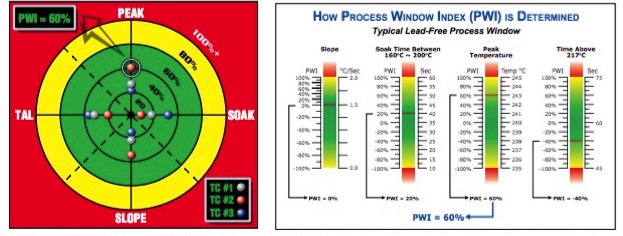
In practice, KIC uses PWI mostly when quantifying the robustness of this reflow soldering process, where a solder paste melts and after having been liquid during a minute or so, gradually the temperature is lowered until it finally reaches ambient temperature. There are four interesting parameters in this process: 1) slope, the rate of temperature rise from ambient to a first plateu temperature; 2) soak, how long the solder paste can sit in that plateau temperature to prepare the chemistry components for the soldering; 3) peak temperature; 4) time in liquid state. Each of these four parameters have a range in values: minimum, maximum and typical value. If the actual measurement is exactly typical value, then the grade for that parameter is 0, minimum value represents –100 % and maximum value is +100 %.

PWI

Two different interpretations about how PWI is determined for a reflow soldering process. Copyright KIC

So, we measure those parameters during the reflow soldering process of an electronic board and attribute a value to each one of those four. One example could be: 1) slope, 0 %; 2) soak, 20 %; 3) peak, 60 %; and 4) time above liquiduos, -40 %. We then take the absolute value, 1) 0 %; 2) 20 %; 3) 60 %; and 4) 40 %, and attribute the highest of those values, 60 % in this case, to PWI for the process in this particular measurement. See also reference 4 below.

… That’s what I learned in school!

1: Purchasing Managers Index

2: Inköpschefsidex sjönk i januari jämfört med december

3: PWI: Process Optimization Made Simple

4: A Method for Quantifying Thermal Profile Performance

+: What did you learn in school today ?
2016-02-05 (Fredag)

Idag har jag lärt mig, att:

Det verkar som inte bara människor har möjligheten att besitta en slags inlevelseförmåga, vad man på engelska kallar ‘theory of mind’, och som innebär att kunna föreställa sig vad en annan varelse tänker, men hur skulle man kunna bevisa att detta också finns hos djur?

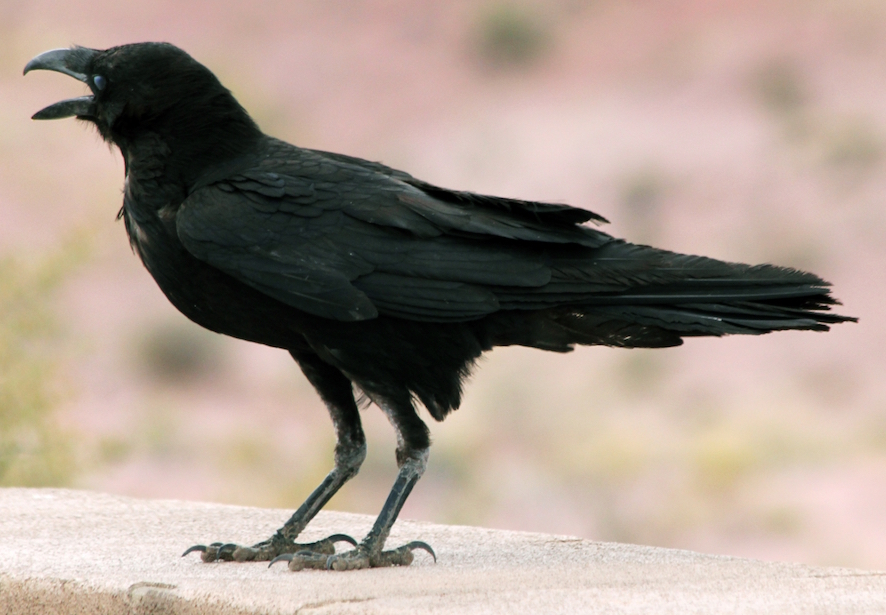
Forskare vid Wiens universitet har gjort försök med korpar, en varelse som har delat jorden med våra förfäldrar i 320 miljoner år. De lät en korp sitta i ett utrymme som var hälften av en låda. I den andra halvan, åtskild från den första av en vägg med ett litet titthål, verkade det som om det fanns en annan korp. Men den andra korpen representerades bara av en högtalare som spelade upp korpkraxningar.

Korp

Forskarna har lyckats visa att korpen gömmer undan den mat han fått fortare när han tror att det finns en korp som spionerar från den andra sidan väggen. Jag rekommenderar att ni lyssnar på hela reportaget från SRs vetenskapsredaktion, referens 1 nedan. Dessutom har jag lagt till ett tidigare reportage från 2011 om att försöka förstå vad som pågår i skallen på en korp, referens 2.

Slutligen vill jag berömma radioprogrammet Ordalaget från SR Jämtland och Västernorrland som är mycket underhållande och tänkvärt varje fredag lunch. De gav oss ordet ‘medieborgare’ för två veckor sedan, se referens nummer 3 nedan, vilket jag lade till såsom domännamn och undertitel på denna blogg, och idag har de gjort det igen:

Efter att ha frågat lyssnarna om ett lämpligt svenskt uttryck för ‘brain storming’, dvs. processen att föreslå ett antal ord, uttryck, alternativa lösningar, etc., i en explosion av idéer, så fastslog de idag såsom nyord det mycket intelligenta uttrycket

SPÅNSKIVA

… Slut för idag, tack för idag!

(This post in Swedish talks about the raven and its ability to satisfy the theory of mind.)

Refs.:

1: Korpar gömmer mat fortare om de anar spioner

2: I huvudet på en korp

3: Ordalaget – godmodiga främjare för/med mål i mun

4: Ordalaget vänder blad och går vidare i etern

5: Ordalaget råkas och språkas

+: What did you learn in school today ?

2016-02-04 (Thursday)

Today, I learned that:

Old sayings are not always true. It may still be so that in the dark all cats still seem to be grey, but do you know why the American political parties are assigned with the colours red for the republican party and blue for the democratic party? It has not always been like that, as you will see below:

If you live in Europe, you are accustomed to the designation of the blue colour for right-wing parties and red for left-wing parties. Red has been associated with revolutionary movements during centuries, already present during the French revolution 1789. (I remember a phrase we learned in school to get the colours of the French flag in correct order: ‘Blod har runnit’ (“Blood has flown”), with b for blå (blue), h for (h)vit (white), and r for röd (red)). But why is it the other way in USA, considering that the republicans normally are to the right of the democrats, politically?

Red-Blue-States 1980

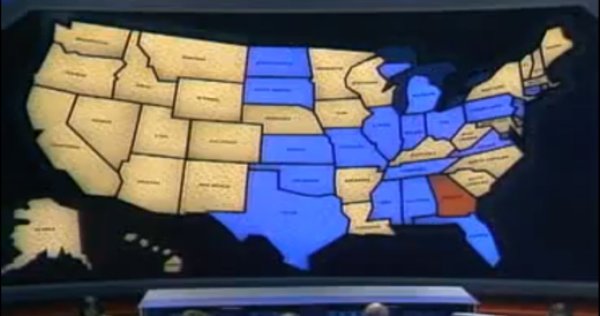
This NBC map from 1980 shows blue for Ronald Reagan, red for Jimmy Carter and yellow for uncalled states. Photo by Youtube.

It all started on November 2, 1976, when the American TV network NBC first presented a forecast of whom would win the presidential election, Gerald Ford or Jimmy Carter. The states where the republican party would win were lit in blue and the states with majority for the democratic party were red, something that NBC kept also in 1980, as you can see in the picture above. But from that point on, there was no general rule, which party would be blue and which one would be red was not a consistent choice, the different TV networks chose whichever colour they wanted. Reference 2 below has a deep discussion about the reasons, including also ‘r(ed)=r(epublican)’, but it seems that both parties for a long time used blue internally and attributed red to their opponent.

The current arrangement with blue for the republican party and red for the democratic party was eventually unanimous in year 2000, when George W Bush defeated Al Gore.

… That’s what I learned in school!

Refs.:

1: https://en.wikipedia.org/wiki/Red#Use_by_political_movements

2: http://www.smithsonianmag.com/history/when-republicans-were-blue-and-democrats-were-red-104176297/

+: What did you learn in school today ?
2016-02-03 (Wednesday)

Today, I learned once more that:

As it happens every year around this time, one of the most ridiculous world championships is under way. During one week, eight countries are represented by their national teams to decide which one is the best in the world in a sport called bandy.

If you do not know what bandy is, think of it as a mixture of football (real football, not American, aka soccer), field hockey and ice hockey. From football has been taken the football ground, the 11-person team and the 2 x 45 minutes game time. Field hockey has contributed with the hooked stick. The size of the goals are intermediate between football and ice hockey, and ice hockey has contributed with the ice and skates. The only original thing with bandy is the small ball, extremely difficult to see if you are on the grandstands of a bandy game.

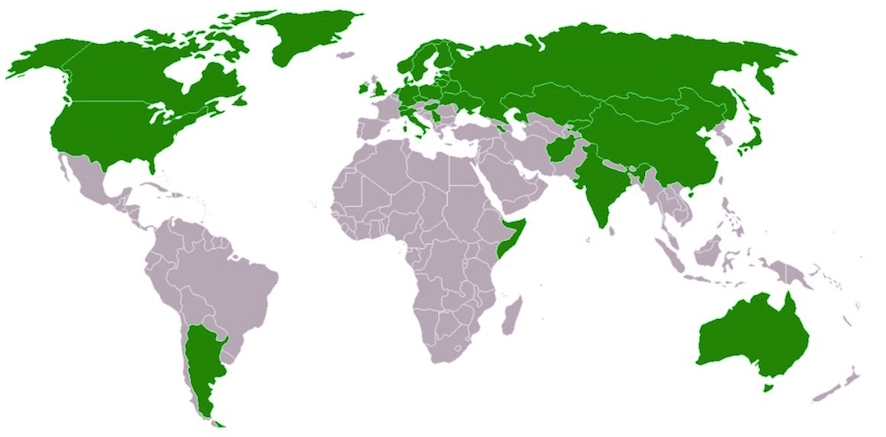
bandycountries

The countries (in green), where bandy is played

The international bandy federation (FIB), with headquarters in the Swedish city of Söderhamn, has 32 member countries, of which the eight teams highest on the international ranking participate in the supreme division to compete for the world championships title. They are divided into two groups of four countries each, with the four best in group A and the other four in group B. In three rounds, their is a round robbin where all teams meet the others once. After those games, the team in position 1 in group A plays team number 4 of group B, the second team in group A plays the third team of group B, etc.

And once more, for the fifth time in a row, everything points to a final game between Russia and Sweden, and a bronze medal game between Finland and Kazakhstan. The two first rounds of group A have resulted in scores of 9-1, 9-1, 11-4 and 10-2, with Sweden and Russia beating Finland and Kazakhstan.

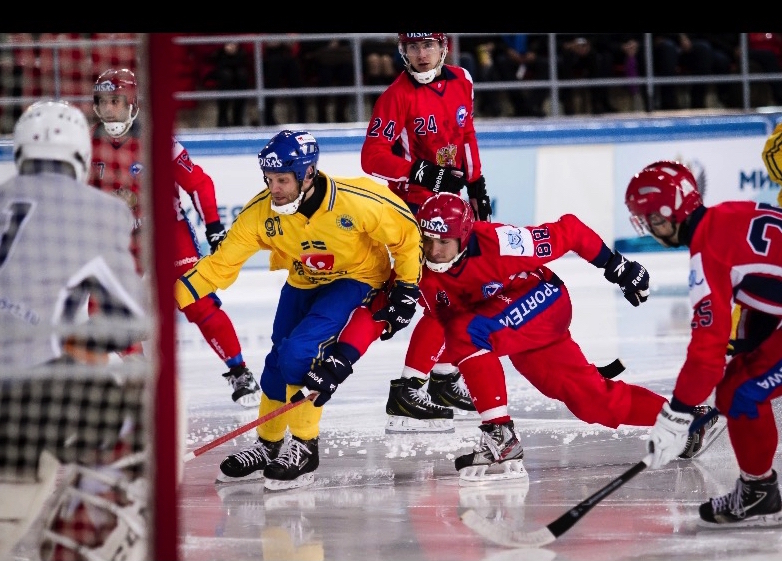
bandy2015

Sweden and Russia playing in the 2015 world championships. Photo by Martin Henriksson/FIB

So, why go through this weekly ordeal to end up with the same nations, Russia and Sweden, determining again who is the best in the world. Let them play a series of best-of-three games, one in each country and, if necessary, a third game in a neutral country.

Update 2016-02-07: It is always difficult to predict, especially about the future! Sweden underestimated Finland in one of the semifinals, losing the game with 3-2. Russia then beat Finland 6-1 in the final, and Sweden took the bronze medals.

… That’s what I learned in school!

Refs.:

1: Bandy

2: Federation of International Bandy

3: 2016 Bandy World Championship

+: What did you learn in school today ?
2016-02-02 (Tisdag)

Idag vill jag åter minnas, att:

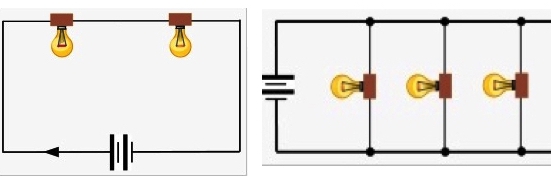
I skolan lärde vi oss att elektriska kretsar kan beskrivas med hjälp av Ohms lag. En elektrisk ström genereras av en spänningskälla och på vägen till att sluta kretsen träffar den på ett antal motstånd. För att skräddarsy kretsen kan vi variera värdena på spänning och resistans (motstånd) och beroende på hur vi kopplar ihop motstånden så får vi en viss ström som cirkulerar i kretsen.

Kopplingsalternativ

Två grundalternativ till en elektrisk koppling, seriekoppling (till vänster) och parallellkoppling (till höger)

Hopkopplingen av motstånden kan göras på två olika sätt, serie- och parallellkoppling. Ju större resistansvärden vi kopplar ihop i serie, desto mindre blir strömmen som passerar genom motstånden. Men om vi istället gör en parallellkoppling så minskar vi den resulterande resistansen och följaktligen ökar vi strömmen.

Men varför då denna lektion i elektrisk kretsteori? Jo, visserligen är det naturligt för en elektroingenjör som jag att ta hjälp av herr Ohm, men framför allt så tycker jag att det passar mycket väl in för att illustrera hur man skulle kunna lösa problemet med att inrätta höghastighetståg för de olika intressenter som önskar att tåget skall stanna just i deras stad.

Om vi först tittar på den södra länken, så har de två huvudalternativen varit att dra järnvägen genom antingen Värnamo eller Växjö. Utan att behöva framstå som partisk i frågan, så är naturligtvis Värnamo det naturliga valet, då vägen däröver är kortare än över Växjö. För att tillfredsställa Växjö, Karlskrona, Kalmar, m.fl. skulle man kunna göra en parallellkoppling med Malmö-Värnamo-Tranås, men denna anknytning borde i så fall inte starta i Malmö utan i Karlskrona och ansluta sig till huvudlinjen i Tranås.

Om vi sedan tittar på den västra länken, så är det uppenbart att Göteborg, Borås och Jönköping måste ligga på huvudlinjen, men exakt vilja mellanliggande orter som man borde stanna i, t.ex. Mölnlycke eller Bollebygd, är en fråga om seriekoppling. Ju fler orter (motstånd), desto lägre hastighet (ström) och längre tid.

Mitt tips är att den södra länken inte blir antingen en linje 1 eller linje 2, utan istället en linje 3, (minns ni kärnkraftsomröstningen 1980 ?), en kompromiss där både Värnamo och Växjö blir nöjda. Om vi skall uppnå målet om fossilfria bränslen år 2050 kanske det måste till. Om bara den politiska viljan finns, så ska nog pengarna också kunna skakas fram. Den västra länken behöver kompletteras med något alternativ som tillfredsställer också de orter som inte blir uttagna för huvudlinjen.

… Slut för idag, tack för idag!

(This post in Swedish uses Ohm’s Law to analyze the options for a highspeed train in the Western and Southern parts of Sweden.)

Refs.:

1: Ohms lag

2: Seriekoppling

3: Parallellkoppling

4: En ny generation järnväg

5: Ekot Kvart i fem 1 februari 2016

6: Ingen station i Ulricehamn och Bollebygd men i Borås

7: Borås chockat av järnvägsbud

+: What did you learn in school today ?
2016-02-01 (Monday)

Today, I learned that:

By entering the month of February, 2016, my blog is also entering its second calendar month. I wish to thank everyone for suggestions, compliments and even complaints, because that is the best way to progress. As you have seen from the posts from January, I like to vary the topics and hopefully there is a little something for everyone.

Although most people have not heard of it, there is a brand new material that is starting to gain space in our lives. The material, which is called graphene, is a two-dimensional atomic crystal made up of carbon atoms arranged in a hexagonal lattice. The first time that anyone was able to isolate graphene was in 2004, and already in 2010 the pioneers, Andre Geim and Kostya Novoselov, were awarded the Nobel Prize in Physics for their research. The following fantastic video, created by the Graphene Flagship Project is a perfect introduction, so I urge you to watch it:

The Graphene Flagship Project, launched in 2013, together with the Human Brain Project, are the first of the European Commission’s Future and Emerging Technology Flagships, whose mission is to address the big scientific and technological challenges of the age through long-term, multidisciplinary research and development efforts. The Graphene Flagship is coordinated by my alma mater Chalmers University of Technology, Gothenburg, Sweden.

The Graphene Flagship is tasked with bringing together academic and industrial researchers to take graphene from the realm of academic laboratories into European society in the space of 10 years, thus generating economic growth, new jobs and new opportunities. The core consortium consists of 142 academic and industrial research groups in 23 countries.

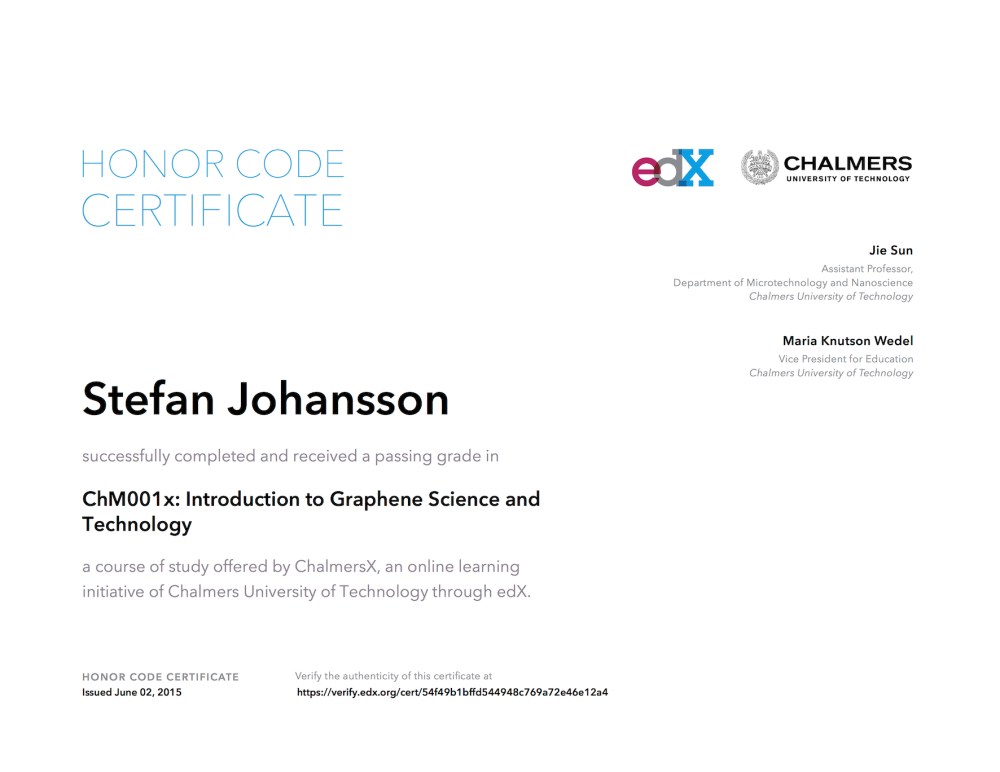
In 2015, I had the pleasure of participating in a MOOC ( Massive open online course ) offered by Chalmers within the EdX organization, one the most prestigious MOOC providers, founded by Harvard University and MIT in 2012. It was a tough course, but it gave me very interesting information about what graphene is, how we can produce it, and what we can use it for.

ChM001x, Introduction to Graphene Science and Technology - Certificate

The references below provide further information about graphene and its applications.

… That’s what I learned in school!

Refs.:

1: Graphene Flagship

2: Introducing Graphene

3: Introduction to Graphene Science and Technology

4: MOOC

5: The Age of Graphene and how it will transform our mobile experiences

+: What did you learn in school today ?
2016-01-31 (Sunday)

Today, I learned that:

Astronomers in Babylon used mathematical methods already during centuries before the start of the Christian era to track movements of Jupiter. In order to do so, they were taking the first steps from geometry toward calculus to figure out the distance it moved across the sky. Such methods with trapezoides were only used much later in Europe, during the 14th century AD.

Babylon

Babylonian clay tablet. Photo: Trustees of the British Museum/Mathieu Ossendrijver

The proof for this can be found in four small clay tablets, which have been stored in the British museum for quite some time. However, it was only recently that Mathieu Ossendrijver from Humboldt University in Berlin was able to decypher their contents.

The interesting story can be found in the two references below.

… That’s what I learned in school!

Refs.:

1: Babylonians Were Using Geometry Centuries Earlier Than Thought

2: Babylonierna räknade också med grafer

+: What did you learn in school today ?
2016-01-30 (Lördag)

Idag har jag lärt mig, att:

Snart kan man tjäna pengar utan att behöva jobba. I Finland diskuterar man sedan ett tag tillbaka att inrätta ett system med garanterad minimilön till sina innevånare. Det rör sig inte om så mycket pengar, men om man inte är statusjägare kanske det är tillräckligt.

Exempel på liknande, men mycket mer begränsade, system finns i Holland och Tyskland.

Allt detta kan ni höra mer om på SR P4 Världen idag. Där finns bl.a. också ett reportage från Colombia om hur man har börjat ännu ett krig, denna gång inte mot FARC-gerillan, utan Aedes aegypti, zika-myggan jag berättade om i torsdags, 2016-01-28.

Se en länk till programmet nedan.

… Tack för idag, slut för idag!

(This post in Swedish deals with getting paid without having to do anything in return.)

Refs.:

1: Få en lön utan att jobba

+: What did you learn in school today ?
2016-01-29 (Friday)

Today, I learned that:

There exists one more evidence of the negative consequencies of the American obsession to defend having a firearm for “personal protection”, instigated by the National Rifle Association. Here are excerpts from a podcast by Scientific American early this morning, stated by David Hemenway, director of the Harvard Injury Control Research Center:

hemenway

David Hemenway, photo by Harvard School of Public Health

“One of the things we know for sure in the United States is that a gun in the home increases the likelihood that someone in the home will die a violent death—from gun accidents, from a woman being murdered by a man in an intimate partner violence situation and particularly by suicide.

The gun violence discussion often seems to give short shrift to suicide, even though more than 60 percent of the approximately 32,000 annual U.S. firearms deaths are suicides.

The evidence is overwhelming, from case control studies and ecological studies. For example, why do we have very different suicide rates across cities, across states, across regions in the United States. To explain the differences in suicide rates across states, turns out it’s not well explained at all by differences in mental health, it’s not well explained at all by differences in the number of psychiatrists, it’s not even explained by differences in suicide ideation among the population or even suicide attempts. What really explains the difference in the United States across the populations is the number of guns. Because it’s gun suicide which is so different.

And someone who commits suicide with a gun very likely would not have either attempted or succeeded if the gun were not available. For example, a 2013 Swiss study tracked men after the size of the army was cut in half, effectively removing guns from half that group. The overall suicide rate went down, and the researchers estimated that only 22 percent of all the men who would have killed themselves with a gun if it had been available wound up committing the act by other means. The presence of the gun just makes it significantly easier to take your own life impulsively.”

Please see references below for complete coverage.

… That’s what I learned in school!

Refs.:

1: http://www.scientificamerican.com/podcast/episode/suicide-differences-by-region-related-to-gun-availability/

2: https://theforum.sph.harvard.edu/events/preventing-gun-violence/

+: https://www.youtube.com/watch?v=VucczIg98Gw

2016-01-28 (Torsdag)

Idag har jag lärt mig, att:

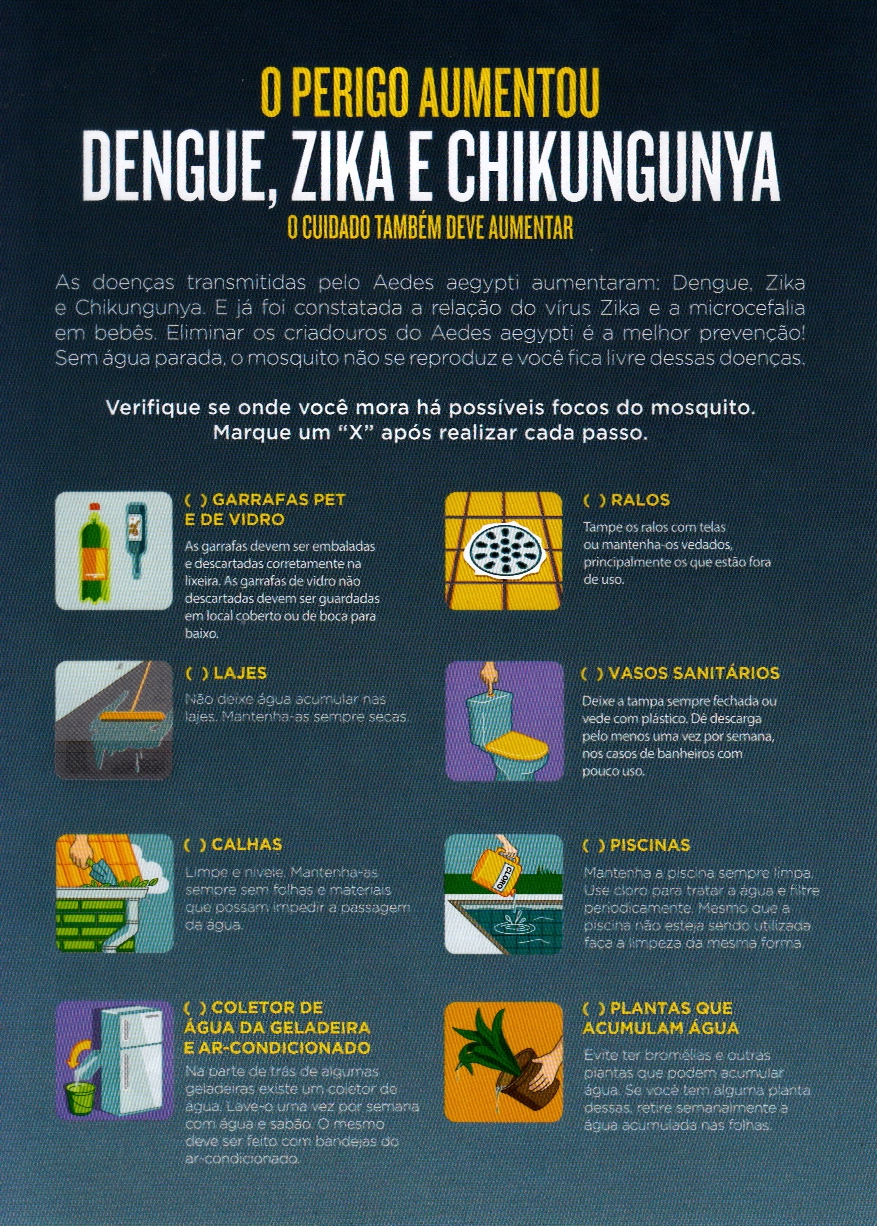
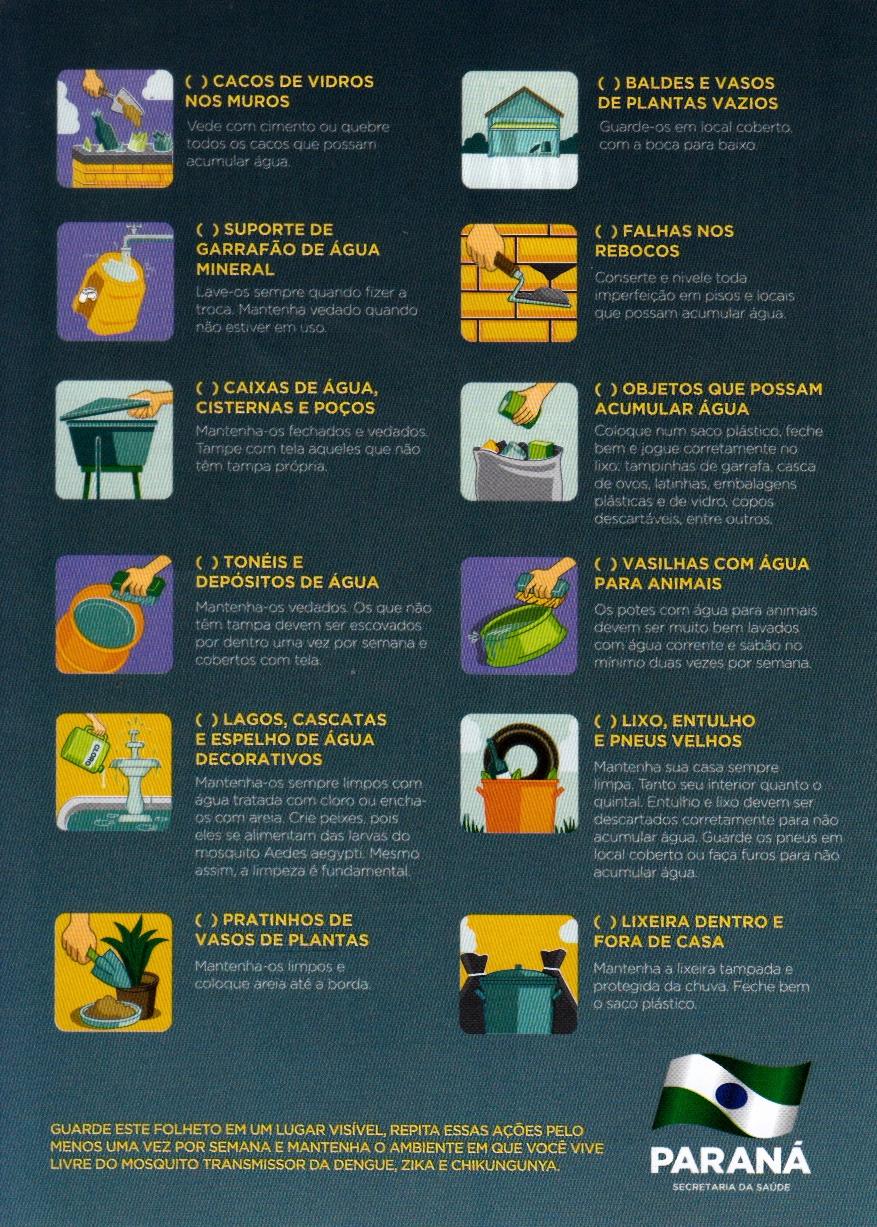
Ett virus som sprids med en mygga är ett stort problem som diskuteras idag på Världshälsoorganisationen. Zikaviruset framkallar zikafeber och myggan, som kallas Aedes aegypti, är också skyldig till att sprida andra febersjukdomar, såsom dengue feber, chikungunya och den välkända gula febern.

Här i Brasilien, där vi sedan några år tillbaka har sett en utbredning av dengue feber i många storstadsregioner börjar man nu också att misstänka att de många fallen av mikrocefali, där foster bara utvecklar förkrympta hjärnor, kan förorsakas av zikaviruset.

Bertolazzi

Don’t complain about the crisis. Work. Be creative. Do like Aedes aegypti, who started small and today is well succeeded with 3 products in the market

Dagens Vetandets Värld i SR P1 behandlade just zikaviruset under titeln “Zikaviruset utmanar Brasiliens forskare”. Jag rekommenderar varmt att de som är intresserade lyssnar på programmet, där man också tar upp frågorna om det kan vara farligt att resa till Brasilien under karnevalen och sommar-OS. Se referens 4 nedan.

Uppdatering 2016-01-30: Lotten Collin, SRs Latinamerikakorrespondent, rapporterar om kriget mot myggorna i Colombia. Se referens 5 nedan.

Uppdatering 2016-01-31: Statsepidemiolog Anders Tegnell på Folkhälsomyndigheten tillfogar fakta om historik och nuläge i dagens program av SR P1 Godmorgon, världen. Se referens 6 nedan.

Flamingos+

Flamingos in Parque das Aves, Foz de Iguaçu, PR, Brazil

Ytterligare en intressant iakttagelse, gjord av SR P1 Vetenskapsradions nyheter i morse, referens 7 nedan: Varför är en del flamingos skära? Jo, det beror på att deras föda är rik på karotenoider. I annat fall skulle de bara se slätstruket grå ut, och det skulle ju göra bilden på flamingona ovan bra mycket tristare.

Allra sist: Som du kan se av undertiteln till min blogg så har jag nu registrerat internetadressen “Medieborgaren.se”. Skriv in den adressen i din webbläsare och du kommer automatiskt att hamna i denna blogg.

… Slut för idag, tack för idag!

(This post deals with the zika virus that is spreading fast now, and which has led to an emergency at WHO. The Swedish radio program in reference 4 below contains quite some material in English.)

Refs.:

1: https://en.wikipedia.org/wiki/Zika_virus

2: https://en.wikipedia.org/wiki/Aedes_aegypti

3: https://en.wikipedia.org/wiki/Microcephaly

4: http://sverigesradio.se/sida/avsnitt/668073?programid=412

5: http://sverigesradio.se/sida/avsnitt/667807?programid=4734

6: http://sverigesradio.se/sida/artikel.aspx?programid=438&artikel=6357340

7: http://sverigesradio.se/sida/avsnitt/668053?programid=406

+: https://www.youtube.com/watch?v=VucczIg98Gw